Suxamethonium-induced hyperkalaemia
Depolarisation potassium surge · Perioperative & Anaesthesia
Physician-written · Verified by three sets of doctors · Reviewed November 2026
Bedside summary
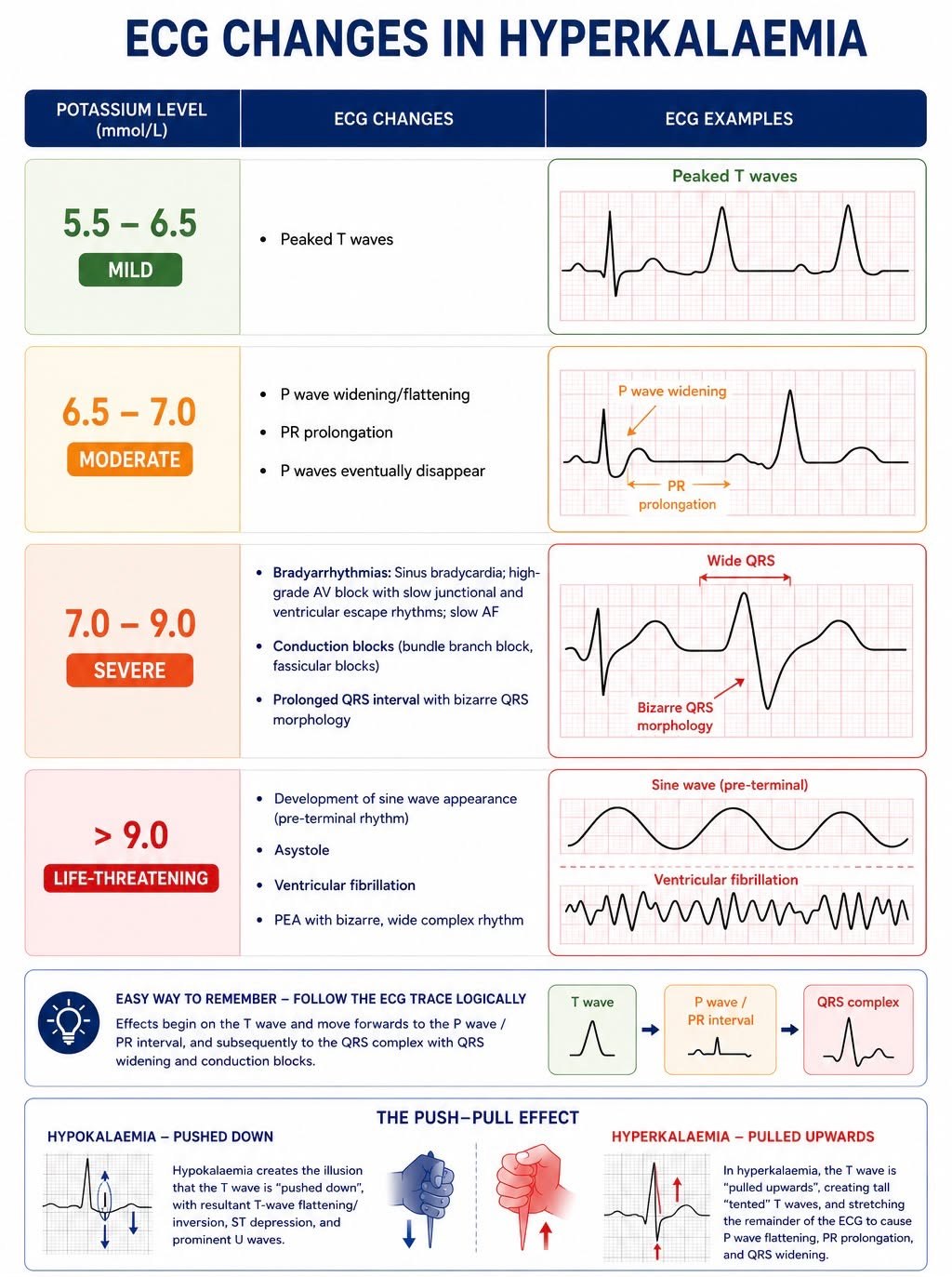
An exaggerated rise in serum potassium after suxamethonium due to depolarisation-triggered efflux through up-regulated or abnormal acetylcholine receptors, risking life-threatening arrhythmia and arrest. High-risk groups include burns, denervation/neuromuscular disease and immobility.
Figures & algorithms
Red flags
- Peaked T waves progressing to widened QRS or sine wave
- Ventricular arrhythmia or asystole after suxamethonium
- Cardiac arrest refractory to standard ALS doses
- Known high-risk patient given suxamethonium
- Rapidly rising potassium on serial gases
Assessment
Differential diagnosis
- Burns (>24-48 h old) with receptor up-regulation
- Denervation injury (spinal cord injury, stroke, Guillain-Barre, prolonged immobility)
- Neuromuscular disease (muscular dystrophy, myopathy)
- Severe sepsis/critical illness myopathy
- Pre-existing hyperkalaemia (renal failure, acidosis)
- Rhabdomyolysis / crush injury
Investigations
- Immediate ECG for peaked T waves, widened QRS, sine wave, arrhythmia
- ABG/VBG with potassium
- Continuous rhythm monitoring
- Serum electrolytes, renal function, creatine kinase
- Review risk factors and timing of suxamethonium
Management
- Recognise sudden peaked T waves/arrhythmia or arrest shortly after suxamethonium
- Stop any further suxamethonium and call for help
- Give IV calcium immediately to stabilise the myocardium
- Shift potassium intracellularly with insulin-dextrose and nebulised/IV salbutamol
- Hyperventilate and correct acidosis (consider sodium bicarbonate)
- If cardiac arrest, start ALS and continue aggressive potassium-lowering; prolonged resuscitation may be needed
- Confirm with ABG and treat until ECG and potassium normalise
- Remove potassium (consider dialysis) if renal failure or refractory
- Avoid suxamethonium in future and document the event
Drugs & doses
Calcium chloride 10% 10 mL IV (or calcium gluconate 10% 30 mL) over 2-3 min, repeat as needed
Insulin (soluble/Actrapid) 10 units in 25 g dextrose (50 mL 50%) IV over 15 min
Salbutamol 2.5-5 mg nebulised or 250 microgram IV
Sodium bicarbonate 8.4% 50 mL IV if acidotic
Adrenaline 1 mg IV per ALS if arrest
Avoid further suxamethonium (use rocuronium for future RSI)
Disposition
Admit to critical care for potassium control, rhythm monitoring and treatment of the underlying condition; investigate for undiagnosed myopathy and clearly document to avoid future suxamethonium exposure.
Complications & pitfalls
- Ventricular fibrillation/asystole and cardiac arrest
- Prolonged resuscitation
- Hypocalcaemia/overcorrection
- Recurrence of hyperkalaemia
- Hypoxic injury
Exam pearls
- Prevention is key: avoid suxamethonium in burns >24 h, denervation, dystrophies and prolonged immobility; use rocuronium instead
- Calcium does not lower potassium but buys time by stabilising the membrane
- Arrest from suxamethonium hyperkalaemia may require prolonged CPR while potassium is corrected
- A normal preoperative potassium does not exclude the risk of an exaggerated rise
- Consider the diagnosis in any unexplained arrest minutes after suxamethonium, especially in children (occult myopathy)
Disclaimer: Educational decision support for qualified clinicians and students — not a substitute for clinical judgement, local protocols or a full drug reference. Confirm every dose and contraindication against your formulary before prescribing.