Acute limb compartment syndrome (traumatic)
Raised compartment pressure, limb-threatening · Vascular
Physician-written · Verified by three sets of doctors · Reviewed November 2026
Bedside summary
Raised pressure within a fascial compartment (after fracture, crush or reperfusion) compromising perfusion and threatening the limb.
Figures & algorithms
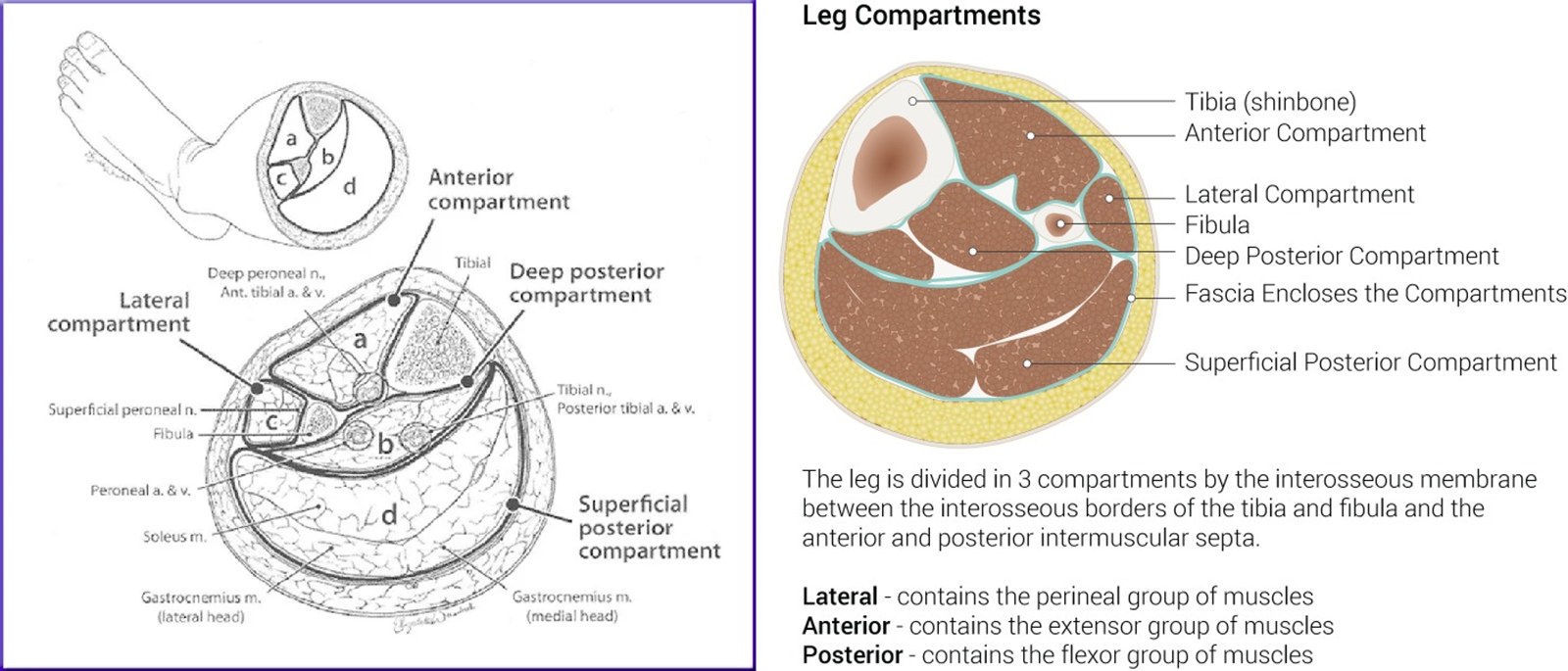
Red flags
- Pain out of proportion and on passive stretch
- Paraesthesia
- Tense swollen compartment
- Late pulselessness (ominous)
Assessment
Differential diagnosis
- Simple fracture pain
- Acute limb ischaemia
- DVT
- Cellulitis
- Nerve injury
Investigations
- Clinical diagnosis (pain out of proportion, pain on passive stretch)
- Compartment pressure measurement if uncertain
- CK and renal function
- Potassium and urine myoglobin
Management
- Remove constrictive casts/dressings and keep limb at heart level
- Give high-flow oxygen and analgesia
- Correct hypotension to maintain perfusion pressure
- Urgent orthopaedic/surgical referral
- Emergency fasciotomy for confirmed compartment syndrome
- Monitor for rhabdomyolysis and treat accordingly
Drugs & doses
Analgesia (titrated opioid)
IV crystalloid (fluid) - maintain perfusion and renal output
Manage hyperkalaemia if rhabdomyolysis
Disposition
Emergency theatre for fasciotomy; orthopaedic admission.
Complications & pitfalls
- Muscle necrosis and contracture
- Rhabdomyolysis and AKI
- Limb loss
Exam pearls
- Pulses are often present until late - do not wait for pulselessness
- It is a clinical diagnosis; do not delay fasciotomy
- Split casts fully to skin
Disclaimer: Educational decision support for qualified clinicians and students — not a substitute for clinical judgement, local protocols or a full drug reference. Confirm every dose and contraindication against your formulary before prescribing.