Acute rheumatic fever and rheumatic heart disease (ARF/RHD)
Valvular / inflammatory · Cardiac
Physician-written · Verified by three sets of doctors · Reviewed November 2026
Bedside summary
Immune sequela of group A streptococcal pharyngitis causing carditis, arthritis, chorea, and skin signs; recurrent/chronic damage produces rheumatic valve disease (esp. mitral and aortic). A leading cause of valvular disease in young people in India and in migrant populations in the UK. Diagnosis is by the revised Jones criteria.
Figures & algorithms
Red flags
- Severe carditis with heart failure or pericardial effusion
- High-grade AV block from carditis
- Recurrent ARF (previous episode — much higher risk of severe valve damage)
- New significant valve regurgitation
- Sydenham chorea (implies CNS involvement)
Assessment
Differential diagnosis
- Septic/reactive arthritis, gonococcal arthritis
- Juvenile idiopathic arthritis / other connective tissue disease
- Infective endocarditis
- Viral myocarditis
- Sydenham chorea vs other movement disorders
- Post-streptococcal reactive arthritis (without carditis)
Investigations
- Evidence of preceding GAS infection: throat swab/culture, rapid antigen, rising ASO or anti-DNase B titres
- ECG (PR prolongation, heart block), echocardiogram (subclinical/clinical carditis — valvulitis, MR/AR, effusion) — echo now part of Jones criteria
- Inflammatory markers: ESR, CRP (major/minor criteria)
- FBC, blood cultures (exclude endocarditis), repeat echo for valve damage
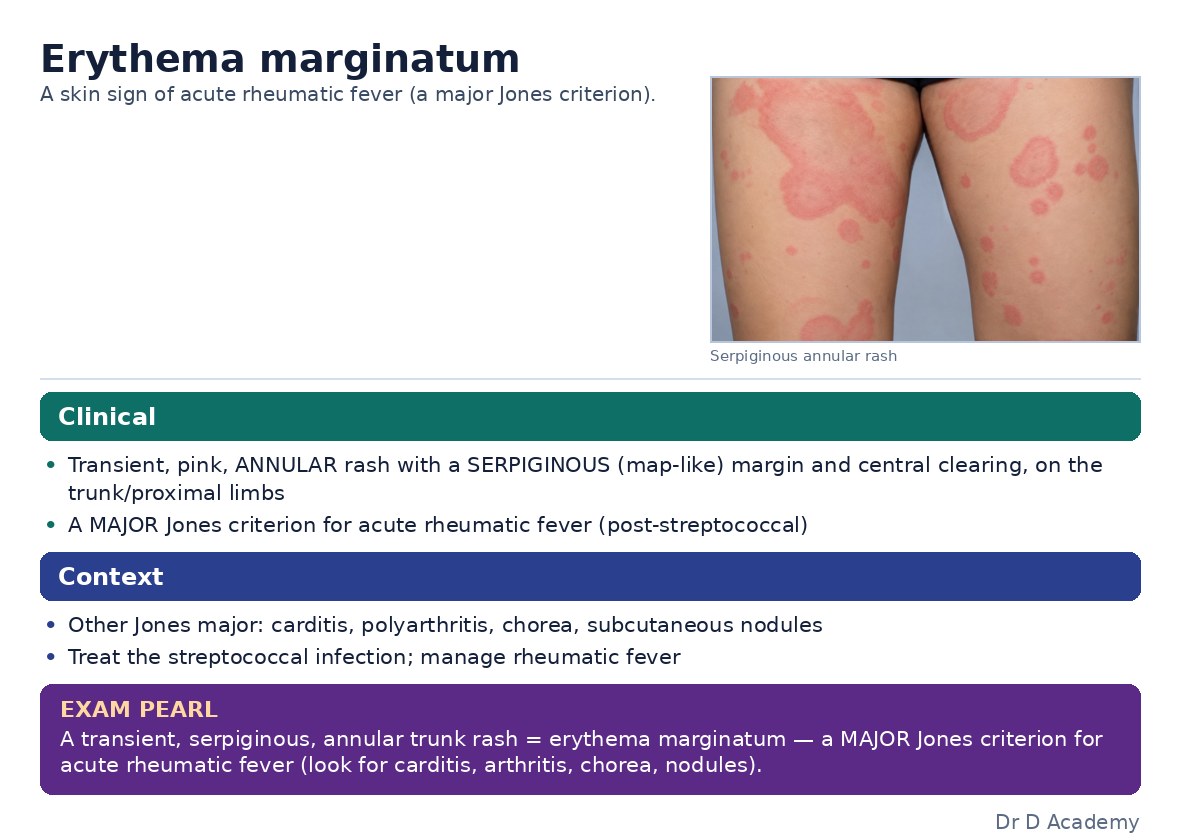
- Apply revised Jones criteria (major: carditis, polyarthritis, chorea, erythema marginatum, subcutaneous nodules; minor: fever, arthralgia, raised ESR/CRP, prolonged PR) with population risk stratification
Management
- Confirm diagnosis by Jones criteria with evidence of antecedent GAS infection
- Eradicate residual streptococcus with penicillin
- Treat carditis/arthritis with anti-inflammatories; manage heart failure if severe carditis
- Manage chorea supportively +/- medication
- Start long-term secondary prophylaxis to prevent recurrence and progressive valve damage — duration depends on carditis severity
- Echo surveillance for rheumatic valve disease; refer established significant valve lesions for intervention (e.g. PBMV for MS)
Drugs & doses
Benzathine penicillin G 1.2 million units IM single dose (0.6 MU if <27 kg) to eradicate GAS
Phenoxymethylpenicillin 500 mg PO QDS for 10 days (oral alternative for eradication) [paeds dose by weight]
Aspirin 50-100 mg/kg/day PO in divided doses (anti-inflammatory for arthritis/carditis), titrate to response [monitor salicylate levels]
Prednisolone 1-2 mg/kg/day PO (max ~60-80 mg) for severe carditis/heart failure, taper over weeks [verify]
Secondary prophylaxis: Benzathine penicillin G 1.2 million units IM every 3-4 weeks (every 3 weeks in high-risk) — continue 10 years or until age 21 (no carditis), to age 40 or lifelong if RHD/valve damage
Oral prophylaxis alternative: phenoxymethylpenicillin 250 mg PO BD (or sulfadiazine; erythromycin if penicillin-allergic)
Carbamazepine or valproate for disabling Sydenham chorea [specialist]
Heart failure therapy (diuretic, ACEi) if severe carditis
Disposition
Admit active ARF with carditis for monitoring and treatment; arrange long-term secondary prophylaxis, echo surveillance and cardiology follow-up. Register in RHD control programme where available.
Complications & pitfalls
- Chronic rheumatic valve disease — mitral stenosis/regurgitation, aortic disease
- Heart failure from severe carditis
- Atrial fibrillation and thromboembolism (later, with MS)
- Infective endocarditis on damaged valves
- Recurrent ARF with cumulative valve damage
Exam pearls
- Secondary prophylaxis (regular benzathine penicillin) is the single most important intervention — it prevents recurrence and progression to severe RHD.
- Echocardiography can detect subclinical carditis and is now incorporated into the revised (2015) Jones criteria, with separate thresholds for high- vs low-risk populations.
- ARF recurs with each new untreated GAS infection — adherence to IM penicillin every 3-4 weeks is critical, especially in endemic settings.
- Arthritis is classically migratory and exquisitely aspirin-responsive; a poor aspirin response should prompt rethinking the diagnosis.
- Chorea and carditis can occur without arthritis, especially in younger children.
Disclaimer: Educational decision support for qualified clinicians and students — not a substitute for clinical judgement, local protocols or a full drug reference. Confirm every dose and contraindication against your formulary before prescribing.