Hyperkalaemia with cardiac toxicity
Life-threatening electrolyte emergency · Cardiac
Physician-written · Verified by three sets of doctors · Reviewed November 2026
Bedside summary
Elevated serum potassium causing ECG changes and risk of malignant arrhythmia; a treatable cause of arrest.
Figures & algorithms
Red flags
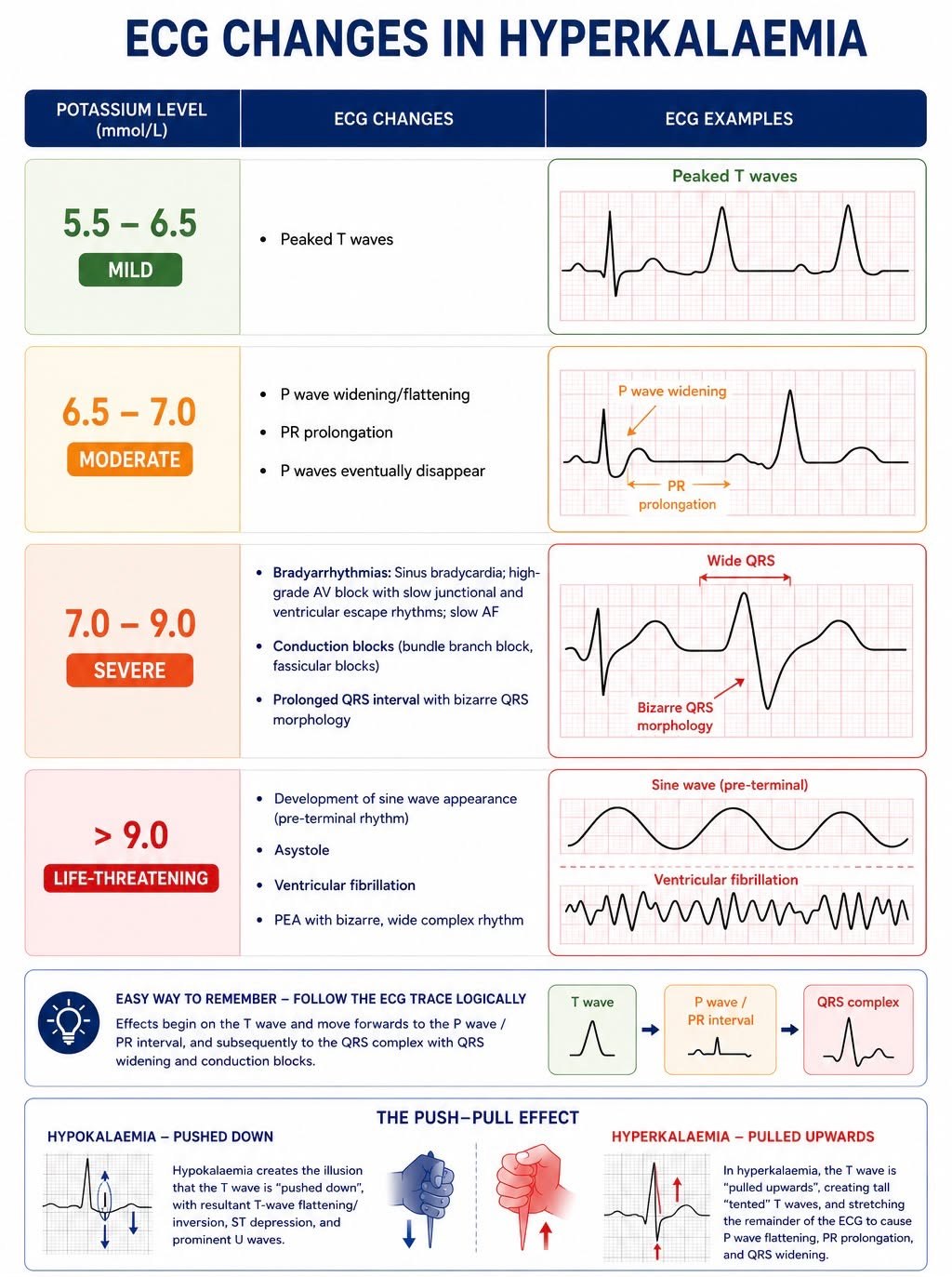
- Broadening QRS or sine-wave pattern
- Bradycardia or hypotension
- Anuria
- Potassium >6.5 mmol/L
Assessment
Differential diagnosis
- Sodium channel blocker toxicity
- Acute MI
- Massive rhabdomyolysis
- Digoxin toxicity
- Pseudohyperkalaemia (haemolysed sample)
Investigations
- 12-lead ECG (peaked T, wide QRS, sine wave)
- Urgent formal serum potassium and VBG
- Renal function and calcium
- ECG monitoring
Management
- Attach continuous ECG monitoring
- Give IV calcium to stabilise the myocardium if ECG changes present
- Shift potassium with insulin-dextrose and nebulised salbutamol
- Address the underlying cause and stop offending drugs
- Remove potassium (dialysis if severe/anuric, consider binders)
- Recheck potassium and ECG after treatment
Drugs & doses
Calcium gluconate 10% (membrane stabiliser) - 10 mL IV, repeat as needed
Insulin (Actrapid) 10 units with 25 g glucose IV (shift)
Salbutamol (beta-2 agonist) - 10-20 mg nebulised
Disposition
Admit; ICU/renal if severe or dialysis required.
Complications & pitfalls
- VF/asystole
- Rebound hyperkalaemia
- Hypoglycaemia after insulin
Exam pearls
- Calcium does not lower potassium - it buys time
- Monitor glucose after insulin
- Dialysis is definitive in renal failure
Disclaimer: Educational decision support for qualified clinicians and students — not a substitute for clinical judgement, local protocols or a full drug reference. Confirm every dose and contraindication against your formulary before prescribing.