STEMI - primary PCI / reperfusion pathway
Reperfusion pathway · Cardiac
Physician-written · Verified by three sets of doctors · Reviewed November 2026
Bedside summary
ST-elevation MI managed on the time-critical reperfusion pathway. A 12-lead ECG within 10 minutes makes the diagnosis; primary PCI is the preferred reperfusion if deliverable in time, otherwise give thrombolysis and transfer. Antiplatelets, anticoagulation and treating complications complete care.
Figures & algorithms
Assessment
Investigations
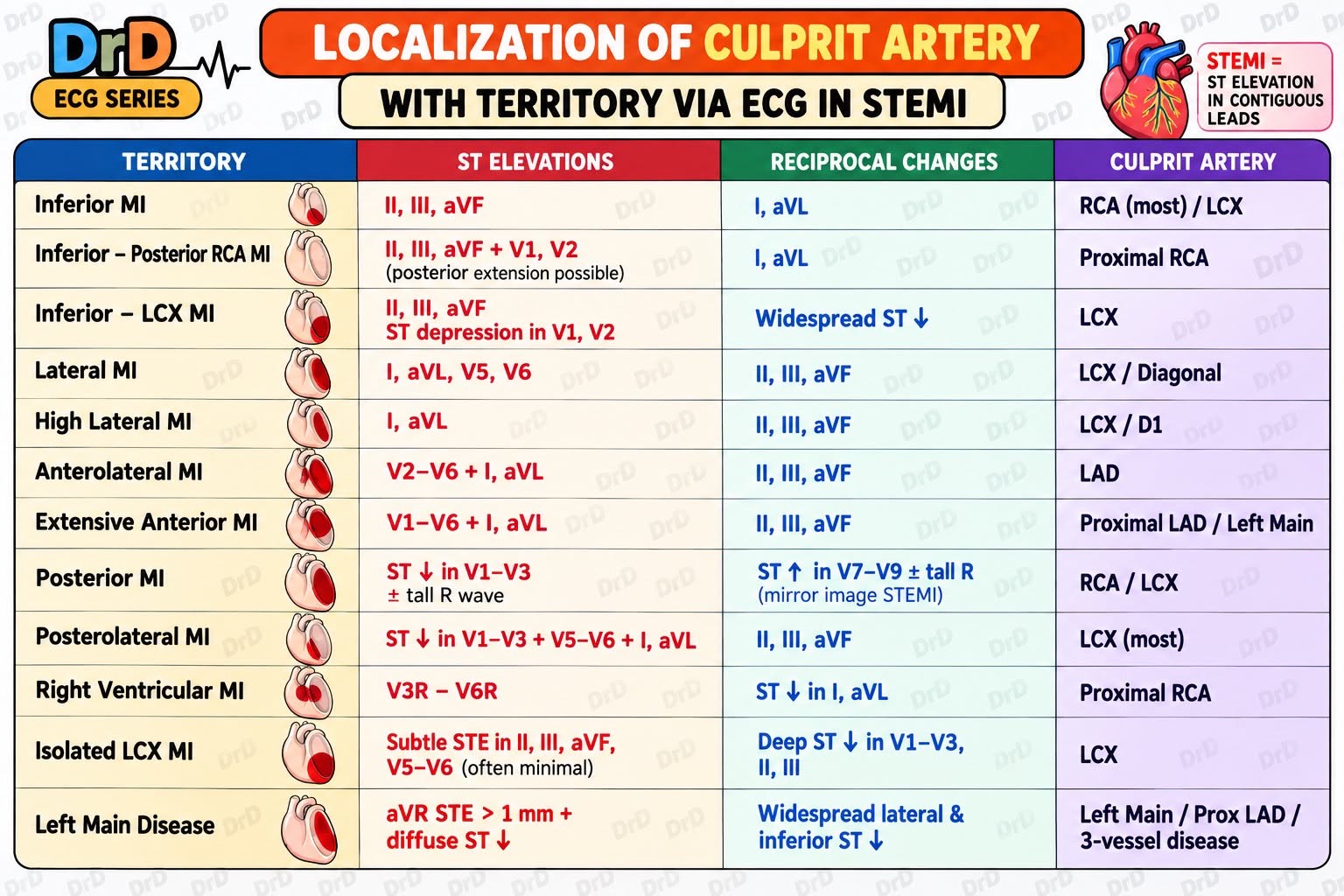
- 12-lead ECG within 10 min (repeat/posterior leads if suspicious); troponin
- Confirm STEMI criteria (or new LBBB with ischaemic context)
- Identify complications (arrhythmia, shock, RV/inferior, mechanical)
Management
- Aspirin 300 mg plus a second antiplatelet (ticagrelor/prasugrel/clopidogrel per pathway)
- Primary PCI if achievable within 120 min of diagnosis - activate the cath lab
- If PCI not available in time: fibrinolysis, then transfer to a PCI centre
- Anticoagulation per pathway; analgesia and antiemetic
- Oxygen ONLY if SpO2 <94%; cautious GTN (avoid in inferior/RV infarct or hypotension)
- Treat arrhythmia and cardiogenic shock; continuous monitoring/defib pads
- Admit to CCU; secondary prevention
Drugs & doses
Aspirin 300 mg + 2nd antiplatelet
Primary PCI (or fibrinolysis if PCI delayed)
Anticoagulation
Analgesia/antiemetic
Disposition
Cath lab / CCU.
ECG in 10 minutes and reperfuse fast - primary PCI within 120 min of diagnosis, otherwise thrombolyse and transfer; avoid GTN in the inferior/RV infarct.
Disclaimer: Educational decision support for qualified clinicians and students — not a substitute for clinical judgement, local protocols or a full drug reference. Confirm every dose and contraindication against your formulary before prescribing.