Acute ischaemic stroke — thrombolysis & thrombectomy care
Stroke peri-procedure · Critical Care
Physician-written · Verified by three sets of doctors · Reviewed November 2026
Bedside summary
Rapid reperfusion with thrombolysis and thrombectomy saves brain; peri-procedure physiological control protects the penumbra and limits complications.
Figures & algorithms
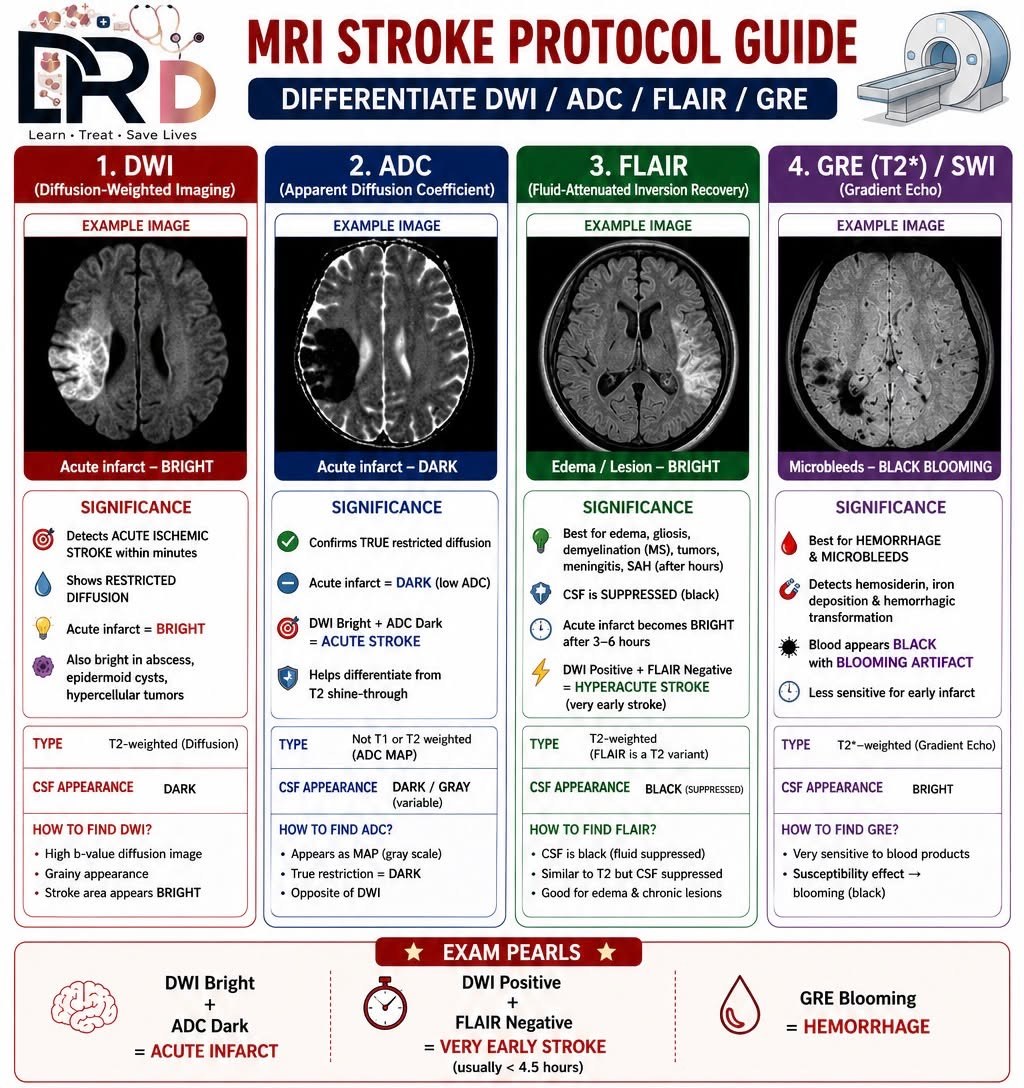
Assessment
Investigations
- Urgent non-contrast CT and CT angiography
- Blood glucose and coagulation
- NIHSS severity
- Perfusion imaging for late window
- Blood pressure monitoring
Management
- Confirm time of onset and exclude haemorrhage
- Give intravenous thrombolysis within the window if eligible
- Refer large-vessel occlusion for thrombectomy
- Keep pressure <185/110 before thrombolysis
- Allow permissive hypertension if not lysed, lower after reperfusion
- Monitor for haemorrhagic transformation and angio-oedema
- Maintain normoglycaemia, normothermia and normoxia
Drugs & doses
Alteplase: 0.9 mg/kg (max 90 mg), 10% bolus then infusion
Tenecteplase: 0.25 mg/kg bolus where used
Disposition
Stroke unit or ICU; thrombectomy centre.
Door-to-needle and door-to-groin times drive outcome.
Disclaimer: Educational decision support for qualified clinicians and students — not a substitute for clinical judgement, local protocols or a full drug reference. Confirm every dose and contraindication against your formulary before prescribing.