Severe hyperkalaemia
Metabolic · Critical Care / ICU
Physician-written · Verified by three sets of doctors · Reviewed November 2026
Bedside summary
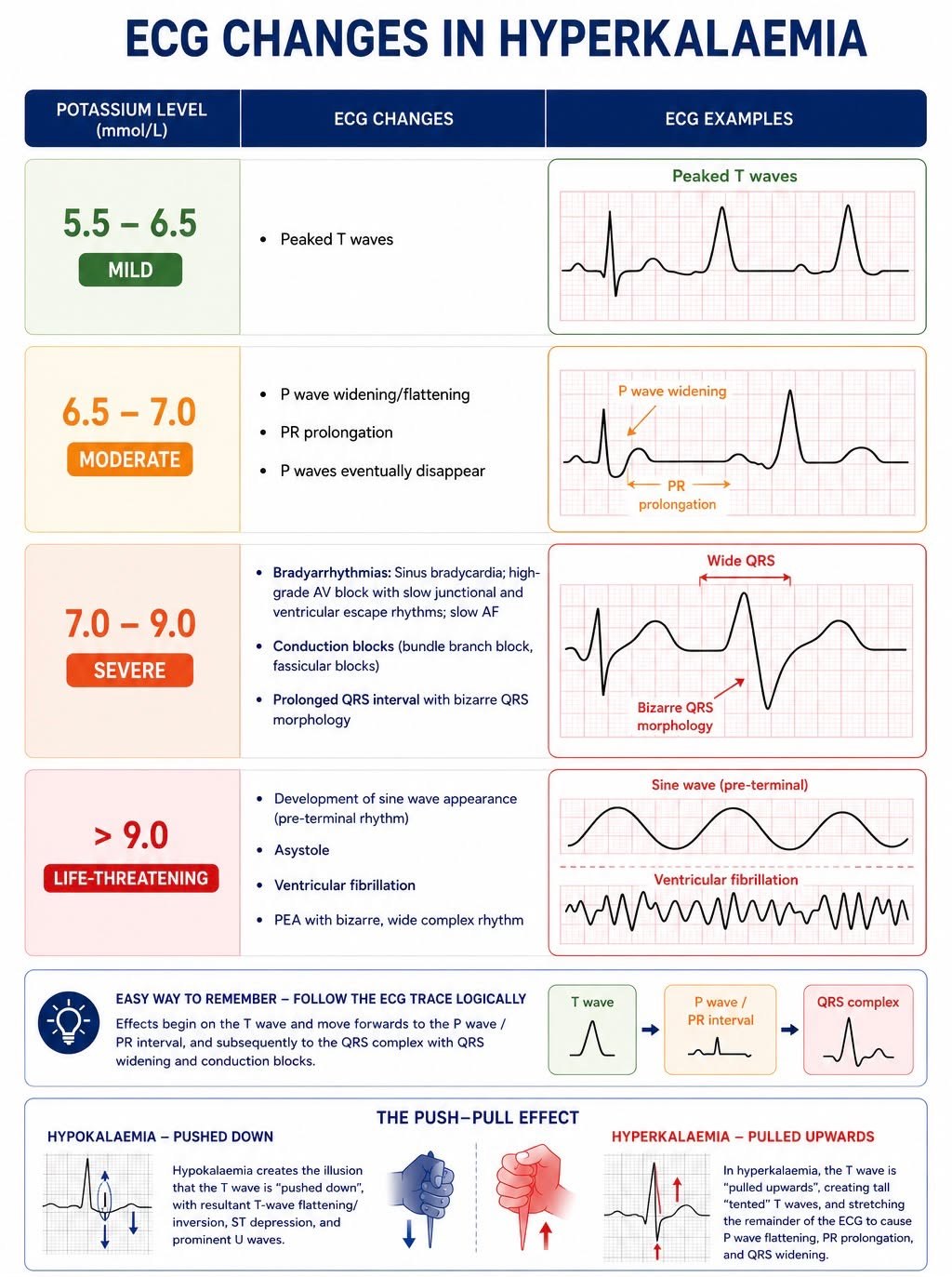
A dangerously high serum potassium (typically greater than 6.5 mmol/L, or with ECG changes) threatening fatal arrhythmia; causes include renal failure, drugs, acidosis, tissue breakdown and adrenal insufficiency.
Figures & algorithms
Red flags
- Broad-complex/sine-wave ECG
- Bradycardia or haemodynamic instability
- Potassium continuing to rise despite treatment
- Anuria (needs dialysis)
Assessment
Differential diagnosis
- Pseudohyperkalaemia (haemolysed sample)
- Acute kidney injury
- Rhabdomyolysis / tumour lysis
- Adrenal insufficiency
- Drug effect (ACE-i, potassium-sparing diuretics)
Investigations
- ECG immediately (peaked T waves, wide QRS, sine wave)
- Repeat/confirmatory potassium (rule out haemolysis)
- U&E, creatinine, glucose
- ABG (acidosis)
- Identify cause (drugs, CK, cortisol)
Management
- Get an urgent ECG and place the patient on a cardiac monitor
- Give IV calcium (gluconate or chloride) for cardioprotection if ECG changes or potassium markedly raised
- Shift potassium intracellularly with insulin-glucose and nebulised salbutamol
- Remove potassium from the body (potassium binders; consider dialysis for refractory/renal failure)
- Stop contributing drugs and treat the cause
- Monitor glucose and recheck potassium serially
Drugs & doses
IV calcium gluconate 10% (cardioprotection; repeat if ECG changes persist)
Insulin (e.g. 10 units soluble) with glucose (monitor for hypoglycaemia)
Nebulised salbutamol
Potassium binder (e.g. patiromer / sodium zirconium cyclosilicate) for removal
Consider sodium bicarbonate if acidotic; dialysis if refractory
Disposition
Monitored bed / HDU; nephrology for dialysis if refractory or in renal failure.
Complications & pitfalls
- Fatal arrhythmia / cardiac arrest
- Rebound hyperkalaemia (shift is temporary)
- Hypoglycaemia from insulin therapy
Exam pearls
- Calcium protects the myocardium but does not lower potassium - always follow with shifting and removal therapies
- Insulin-glucose and salbutamol only shift potassium temporarily - definitive removal (binders/dialysis) is needed
- Always exclude a haemolysed sample but never delay treatment when ECG changes are present
Disclaimer: Educational decision support for qualified clinicians and students — not a substitute for clinical judgement, local protocols or a full drug reference. Confirm every dose and contraindication against your formulary before prescribing.