Acute G6PD haemolytic crisis
Haematological · Metabolic
Physician-written · Verified by three sets of doctors · Reviewed November 2026
Bedside summary
Acute intravascular haemolysis in a person with glucose-6-phosphate dehydrogenase deficiency triggered by oxidative stress (infection, certain drugs, fava beans), presenting with jaundice, dark urine, anaemia and back/abdominal pain.
Figures & algorithms
Red flags
- Rapidly falling haemoglobin
- Acute kidney injury / haemoglobinuria
- Haemodynamic instability
- Ongoing exposure to the trigger
Assessment
Differential diagnosis
- Other causes of haemolysis (autoimmune, mechanical)
- Sepsis
- Sickle cell crisis
- Hepatobiliary disease causing jaundice
- Methaemoglobinaemia (may coexist with certain triggers)
Investigations
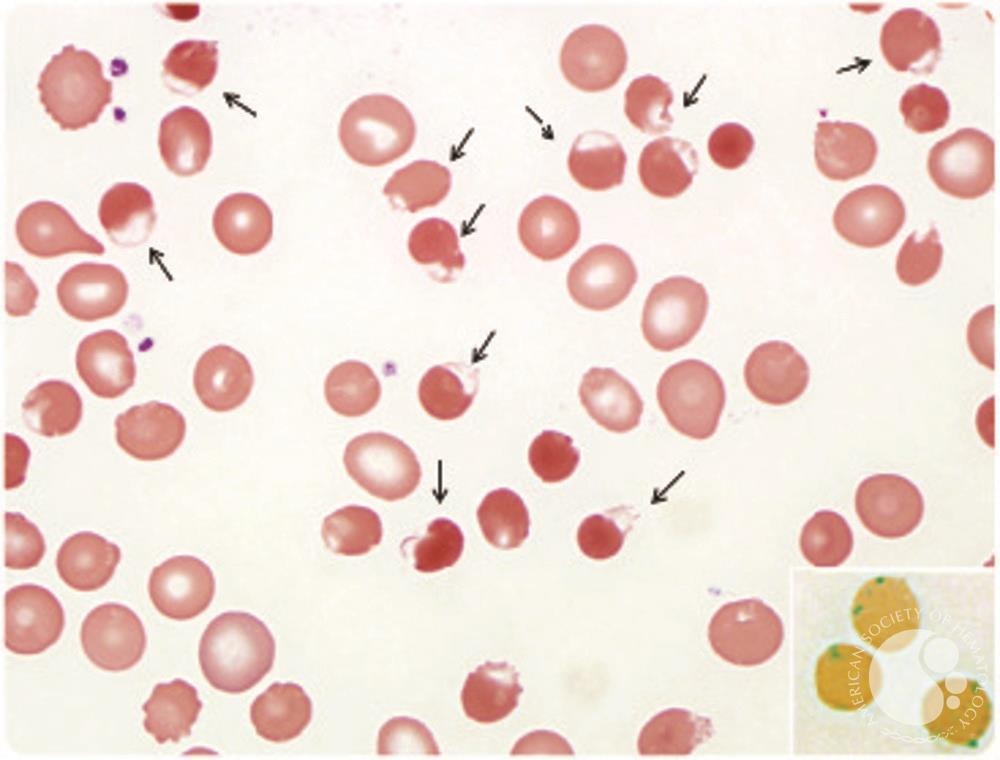
- FBC and blood film (bite cells, Heinz bodies, blister cells)
- Reticulocytes, LDH, haptoglobin, bilirubin (haemolysis markers)
- Urinalysis (haemoglobinuria)
- G6PD assay (may be falsely normal during acute haemolysis due to reticulocytosis - repeat later)
- Renal function (pigment nephropathy risk)
Management
- Identify and remove the oxidative trigger (culprit drug, treat infection, stop fava beans)
- Provide supportive care - hydration to protect the kidneys from pigment injury
- Transfuse if anaemia is severe or symptomatic
- Monitor haemoglobin, renal function and for haemoglobinuria
- Counsel and provide a list of drugs/foods to avoid
- Recheck G6PD activity after recovery (acute test may be falsely normal)
Drugs & doses
Supportive care and IV fluids
Blood transfusion for severe anaemia
Treat any precipitating infection
Avoid oxidant drugs (and methylene blue) going forward
Disposition
Admit if significant haemolysis; haematology follow-up and trigger avoidance counselling.
Complications & pitfalls
- Severe anaemia requiring transfusion
- Acute kidney injury from pigment nephropathy
- Rarely, haemolysis severe enough to be life-threatening
Exam pearls
- A G6PD assay during acute haemolysis can be falsely normal because young reticulocytes have higher enzyme levels - repeat after recovery
- Removing the trigger and supportive care usually suffice; transfuse only if severe
Disclaimer: Educational decision support for qualified clinicians and students — not a substitute for clinical judgement, local protocols or a full drug reference. Confirm every dose and contraindication against your formulary before prescribing.