Amiodarone-induced thyrotoxicosis
Drug-induced thyrotoxicosis · Endocrine
Physician-written · Verified by three sets of doctors · Reviewed November 2026
Bedside summary
Amiodarone can cause thyrotoxicosis by iodine load driving synthesis (type 1) or by a destructive thyroiditis (type 2), which respond to different treatments. It can be hard to distinguish and may precipitate arrhythmia or storm.
Figures & algorithms
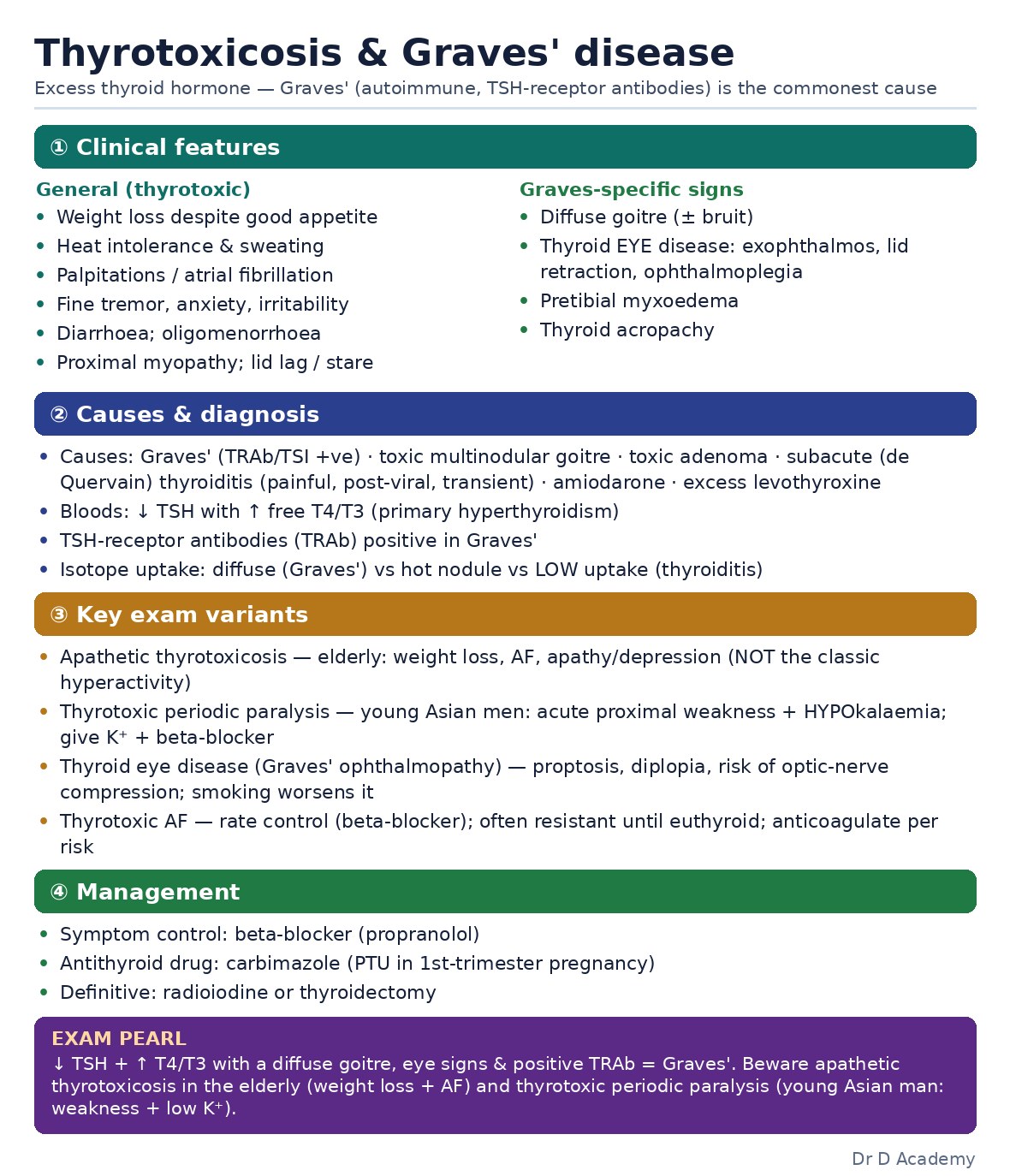
Assessment
Investigations
- TFTs; assess for arrhythmia/cardiac decompensation
- Doppler thyroid (vascularity helps type 1 vs 2)
- Review amiodarone and cardiac indication
Management
- Beta-blockade for symptoms (caution in heart failure)
- Type 1: anti-thyroid drugs (carbimazole) +/- potassium perchlorate
- Type 2: corticosteroids (destructive thyroiditis)
- Mixed/uncertain: often both; endocrine and cardiology input
- Decide on stopping amiodarone with cardiology
Drugs & doses
Carbimazole (type 1)
Prednisolone (type 2)
Beta-blocker
Disposition
Endocrine + cardiology.
Amiodarone thyrotoxicosis is type 1 (give anti-thyroid drugs) or type 2 (give steroids) - and the two are easily confused, so involve endocrinology.
Disclaimer: Educational decision support for qualified clinicians and students — not a substitute for clinical judgement, local protocols or a full drug reference. Confirm every dose and contraindication against your formulary before prescribing.