Pituitary disorders (hypopituitarism, prolactinoma, acromegaly)
Endocrine · Endocrine
Physician-written · Verified by three sets of doctors · Reviewed November 2026
Bedside summary
Pituitary adenomas cause hormone excess (prolactinoma, acromegaly, Cushing's disease), hormone deficiency (hypopituitarism) and local mass effect. Prolactinomas respond to dopamine agonists; others usually need surgery.
Figures & algorithms
Red flags
- Refer all pituitary tumours to endocrinology/neurosurgery
- Admit urgently: pituitary apoplexy, acute visual deterioration, adrenal crisis, symptomatic hyponatraemia/diabetes insipidus
- Macroadenoma near optic chiasm needs prompt specialist assessment
Assessment
Investigations
- Baseline axis: prolactin, IGF-1, 9am cortisol/short Synacthen, free T4/TSH, LH/FSH + testosterone/oestradiol, IGF-1
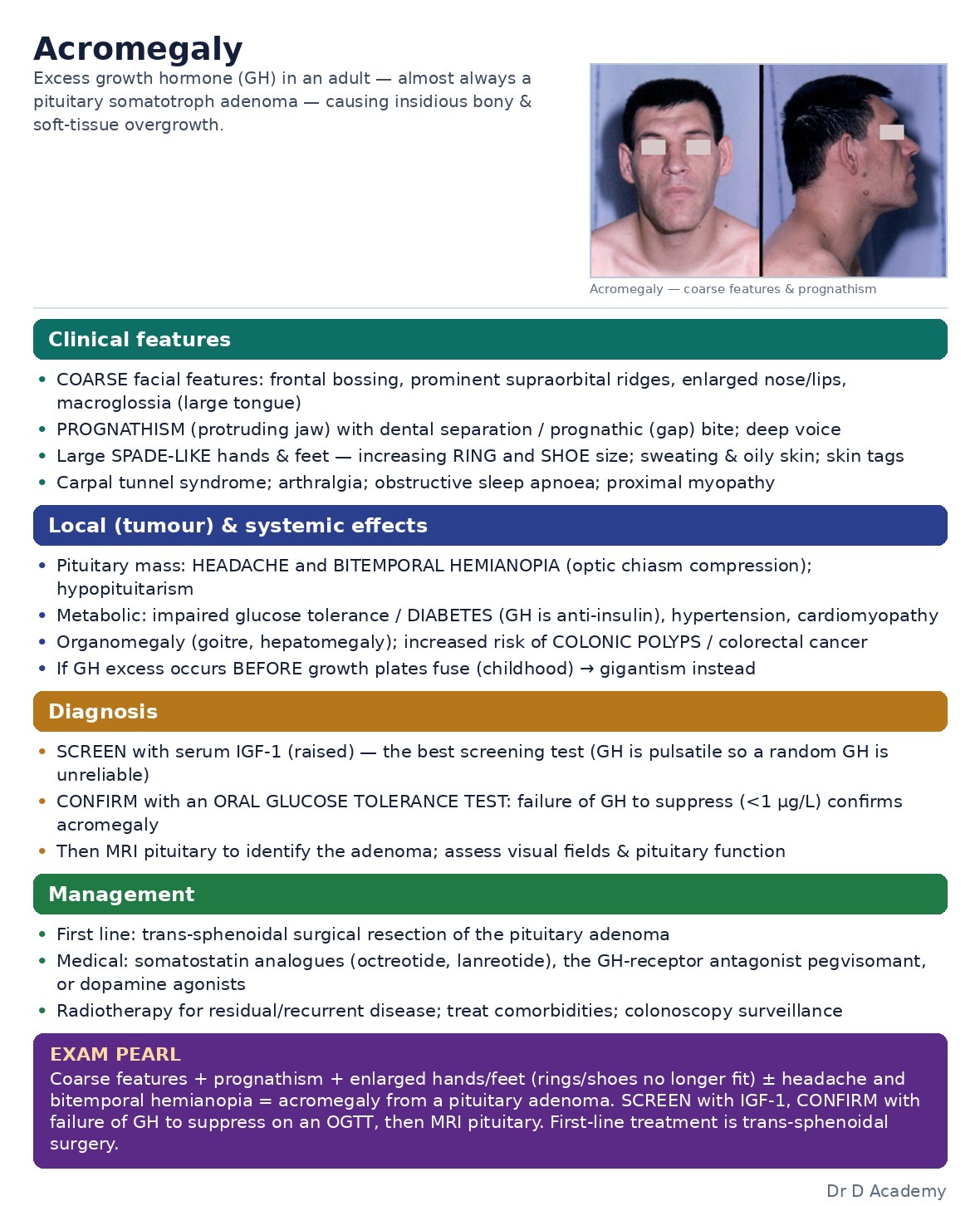
- Acromegaly confirmed by failure of GH suppression on OGTT
- Pituitary MRI, formal visual fields (perimetry)
- Dynamic tests as directed by endocrinology
Management
- Replace deficient hormones (hydrocortisone first, then levothyroxine, sex steroids, GH as indicated)
- Prolactinoma: dopamine agonist first line (cabergoline, bromocriptine) - shrinks tumour and normalises prolactin, surgery rarely needed
- Acromegaly and other secretory/compressive adenomas: transsphenoidal surgery first line; adjuncts somatostatin analogues (octreotide/lanreotide), pegvisomant, cabergoline, radiotherapy
- Apoplexy with visual loss: urgent steroids +/- surgical decompression
Disposition
Refer all pituitary tumours to endocrinology/neurosurgery.
Complications & pitfalls
- Visual loss, hypopituitarism (including life-threatening adrenal insufficiency), pituitary apoplexy, diabetes insipidus (post-surgery)
- Acromegaly: cardiomyopathy, diabetes, OSA, colonic polyps, increased mortality
- Untreated prolactinoma: osteoporosis, infertility
Exam pearls
- Before diagnosing a prolactinoma, exclude the common benign causes of raised prolactin: pregnancy, hypothyroidism, antipsychotics/antiemetics, and stalk-effect from a non-functioning macroadenoma (prolactin usually <2000-3000 mU/L in stalk effect). Replace cortisol before thyroxine in panhypopituitarism.
- Monitoring & follow-up: Serial hormone levels (IGF-1 in acromegaly, prolactin in prolactinoma), MRI surveillance, visual field testing. After surgery monitor for new deficiencies, diabetes insipidus and SIADH. Lifelong replacement review with sick-day rules for steroid-dependent patients.
Disclaimer: Educational decision support for qualified clinicians and students — not a substitute for clinical judgement, local protocols or a full drug reference. Confirm every dose and contraindication against your formulary before prescribing.