Acute angle-closure glaucoma
Sight-threatening · Ophthalmology
Physician-written · Verified by three sets of doctors · Reviewed November 2026
Bedside summary
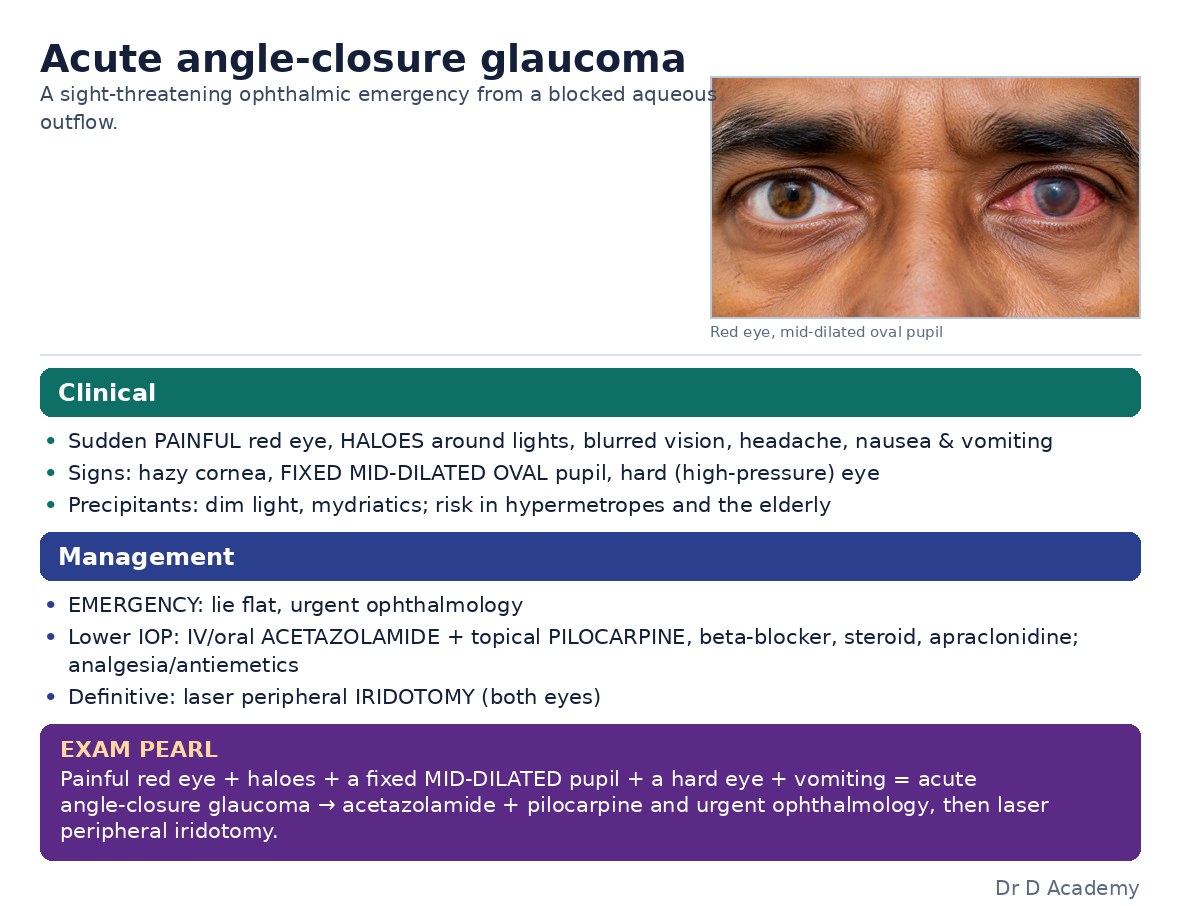
Sudden rise in intraocular pressure from blocked aqueous drainage — painful red eye, haloes, fixed mid-dilated pupil, nausea/vomiting. Sight-threatening.
Figures & algorithms
Red flags
- Severe pain with vomiting + red eye
- Markedly reduced vision/haloes
- Very high IOP
Assessment
Differential diagnosis
- Anterior uveitis
- Acute conjunctivitis
- Corneal pathology
- Cluster headache
- Migraine
Investigations
- Visual acuity; measure intraocular pressure (often >40)
- Penlight exam (mid-dilated fixed oval pupil, hazy cornea)
- Urgent ophthalmology assessment
Management
- Urgent ophthalmology referral — sight-threatening
- Lower IOP: topical (pilocarpine, beta-blocker, apraclonidine) + IV/oral acetazolamide
- Analgesia and antiemetics; lie supine
- Definitive: laser peripheral iridotomy
- Treat the fellow eye prophylactically
Drugs & doses
Acetazolamide IV/PO
Topical pilocarpine, timolol, apraclonidine
Analgesia, antiemetics
Disposition
Urgent ophthalmology; admit for IOP control.
Complications & pitfalls
- Permanent optic nerve damage/blindness
- Central retinal artery/vein occlusion
Exam pearls
- Painful red eye + headache + vomiting — check the eye, not just the head
- Mid-dilated fixed pupil + hazy cornea is classic
- Avoid pupil dilatation; treat both eyes (iridotomy)
Lower the pressure fast (topicals + acetazolamide) and get urgent ophthalmology for iridotomy.
Disclaimer: Educational decision support for qualified clinicians and students — not a substitute for clinical judgement, local protocols or a full drug reference. Confirm every dose and contraindication against your formulary before prescribing.