Acute severe tonsillitis
Throat infection · ENT
Physician-written · Verified by three sets of doctors · Reviewed November 2026
Bedside summary
Severe bacterial or viral tonsillitis causes odynophagia, fever and dehydration, and can progress to a peritonsillar abscess or airway compromise. Supportive care, scoring for antibiotics and watching for quinsy/airway signs are key.
Figures & algorithms
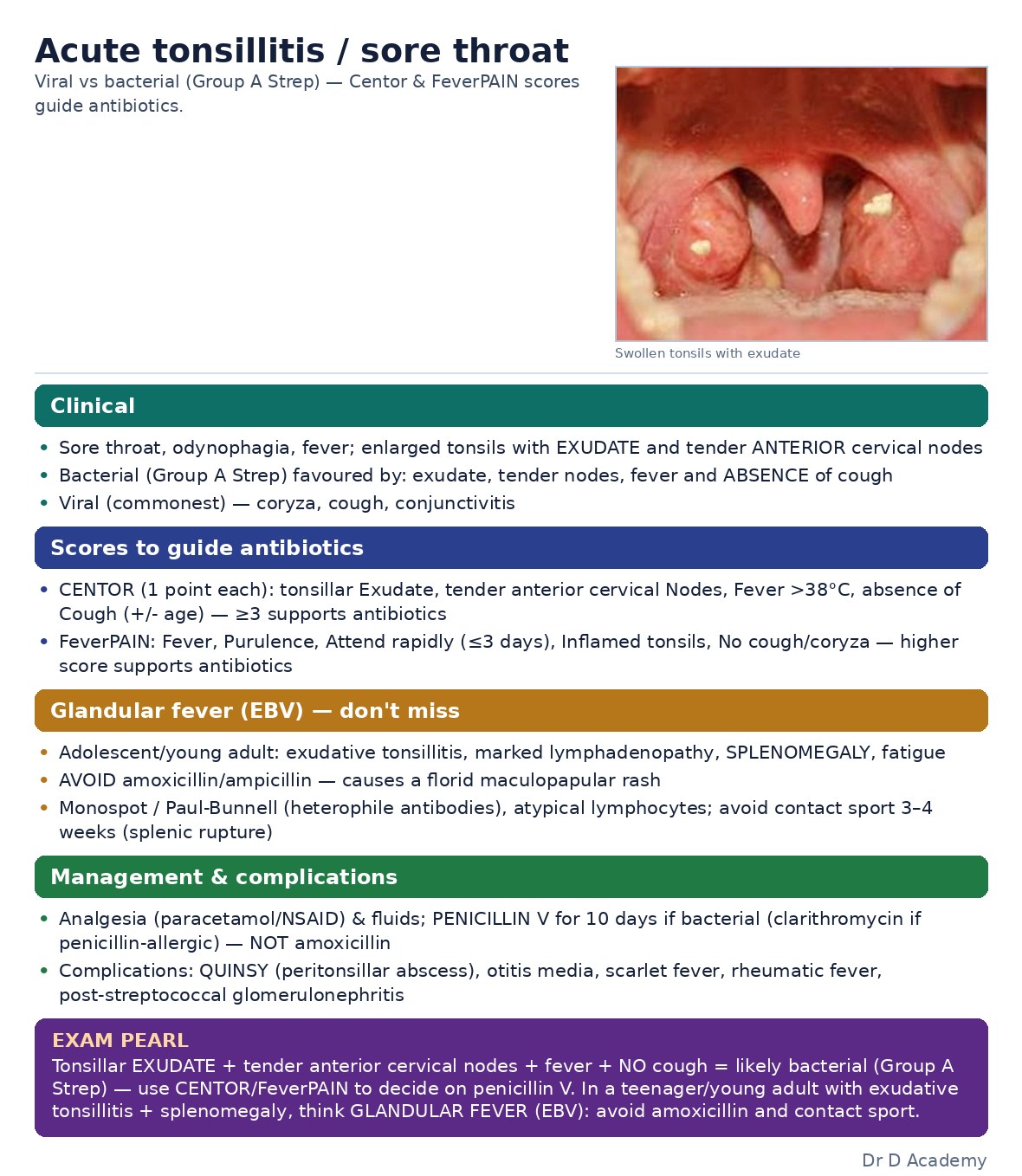
Assessment
Investigations
- Examine the throat (exudate, trismus, asymmetry suggesting quinsy)
- Centor/FeverPAIN score; consider glandular fever
- Assess hydration and airway
Management
- Analgesia and rehydration (IV fluids if not swallowing)
- Antibiotics per score/severity (avoid amoxicillin if glandular fever likely)
- Single-dose steroid can ease severe odynophagia
- Look for and refer quinsy/airway compromise
- Safety-net and ENT referral if not improving
Drugs & doses
Penicillin V (or per local)
IV fluids
Dexamethasone (severe odynophagia)
Disposition
Discharge / admit if dehydrated/airway risk.
Severe tonsillitis with trismus and asymmetry suggests a quinsy - and avoid amoxicillin if glandular fever is possible (rash).
Disclaimer: Educational decision support for qualified clinicians and students — not a substitute for clinical judgement, local protocols or a full drug reference. Confirm every dose and contraindication against your formulary before prescribing.