Autoimmune blistering disease (pemphigus & pemphigoid)
Dermatology · Dermatology
Physician-written · Verified by three sets of doctors · Reviewed November 2026
Bedside summary
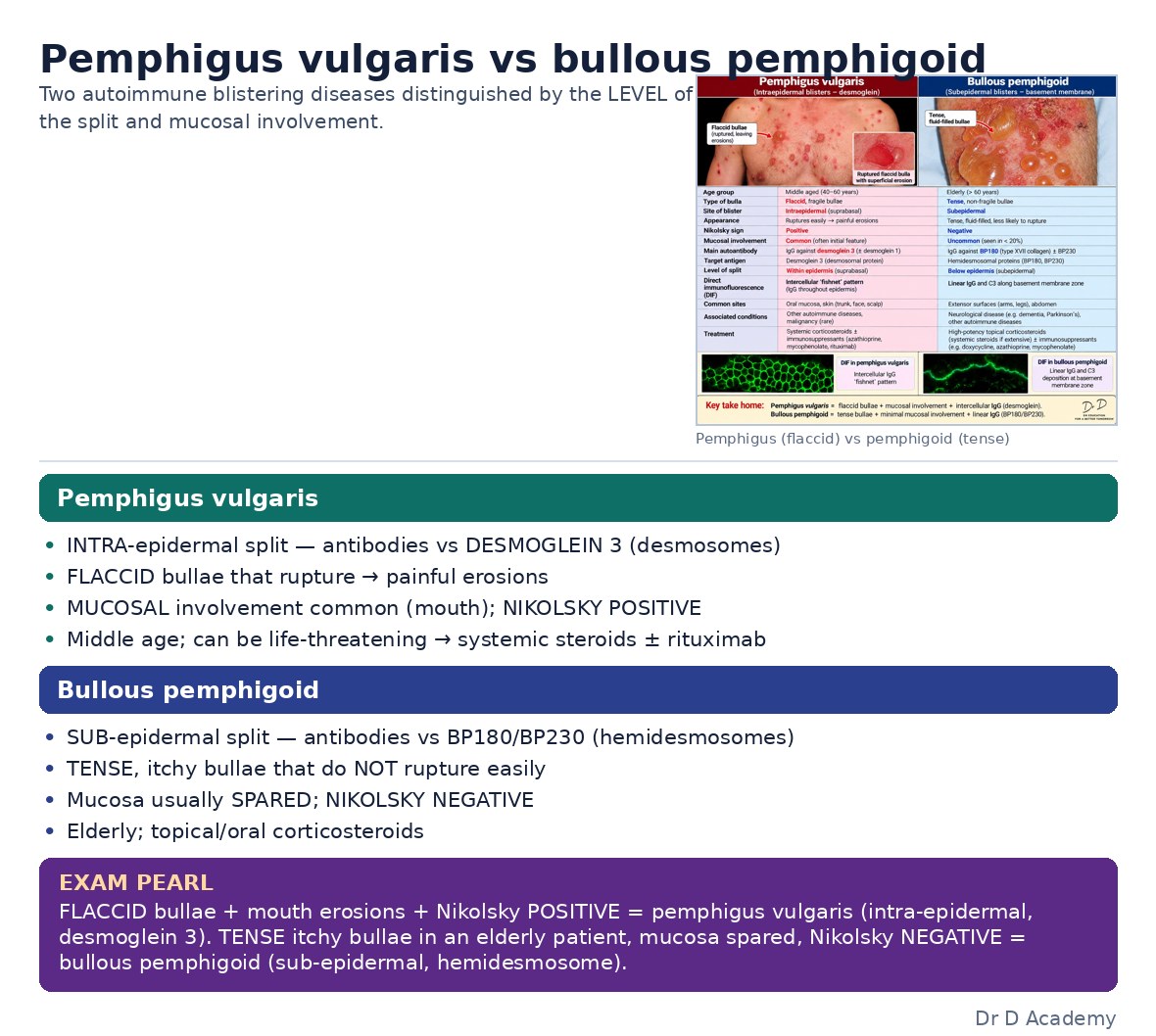
Immunobullous disorders in which autoantibodies target skin adhesion proteins, producing blisters and erosions. Pemphigus (intra-epidermal, flaccid blisters, often mucosal) is more aggressive than bullous pemphigoid (sub-epidermal, tense blisters in the elderly). Both need confirmation by biopsy and immunofluorescence and immunosuppressive treatment.
Figures & algorithms
Red flags
- Refer all suspected cases to dermatology for biopsy and immunosuppressive planning
- Admit extensive blistering/erosions or secondary sepsis for wound care, fluid balance and specialist treatment
Assessment
Investigations
- Skin biopsy for histology (level of split) plus perilesional biopsy for direct immunofluorescence (intercellular IgG in pemphigus; linear IgG/C3 along the basement membrane in pemphigoid)
- Serum indirect immunofluorescence and ELISA (anti- desmoglein; anti-BP180/BP230) support diagnosis and monitor activity
Management
- Pemphigus: systemic corticosteroids with rituximab (now first-line for moderate–severe disease) ± steroid-sparing immunosuppressants; meticulous wound/mucosal care
- Pemphigoid: potent topical corticosteroids for localised disease, oral steroids ± doxycycline/immunosuppressants for extensive disease
- Stop any culprit drug
Disposition
Refer all suspected cases to dermatology for biopsy and immunosuppressive planning.
Complications & pitfalls
- Secondary skin infection and sepsis, fluid/protein loss from widespread erosions, mucosal scarring, and the morbidity of long-term immunosuppression — infection, steroid effects; pemphigus can be fatal if untreated
Exam pearls
- Flaccid blisters with mouth erosions and a positive Nikolsky sign point to pemphigus (the more dangerous one); tense, itchy blisters in an elderly patient with spared mucosa point to pemphigoid — and a perilesional sample for direct immunofluorescence is what clinches it.
- Monitoring & follow-up: Track disease activity clinically and with antibody titres; taper immunosuppression to the lowest effective dose. Monitor for treatment toxicity (glucose, bone protection, infection prophylaxis) and screen for underlying malignancy in paraneoplastic cases.
Disclaimer: Educational decision support for qualified clinicians and students — not a substitute for clinical judgement, local protocols or a full drug reference. Confirm every dose and contraindication against your formulary before prescribing.