Chronic suppurative otitis media & cholesteatoma
Bedside summary
Chronic suppurative otitis media (CSOM) is persistent middle-ear/mastoid inflammation with a non-intact tympanic membrane and recurrent/persistent discharge (>2–6 weeks). Two broad patterns: 'safe' mucosal disease (central perforation) and 'unsafe' squamous disease — CHOLESTEATOMA — where keratinising squamous epithelium accumulates behind an attic/marginal retraction, eroding bone. Cholesteatoma is progressive and can cause serious complications, so recognising it (foul discharge, attic crust/retraction) and referring promptly is essential.
Figures & algorithms
Red flags
- Cholesteatoma features: foul-smelling discharge, attic/marginal retraction pocket with crust, granulation or aural polyp → urgent ENT
- Facial weakness, vertigo, severe headache, fever, meningism → intratemporal/intracranial complication — emergency
- Severe otalgia with granulation and cranial neuropathy in a diabetic/immunocompromised patient → necrotising otitis externa
Assessment
Differential diagnosis
- Otitis externa (canal, not middle-ear, origin)
- Simple tympanic membrane perforation without active disease
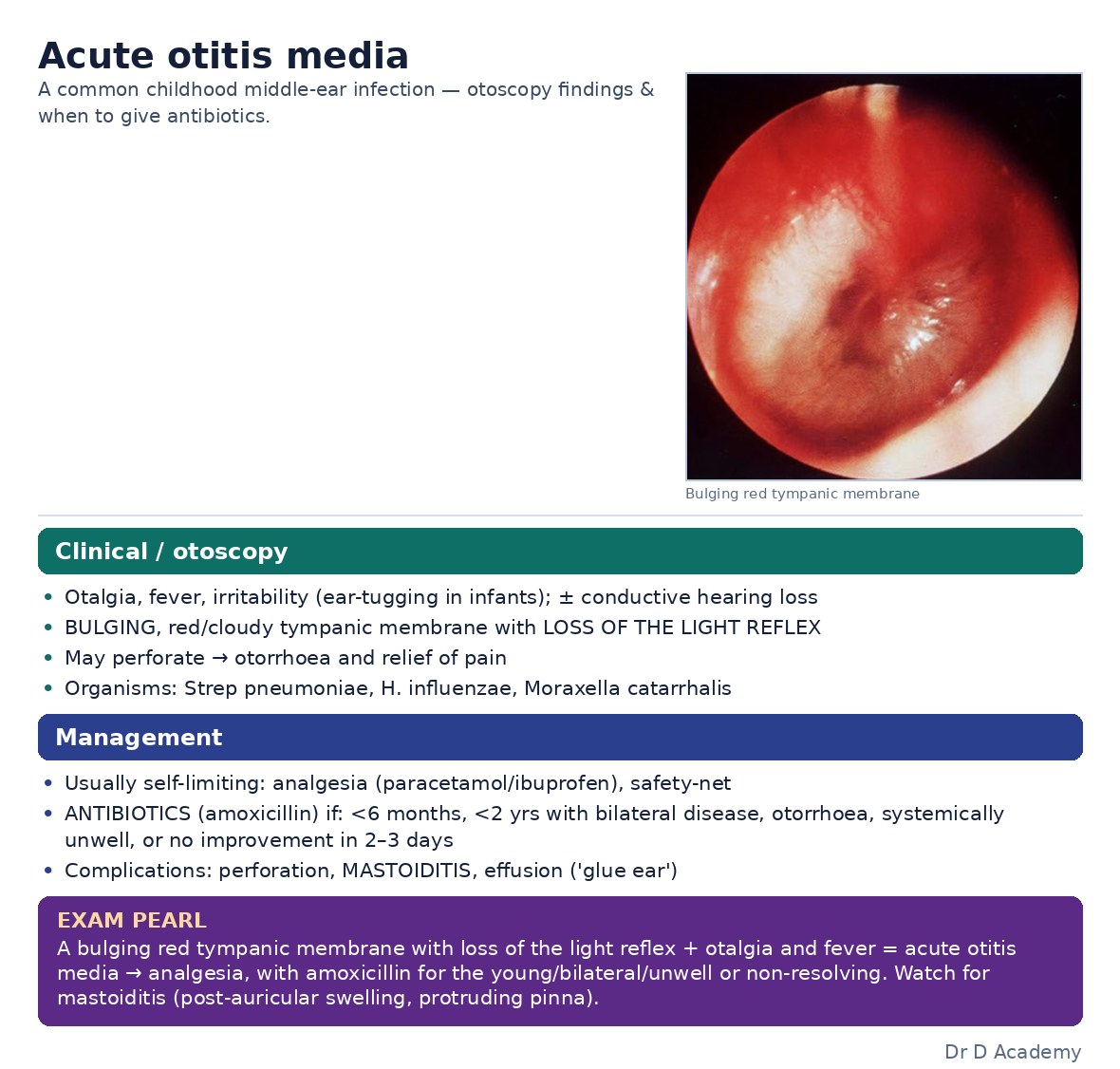
- Otitis media with effusion / acute otitis media
- Granular myringitis; keratosis obturans
- Malignant (necrotising) otitis externa in diabetic/immunocompromised (severe pain, granulation at bony–cartilaginous junction)
- Rarely middle-ear/temporal bone malignancy
Investigations
- Otoscopy/microscopy: identify perforation type — central (mucosal/"safe") vs attic/marginal retraction with keratin/crust (squamous/cholesteatoma)
- Audiometry (usually conductive loss; mixed/sensorineural suggests inner-ear involvement)
- Swab persistent discharge for microbiology (commonly Pseudomonas, Staph aureus, anaerobes)
- High-resolution CT temporal bones (± MRI) when cholesteatoma or complications are suspected — for extent and surgical planning
Management
- Aural toilet — microsuction to clear discharge and debris is the cornerstone of managing the discharging ear.
- Treat active mucosal CSOM with topical antibiotic ± steroid drops; keep the ear dry (water precautions).
- Prefer topical quinolone drops (e.g. ciprofloxacin) where there is a perforation to minimise ototoxicity risk — confirm against local policy; reserve systemic antibiotics for spreading infection/complications.
- Refer to ENT for any suspected CHOLESTEATOMA (attic retraction/crust, foul discharge, granulation) — definitive treatment is surgical (mastoidectomy/tympanoplasty).
- For safe mucosal perforations that remain dry, offer myringoplasty/tympanoplasty to close the drum and improve hearing.
- Address hearing loss (surgery ± hearing aids) and give water-precaution advice.
- Have a high index of suspicion for complications (see red flags) and escalate urgently.
Drugs & doses
Disposition
Complications & pitfalls
- Cholesteatoma: ossicular erosion and hearing loss, labyrinthine fistula, facial nerve palsy
- Mastoiditis, petrositis
- Intracranial: meningitis, brain abscess, sigmoid sinus thrombosis
- Persistent perforation and conductive hearing loss
Exam pearls
- Foul discharge + attic crust/retraction = cholesteatoma until proven otherwise — refer; it will not resolve with drops.
- Microsuction (aural toilet) plus topical quinolone drops is the mainstay for the discharging mucosal ear.
- Avoid aminoglycoside drops with a perforation where safer alternatives exist.
Educational — confirm all doses against local policy. Antibiotic doses per BNF (current edition); confirm choice in the in-app Antibiotic Dosing tool.
Disclaimer: Educational decision support for qualified clinicians and students — not a substitute for clinical judgement, local protocols or a full drug reference. Confirm every dose and contraindication against your formulary before prescribing.