DRESS syndrome
Dermatological emergency · Dermatology
Physician-written · Verified by three sets of doctors · Reviewed November 2026
Bedside summary
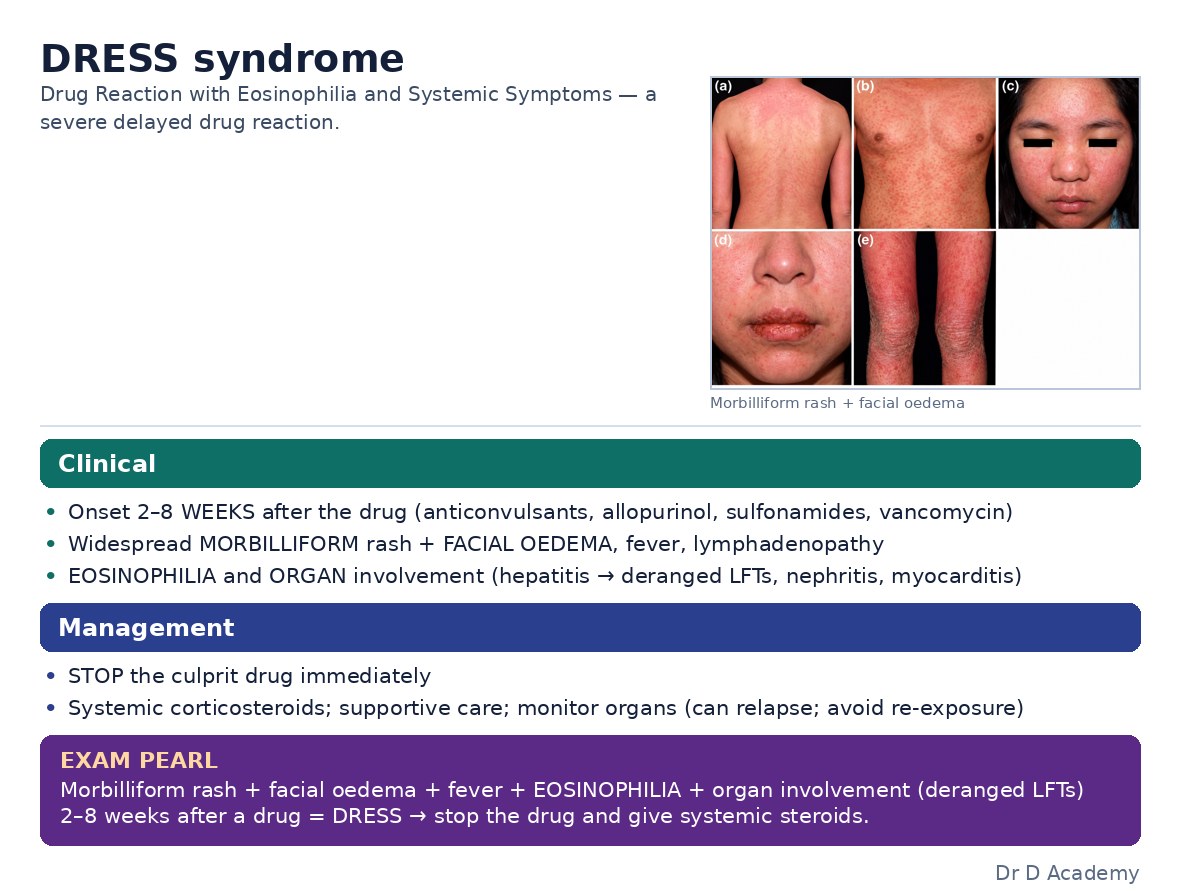
Drug Reaction with Eosinophilia and Systemic Symptoms — rash, fever, lymphadenopathy, eosinophilia and internal-organ involvement (esp. liver), 2–6 weeks after a drug.
Figures & algorithms
Red flags
- Transaminitis/hepatic failure
- Myocarditis, AKI
- Extensive rash, high eosinophilia
Assessment
Differential diagnosis
- SJS/TEN
- Acute viral illness
- Serum sickness
- Lymphoma
- Sepsis
Investigations
- FBC (eosinophilia), LFT (hepatitis), U&E, CRP
- Identify culprit drug (anticonvulsants, allopurinol, sulfonamides)
- Dermatology referral
Management
- STOP the culprit drug
- Supportive care; systemic corticosteroids for organ involvement (specialist)
- Monitor liver/renal/cardiac function
- Dermatology + relevant organ specialty
- Avoid the culprit drug class lifelong; counsel
Drugs & doses
Stop culprit drug
Systemic corticosteroids (organ involvement)
Supportive care
Disposition
Admit; dermatology; ICU if organ failure.
Complications & pitfalls
- Fulminant hepatitis
- Myocarditis
- Long-term autoimmune sequelae
Exam pearls
- Long latency (2–6 weeks) distinguishes it from other drug rashes
- Liver involvement drives mortality
- Anticonvulsants and allopurinol are classic triggers
Stop the drug, check for organ (especially liver) involvement, and treat with steroids under specialist care.
Disclaimer: Educational decision support for qualified clinicians and students — not a substitute for clinical judgement, local protocols or a full drug reference. Confirm every dose and contraindication against your formulary before prescribing.