Epiglottitis (adult)
Airway emergency · ENT
Physician-written · Verified by three sets of doctors · Reviewed November 2026
Bedside summary
Life-threatening supraglottic inflammation. Rapidly progressive airway obstruction; do not distress the patient or examine the throat aggressively.
Figures & algorithms
Red flags
- Stridor, drooling, tripod posture, muffled voice
- Rapid deterioration
- Hypoxia
Assessment
Differential diagnosis
- Peritonsillar abscess
- Ludwig’s angina
- Croup (children)
- Anaphylaxis
- Foreign body
Investigations
- Do NOT examine the throat or lie the patient down if airway threatened
- Senior airway team to assess (often fibreoptic in theatre)
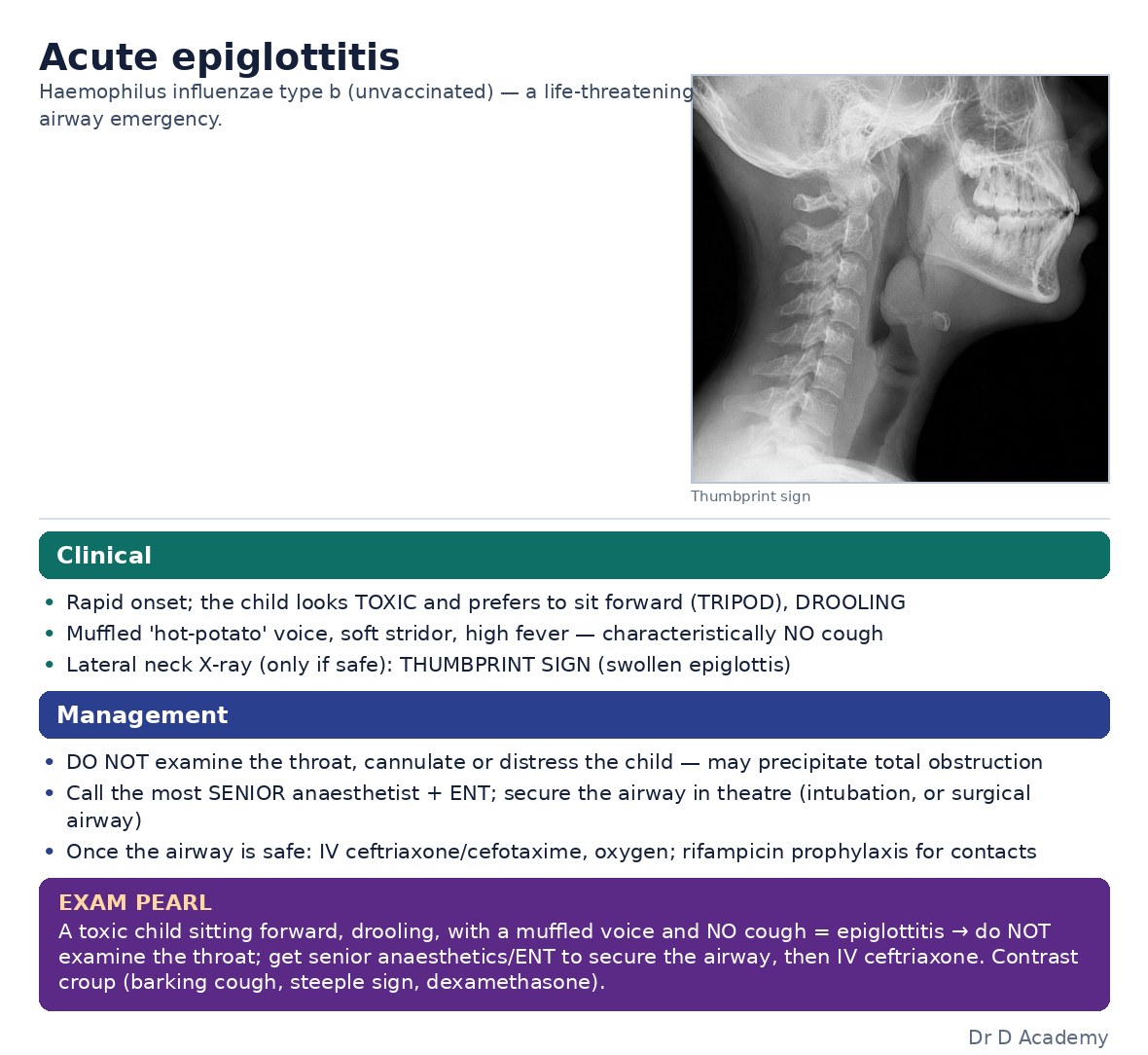
- Lateral neck X-ray (“thumbprint”) only if stable and airway safe
Management
- Keep the patient calm and upright; high-flow oxygen
- Urgent senior anaesthetics + ENT — controlled airway in theatre
- IV broad-spectrum antibiotics (e.g. ceftriaxone) after airway secured/safe
- Nebulised adrenaline + steroids may temporise
- Do not attempt blind/distressing airway manoeuvres
Drugs & doses
IV ceftriaxone (or local)
Nebulised adrenaline; steroids
Difficult-airway/surgical-airway kit
Disposition
ICU/theatre; ENT + anaesthetics.
Complications & pitfalls
- Complete airway obstruction
- Sepsis, death
Exam pearls
- Keep them calm and upright — agitation can precipitate obstruction
- Secure the airway before investigations
- Now more common in adults than children (Hib vaccine)
Don’t distress the patient; get senior airway help to control the airway in theatre, then antibiotics.
Disclaimer: Educational decision support for qualified clinicians and students — not a substitute for clinical judgement, local protocols or a full drug reference. Confirm every dose and contraindication against your formulary before prescribing.