Erythroderma
Dermatological emergency · Dermatology
Physician-written · Verified by three sets of doctors · Reviewed November 2026
Bedside summary
Generalised erythema involving >90% of the body surface (drug reaction, psoriasis, eczema, lymphoma). Impaired thermoregulation, fluid loss and high-output cardiac failure.
Figures & algorithms
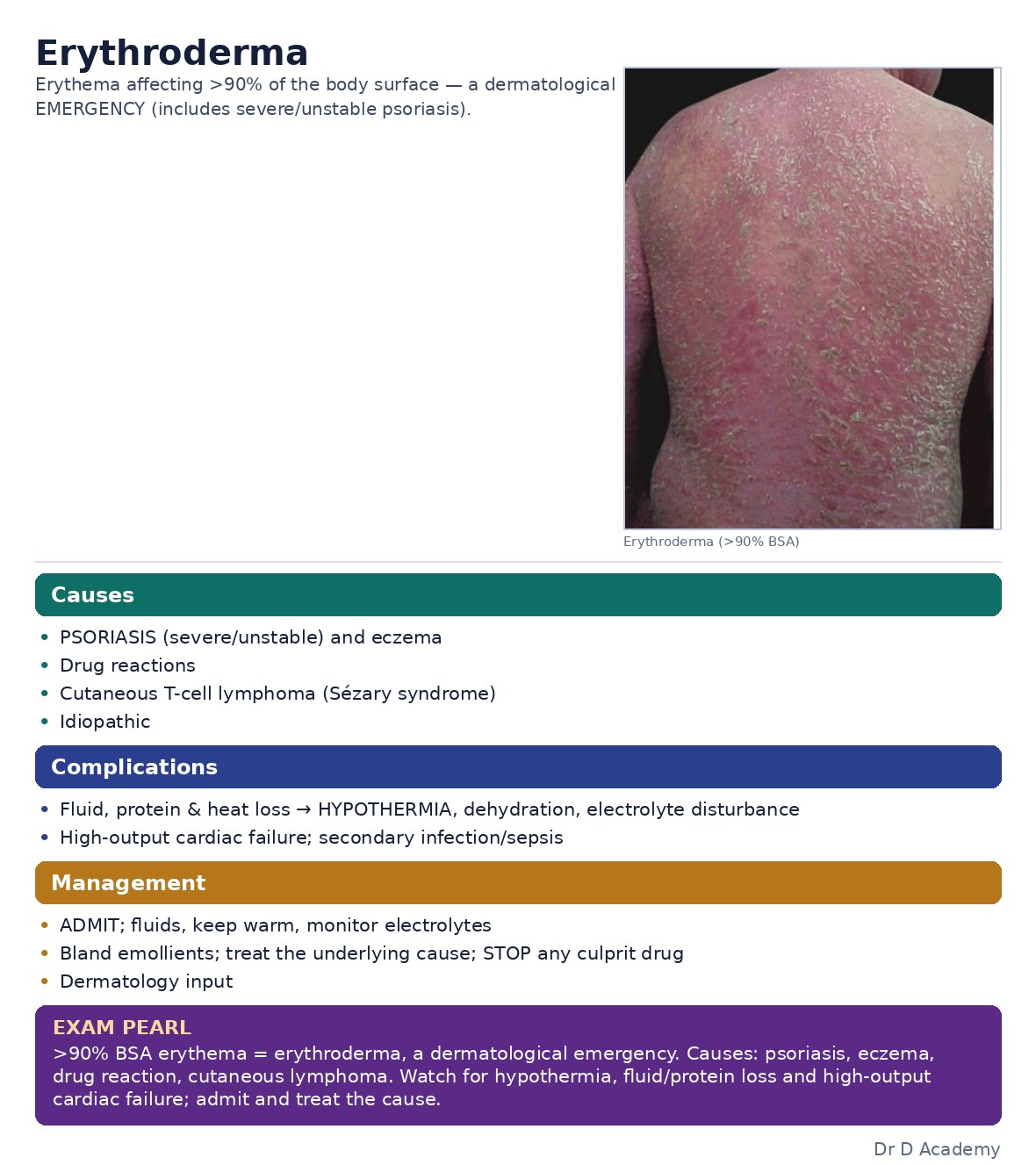
Red flags
- Haemodynamic instability/high-output failure
- Hypothermia, sepsis
- Significant fluid/electrolyte derangement
Assessment
Differential diagnosis
- SJS/TEN
- Severe drug eruption
- Cutaneous lymphoma (Sézary)
- Pustular psoriasis
Investigations
- FBC, U&E, LFT, albumin, cultures
- Identify cause/culprit drug
- Dermatology referral ± biopsy
Management
- Supportive care: fluids, temperature regulation, emollients
- Stop any culprit drug; treat underlying cause
- Monitor fluid balance/electrolytes; watch for sepsis and high-output failure
- Dermatology referral; admit
- Avoid further skin insults
Drugs & doses
IV fluids; emollients
Treat underlying cause; stop culprit drug
Empirical antibiotics per BNF — see the in-app Antibiotic Dosing tool
Disposition
Admit; dermatology; HDU if unstable.
Complications & pitfalls
- Hypothermia, dehydration
- High-output cardiac failure
- Sepsis
Exam pearls
- Treat like a burn — fluids, warmth, skin care
- Watch for high-output cardiac failure and infection
- Find and remove the trigger
Supportive burn-like care (fluids, warmth, emollients), remove the trigger, and admit under dermatology. Antibiotic doses per BNF (current edition); confirm choice in the in-app Antibiotic Dosing tool.
Disclaimer: Educational decision support for qualified clinicians and students — not a substitute for clinical judgement, local protocols or a full drug reference. Confirm every dose and contraindication against your formulary before prescribing.