Impetigo & ecthyma (incl. bullous impetigo)
impetigo, bullous impetigo, ecthyma, non-bullous impetigo, school sores, Staphylococcus aureus, Streptococcus pyogenes · Dermatology
Physician-written · Verified by three sets of doctors · Reviewed November 2026
Bedside summary
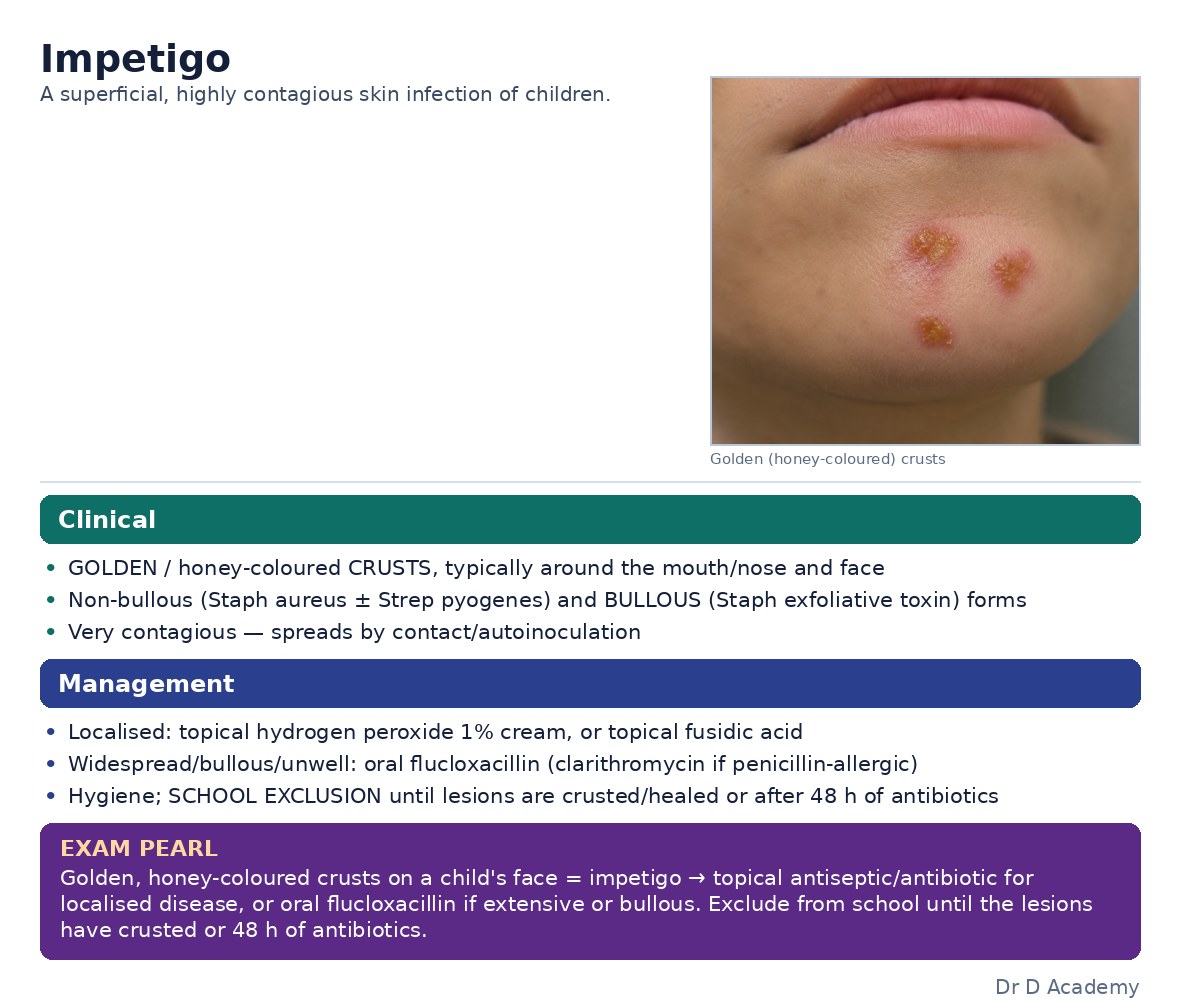
Common contagious superficial skin infection, usually Staphylococcus aureus and/or group A Streptococcus. Non-bullous (golden-crusted) is most common; bullous impetigo is toxin-mediated S. aureus. Ecthyma is a deeper ulcerative form reaching the dermis with scarring. Treatment depends on extent; antibiotic stewardship favours topical therapy for localised disease.
Figures & algorithms
Red flags
- Rapidly spreading erythema, pain out of proportion, systemic sepsis - cellulitis/necrotising infection
- Widespread flaccid bullae with Nikolsky sign and fever in a child - staphylococcal scalded skin syndrome
- Post-streptococcal glomerulonephritis (haematuria, oedema, hypertension 1-3 weeks after GAS impetigo)
- Eczema herpeticum masquerading as impetiginised eczema (punched-out monomorphic erosions, systemically unwell)
- Immunocompromised with necrotic ulcer - ecthyma gangrenosum (Pseudomonas sepsis)
Assessment
Differential diagnosis
- Herpes simplex / eczema herpeticum
- Eczema (impetiginised) / contact dermatitis
- Tinea / kerion
- Scabies with secondary infection
- Pemphigus / bullous pemphigoid (bullous impetigo vs)
- Staphylococcal scalded skin syndrome (widespread bullous)
- Cutaneous diphtheria / ecthyma gangrenosum (Pseudomonas, in immunocompromised)
Investigations
- Clinical diagnosis
- Swab exudate for culture/sensitivity if extensive, recurrent, treatment failure, or MRSA risk
- Consider nasal/skin MRSA screen in recurrent cases
- Check for underlying skin disease (eczema, scabies) and treat it
- Urinalysis if post-streptococcal glomerulonephritis suspected (haematuria/oedema after GAS impetigo)
Management
- Localised non-bullous impetigo: hydrogen peroxide 1% cream first-line (NICE) or a short topical antibiotic; soak/remove crusts, hygiene advice
- Widespread, bullous, or systemically unwell: oral antibiotic (flucloxacillin first-line; clarithromycin/erythromycin if penicillin-allergic)
- Ecthyma: oral antibiotics (deeper infection), wound care
- MRSA-positive or risk: guide by sensitivities (e.g. doxycycline, co-trimoxazole, clindamycin) [verify local]
- Hygiene/infection control: handwashing, own towel, avoid scratching, cover lesions; children stay off school/nursery until lesions crusted/healed or 48 h of antibiotics
- Treat any underlying dermatosis (eczema, scabies) and decolonise if recurrent
- Safety-net for post-streptococcal glomerulonephritis and spreading cellulitis
Drugs & doses
Hydrogen peroxide 1% cream applied twice-three times daily for 5 days (localised non-bullous, first-line NICE)
Topical fusidic acid 2% three times daily for 5 days (localised, if H2O2 unsuitable) [verify local]
Flucloxacillin 500 mg ORAL four times daily for 5 days (adult; widespread/bullous); child dose weight-based [verify local]
Clarithromycin 250-500 mg ORAL twice daily for 5 days if penicillin-allergic (or erythromycin, safe in pregnancy) [verify local]
Co-amoxiclav 625 mg ORAL three times daily for ecthyma/mixed infection [verify local]
MRSA: doxycycline 100 mg ORAL twice daily, or co-trimoxazole, or clindamycin per sensitivities [verify local]
Topical mupirocin for MRSA nasal decolonisation if recurrent [verify local]
Disposition
Discharge with topical/oral therapy and hygiene advice for most. Admit if systemically unwell, extensive bullous disease, SSSS, or suspected deeper/necrotising infection. Dermatology/paediatric input for recurrent or severe cases.
Complications & pitfalls
- Cellulitis and local spread
- Staphylococcal scalded skin syndrome (toxin-mediated)
- Post-streptococcal glomerulonephritis
- Scarring (ecthyma)
- Recurrence from S. aureus carriage / untreated underlying dermatosis
- Outbreaks in schools/households
Exam pearls
- NICE 2020 impetigo guidance: hydrogen peroxide 1% cream first-line for localised non-bullous disease to reduce antibiotic use; reserve oral antibiotics for widespread/bullous/systemic disease
- Flucloxacillin covers both Staph and Strep for oral therapy; use macrolide in penicillin allergy/pregnancy
- Always look for and treat the underlying condition (eczema, scabies) in recurrent impetigo
- Exclude from school until lesions healed/crusted or 48 h of antibiotic treatment
- Watch for post-streptococcal glomerulonephritis after GAS impetigo (does not prevent it with antibiotics)
Disclaimer: Educational decision support for qualified clinicians and students — not a substitute for clinical judgement, local protocols or a full drug reference. Confirm every dose and contraindication against your formulary before prescribing.