Measles — acute exanthem & complications
Bedside summary
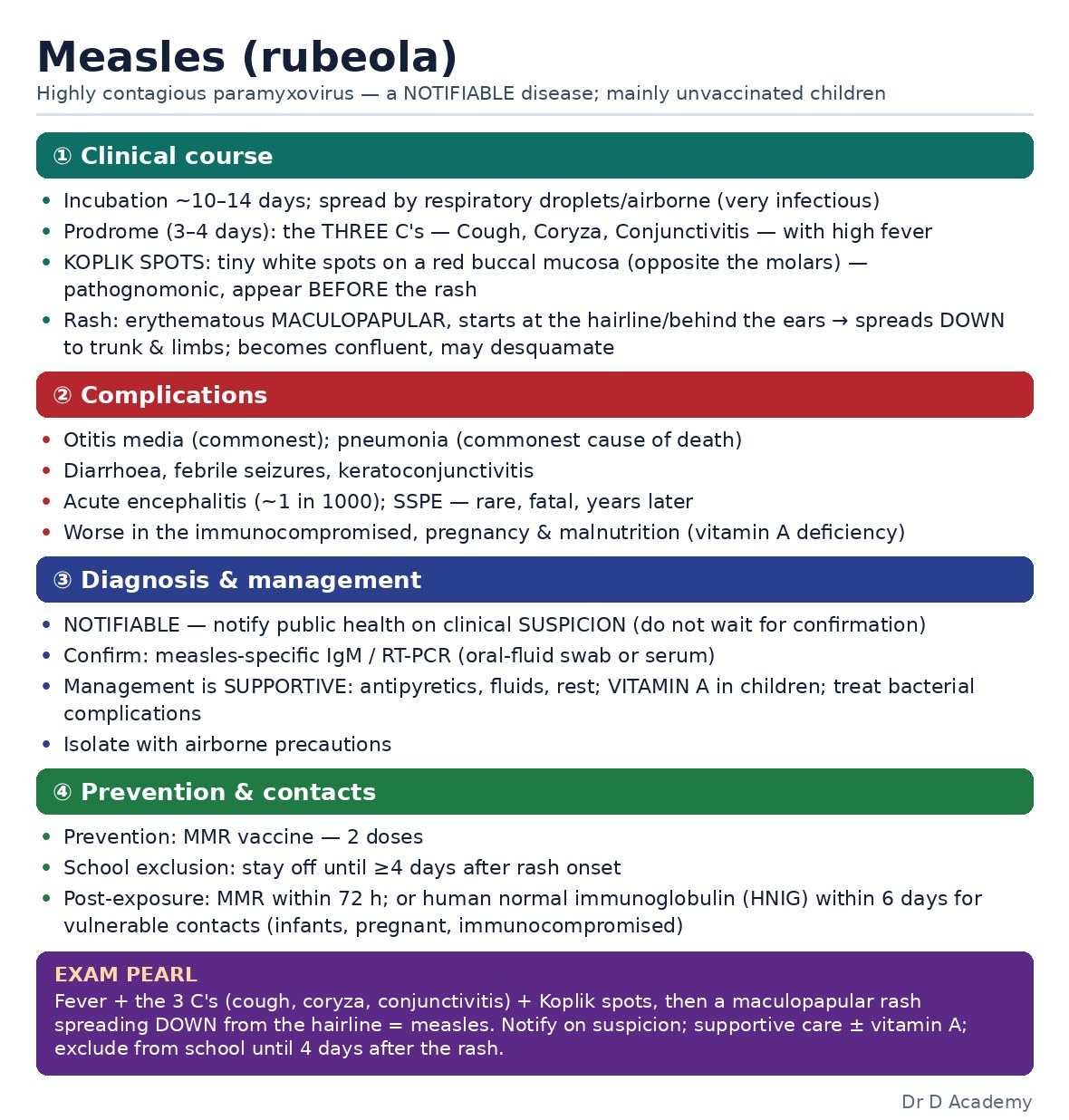
Measles is a highly contagious notifiable viral illness presenting with prodromal fever, cough, coryza and conjunctivitis, pathognomonic Koplik spots, then a descending morbilliform (maculopapular) rash. It is dangerous in infants, pregnant and immunocompromised patients. Management is supportive with vitamin A, strict infection control/isolation and prompt public-health notification; recognition protects contacts as much as the patient.
Figures & algorithms
Red flags
- Respiratory distress (measles pneumonia)
- Drowsiness, seizures or focal signs (encephalitis)
- Infant, pregnant or immunocompromised patient
- Severe dehydration
Assessment
Differential diagnosis
- Other viral exanthems: rubella, parvovirus B19, roseola, enterovirus, dengue
- Scarlet fever, Kawasaki disease, drug eruption
- Rickettsial infection, toxic shock, secondary syphilis
Investigations
- Clinical suspicion plus confirmatory testing: measles IgM serology and/or RT-PCR (oral fluid, throat swab, urine) per local public-health pathway
- NOTIFY public health urgently on clinical suspicion — do not wait for confirmation
- Assess hydration, respiratory status and for complications (otitis media, pneumonia, encephalitis)
- Check immunisation and pregnancy status and identify vulnerable contacts
Management
- Isolate the patient immediately (airborne precautions) and notify public health on suspicion — this is time-critical for contacts.
- Provide supportive care: antipyretics, fluids/hydration, and treat secondary bacterial infections (e.g. otitis media, pneumonia).
- Give vitamin A to children with measles (and other at-risk groups) per WHO/local guidance — it reduces morbidity and mortality.
- Identify susceptible exposed contacts for post-exposure prophylaxis (MMR vaccine or immunoglobulin) within the recommended window — prioritise infants, pregnant and immunocompromised contacts.
- Monitor for and manage complications: pneumonia, severe diarrhoea/dehydration, encephalitis.
- Counsel on the later risk of subacute sclerosing panencephalitis and reinforce routine MMR vaccination.
Drugs & doses
Disposition
Complications & pitfalls
- Pneumonia (leading cause of death)
- Acute encephalitis
- Otitis media and severe diarrhoea
- Subacute sclerosing panencephalitis (late)
Exam pearls
- Koplik spots precede the rash and are pathognomonic — look inside the mouth.
- Notify public health and isolate on clinical suspicion, before confirmation.
- Vitamin A reduces measles morbidity and mortality in children.
Educational — confirm all doses against local policy. Antibiotic doses per BNF (current edition); confirm choice in the in-app Antibiotic Dosing tool.
Disclaimer: Educational decision support for qualified clinicians and students — not a substitute for clinical judgement, local protocols or a full drug reference. Confirm every dose and contraindication against your formulary before prescribing.