Skin cancer (melanoma & non-melanoma)
Dermatology · Dermatology
Physician-written · Verified by three sets of doctors · Reviewed November 2026
Bedside summary
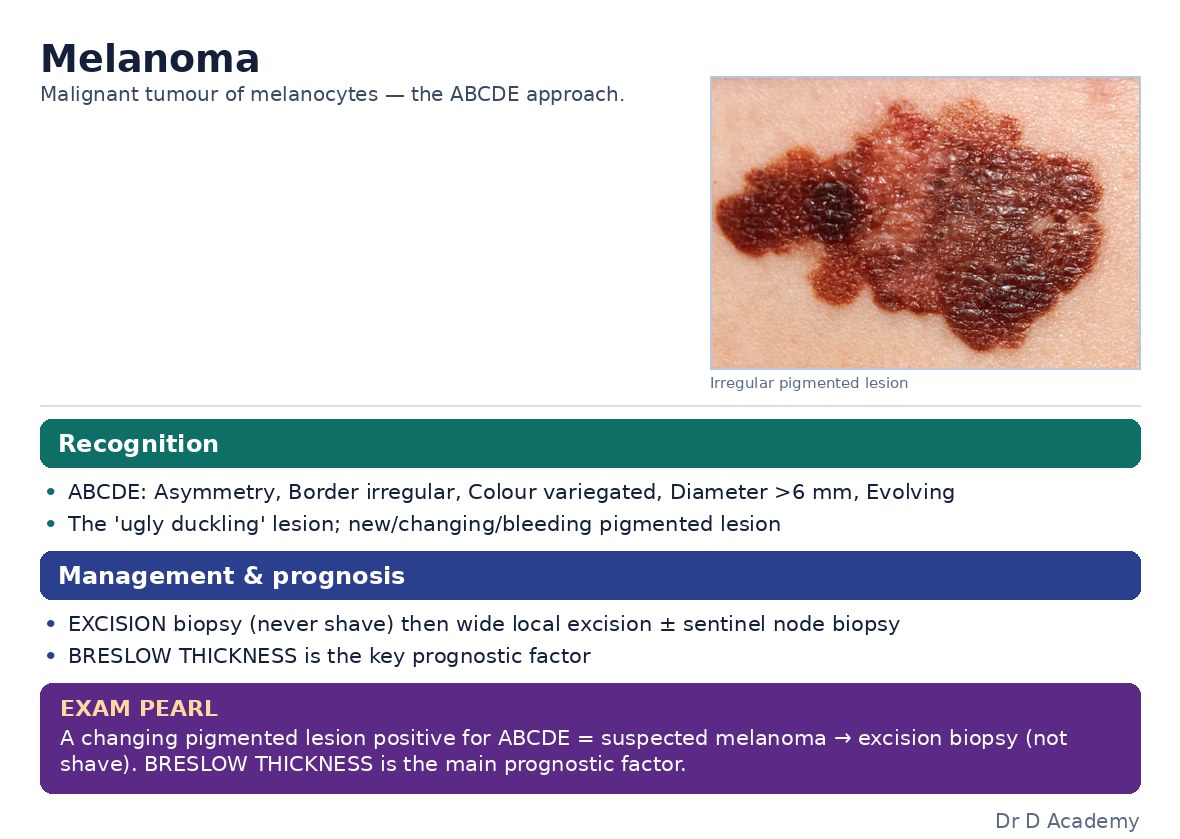
The common skin malignancies — basal cell and squamous cell carcinoma (non-melanoma) and melanoma. Early recognition of a changing, ulcerated or atypical lesion and prompt referral/excision are what change outcomes, especially for melanoma. First action: examine the lesion with the ABCDE rule and arrange dermatology assessment for anything suspicious.
Figures & algorithms
Red flags
- Urgent (2-week) dermatology referral for suspected melanoma or SCC, and for a pigmented lesion scoring on a weighted checklist
- Routine referral for suspected BCC
- Specialist skin- cancer MDT for all melanomas and high-risk/incompletely excised tumours
Assessment
Investigations
- Dermoscopy by a trained clinician
- Excisional biopsy for suspected melanoma (histology with Breslow thickness, ulceration, mitoses drives staging/prognosis)
- Biopsy/excision for SCC/atypical BCC
- Staging investigations (imaging, sentinel node biopsy) for higher-risk melanoma/SCC via specialist MDT
Management
- Non-melanoma: surgical excision (Mohs for high-risk facial BCC); alternatives for superficial/low-risk BCC and in-situ disease (curettage, cryotherapy, topical imiquimod/5- FU, photodynamic therapy); radiotherapy where surgery is unsuitable
- Melanoma: wide local excision by Breslow thickness, sentinel-node biopsy for staging, and for advanced/metastatic disease, immunotherapy (checkpoint inhibitors) or targeted therapy (BRAF/MEK)
- Sun protection and surveillance for all
Disposition
Urgent (2-week) dermatology referral for suspected melanoma or SCC, and for a pigmented lesion scoring on a weighted checklist.
Complications & pitfalls
- Local tissue destruction and recurrence (BCC), nodal and distant metastasis (melanoma, high-risk SCC), and a raised risk of further skin cancers; advanced melanoma carries a poor prognosis
Exam pearls
- Trust the "ugly duckling" — a single mole that looks different from the patient's others, or one that is changing, deserves dermoscopy and excision, because early-stage melanoma is curable and thick melanoma often is not.
- Monitoring & follow-up: Risk-based skin surveillance (higher for melanoma, multiple lesions, immunosuppressed/transplant patients), with education in self-examination and sun protection. Stage-directed follow-up and imaging for melanoma/high-risk SCC per MDT.
Disclaimer: Educational decision support for qualified clinicians and students — not a substitute for clinical judgement, local protocols or a full drug reference. Confirm every dose and contraindication against your formulary before prescribing.