Staphylococcal scalded skin syndrome
Infection · Dermatology
Physician-written · Verified by three sets of doctors · Reviewed November 2026
Bedside summary
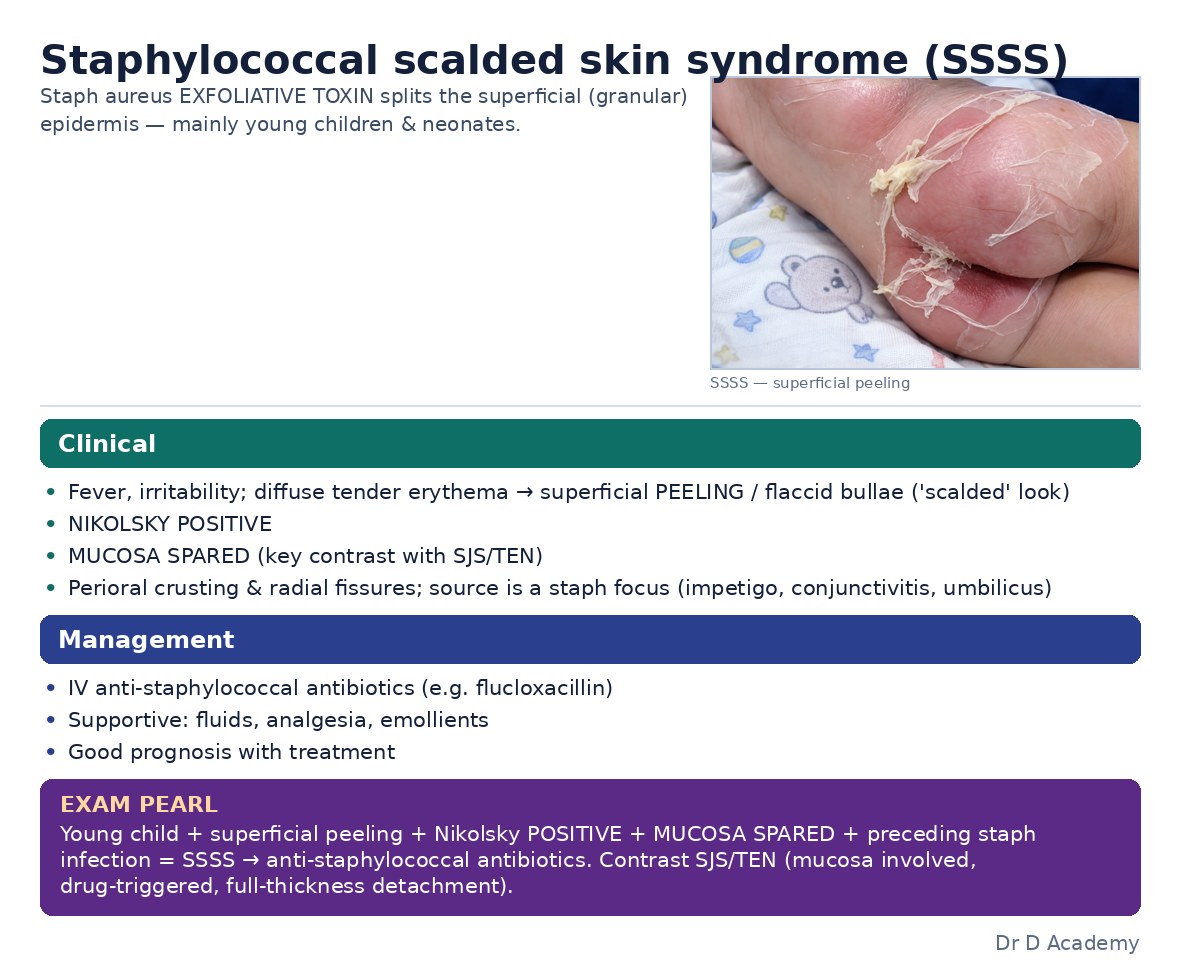
Toxin-mediated epidermal splitting (mainly young children) — diffuse erythema, superficial peeling and positive Nikolsky, with mucosa SPARED (unlike TEN).
Figures & algorithms
Red flags
- Extensive peeling, sepsis
- Significant fluid/electrolyte loss
- Neonate/immunosuppressed
Assessment
Differential diagnosis
- SJS/TEN (mucosa involved)
- Severe impetigo
- Burn
- Toxic shock syndrome
Investigations
- Clinical diagnosis; bacterial swabs/cultures
- FBC, U&E (fluid loss); identify focus
- Biopsy if diagnosis unclear (superficial split)
Management
- IV anti-staphylococcal antibiotics (e.g. flucloxacillin) ± clindamycin (anti-toxin)
- Burn-like supportive care: fluids, analgesia, temperature control, emollients/skin care
- Identify and treat the source of infection
- Paediatrics/dermatology; admit
- Avoid steroids
Drugs & doses
IV flucloxacillin ± clindamycin
IV fluids, analgesia, emollients
Disposition
Admit; paediatrics/dermatology; HDU if extensive.
Complications & pitfalls
- Sepsis, dehydration
- Secondary infection
- Usually heals without scarring if treated
Exam pearls
- Mucosa is SPARED (vs SJS/TEN which involves mucosa)
- Anti-staphylococcal antibiotics + burn-like care
- Commonest in young children
Anti-staph antibiotics + clindamycin, burn-like supportive care; mucosal sparing distinguishes it from TEN.
Disclaimer: Educational decision support for qualified clinicians and students — not a substitute for clinical judgement, local protocols or a full drug reference. Confirm every dose and contraindication against your formulary before prescribing.