Superficial fungal skin infections (dermatophytosis - tinea corporis/cruris/pedis/capitis, pityriasis versicolor, cutaneous candidiasis)
tinea, ringworm, dermatophyte, athlete's foot, tinea pedis, tinea cruris, tinea capitis, pityriasis versicolor, tinea versicolor, cutaneous candidiasis, intertrigo · Dermatology
Physician-written · Verified by three sets of doctors · Reviewed November 2026
Bedside summary
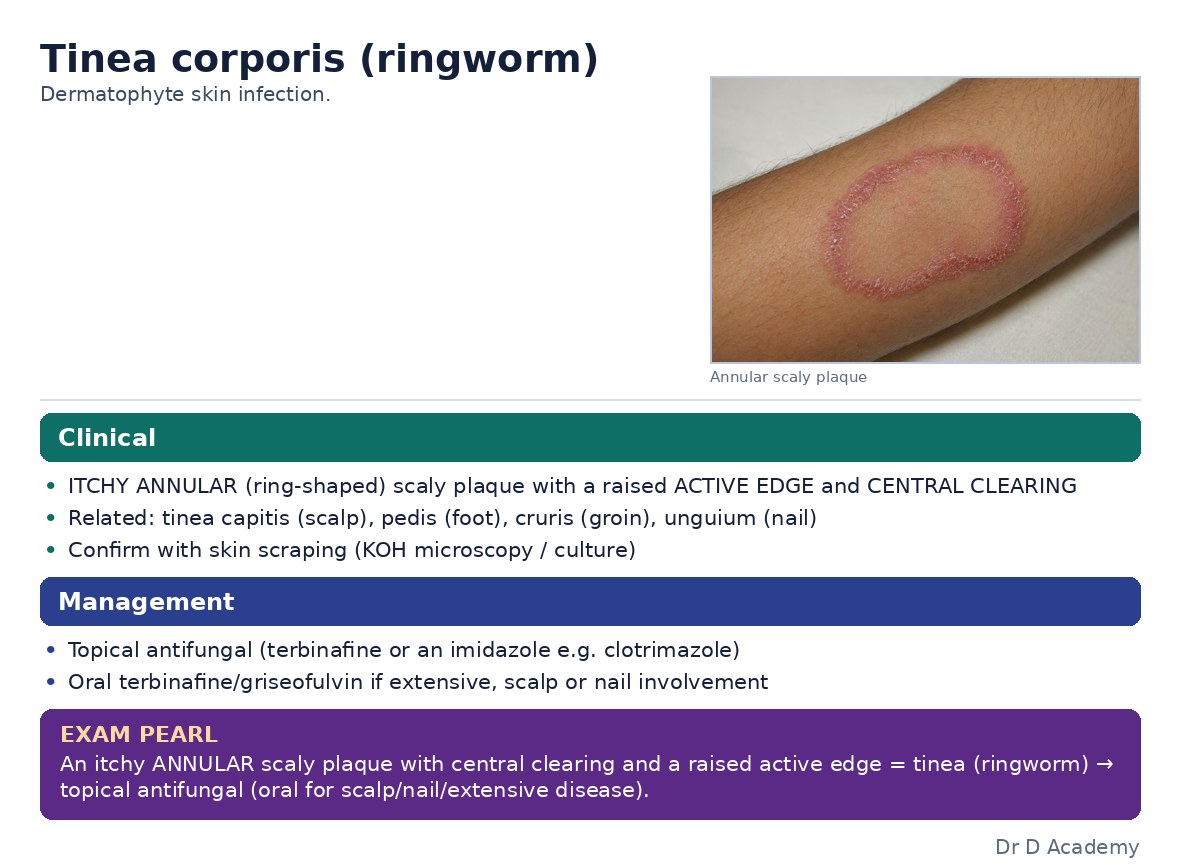
Superficial mycoses of keratinised skin. Dermatophytes (Trichophyton, Microsporum) cause annular scaly 'ringworm' (tinea), Malassezia causes hypo/hyperpigmented pityriasis versicolor, and Candida causes moist flexural intertrigo. Scalp (tinea capitis) and nail disease need oral therapy. Note the global rise of terbinafine-resistant Trichophyton indotineae, important in the Indian subcontinent.
Figures & algorithms
Red flags
- Tinea capitis with boggy, pustular, tender swelling (kerion) - risk of scarring alopecia, needs oral antifungal +/- short steroid
- Extensive/atypical dermatophytosis - consider immunosuppression / HIV / diabetes
- Treatment-resistant widespread tinea (Trichophyton indotineae / terbinafine resistance)
- Candidaemia risk in immunocompromised with widespread candidiasis
- Facial 'eczema' worsening on topical steroid - tinea incognito
Assessment
Differential diagnosis
- Eczema / nummular dermatitis
- Psoriasis (esp. tinea incognito after topical steroid)
- Pityriasis rosea
- Erythrasma (Corynebacterium - coral-red Wood's lamp; flexural)
- Seborrhoeic dermatitis
- Vitiligo / post-inflammatory hypopigmentation (vs versicolor)
- Granuloma annulare
- Inverse psoriasis / bacterial intertrigo
Investigations
- Skin scraping / nail clipping / plucked hair for KOH microscopy and fungal culture (confirm before oral therapy, esp. nails/scalp)
- Wood's lamp: pityriasis versicolor pale yellow-green; some Microsporum green; erythrasma coral-red
- Culture/PCR to identify species and resistance where treatment failure (consider T. indotineae / terbinafine resistance)
- Screen for diabetes/immunosuppression in extensive or recurrent candidiasis
Management
- Confirm diagnosis (KOH) before starting oral antifungals, particularly for scalp and nails
- Localised tinea corporis/cruris/pedis: topical antifungal (imidazole or terbinafine) for 2-4 weeks, continue 1-2 weeks after clearance
- Extensive/recurrent dermatophytosis, tinea capitis, or nail involvement: oral antifungal (terbinafine first-line for dermatophytes)
- Tinea capitis: ALWAYS oral therapy (topicals do not penetrate follicle) + antifungal shampoo to reduce spread; treat household contacts
- Pityriasis versicolor: topical ketoconazole/selenium sulfide; oral itraconazole if extensive (counsel pigment takes weeks-months to normalise)
- Cutaneous candidiasis/intertrigo: topical imidazole or nystatin, keep area dry, treat predisposing moisture/diabetes
- Address source and avoid topical steroid monotherapy (causes tinea incognito)
- If terbinafine failure in recurrent tinea (esp. South Asia) - consider resistant Trichophyton, use itraconazole and prolonged course [verify local]
Drugs & doses
Topical terbinafine 1% cream once-twice daily for 1-2 weeks (dermatophyte); or clotrimazole 1% / miconazole 2% twice daily 2-4 weeks
Terbinafine 250 mg ORAL once daily: tinea corporis/cruris 2-4 weeks, tinea pedis 2-6 weeks, onychomycosis fingernail 6 weeks / toenail 12 weeks [verify local]
Itraconazole 100-200 mg ORAL once daily (alternative; preferred if terbinafine resistance / T. indotineae - often 200 mg od for 4+ weeks) [verify local dose]
Griseofulvin 10-20 mg/kg/day ORAL (Microsporum tinea capitis in children; with fatty food) or terbinafine for Trichophyton capitis [verify local dose]
Tinea capitis child terbinafine (weight-based): e.g. ~62.5 mg/day <20 kg, 125 mg 20-40 kg, 250 mg >40 kg, for 4 weeks [verify local dose]
Pityriasis versicolor: ketoconazole 2% shampoo applied to body, left 5-10 min, daily for 5-7 days; or selenium sulfide 2.5%; itraconazole 200 mg ORAL od 5-7 days if extensive [verify local]
Cutaneous candidiasis: topical clotrimazole or nystatin cream twice daily; fluconazole 150 mg ORAL weekly or 50 mg daily for extensive disease [verify local dose]
Disposition
Community/GP management for localised disease. Refer for diagnostic doubt, tinea capitis/kerion, onychomycosis needing confirmation, immunosuppression, or terbinafine-resistant recurrent tinea.
Complications & pitfalls
- Scarring alopecia from untreated kerion
- Secondary bacterial infection (cellulitis via tinea pedis fissures - entry portal)
- Chronic recurrent disease and spread to contacts
- Persistent dyspigmentation after versicolor
- Id reaction (dermatophytid)
Exam pearls
- Confirm with KOH/culture before oral antifungals and always for scalp/nail disease
- Tinea capitis needs ORAL therapy - topicals fail; treat Microsporum with griseofulvin, Trichophyton with terbinafine
- Tinea pedis/interdigital maceration is a common portal for recurrent lower-limb cellulitis - treat it
- Rising terbinafine-resistant T. indotineae (India and worldwide): if failure, switch to itraconazole and prolong
- Topical steroid alone creates tinea incognito - always consider fungus in atypical steroid-responsive 'eczema'
- Warn that versicolor pigment change persists for months after cure - it is not treatment failure
Disclaimer: Educational decision support for qualified clinicians and students — not a substitute for clinical judgement, local protocols or a full drug reference. Confirm every dose and contraindication against your formulary before prescribing.