Fournier gangrene (necrotising perineal infection)
Bedside summary
A rapidly progressive necrotising fasciitis of the perineal, genital and perianal region, usually polymicrobial (synergistic aerobes and anaerobes). It carries high mortality and most often affects patients with diabetes, immunosuppression or local anorectal/urogenital infection. The safety principle is urgent recognition and IMMEDIATE, aggressive surgical debridement combined with broad-spectrum antibiotics and resuscitation — delay kills.
Figures & algorithms
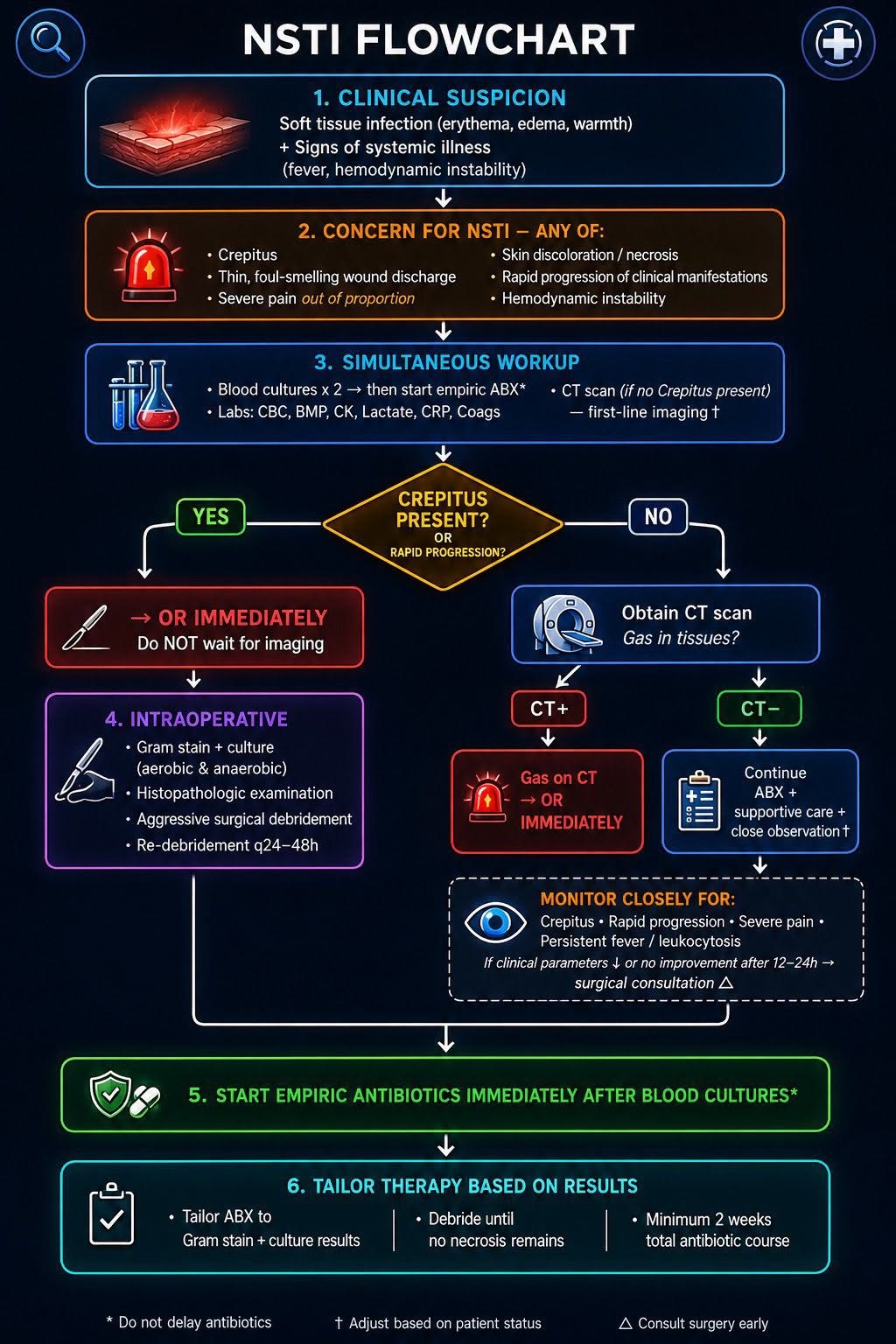
Red flags
- Pain out of proportion to skin findings
- Crepitus, skin necrosis, bullae or a foul "dishwater" discharge
- Rapid spread and systemic toxicity/septic shock
- Immunosuppression or poorly controlled diabetes
Assessment
Differential diagnosis
- Severe cellulitis or a perianal/scrotal abscess (do not under-call a necrotising process)
- Perianal Crohn/abscess, strangulated hernia, epididymo-orchitis as the source
- Pain out of proportion to skin signs, crepitus or systemic toxicity should trigger escalation
Investigations
- Primarily a CLINICAL and surgical diagnosis — do NOT delay debridement for imaging
- Bloods: FBC, U&E, CRP, glucose/HbA1c, lactate, coagulation, blood cultures; the LRINEC score may support but never rules out the diagnosis
- CT can delineate extent and source (gas, fascial involvement) if it does not delay surgery
Management
- Resuscitate aggressively for sepsis/septic shock (IV fluids, oxygen, early review) and control glucose.
- Start EARLY broad-spectrum IV antibiotics covering Gram-positives (including MRSA where relevant), Gram-negatives and anaerobes, plus an antitoxin agent (e.g. clindamycin or linezolid) for toxin suppression.
- Arrange IMMEDIATE surgical debridement — radical excision of all necrotic tissue; the extent is usually greater than the skin suggests.
- Plan repeated second-look debridements every 24–48 h until all necrotic tissue is removed.
- Divert as needed: consider urinary catheter/suprapubic diversion and faecal diversion (colostomy) for perianal involvement.
- Provide ICU support, nutrition and later reconstructive surgery; involve urology/colorectal/plastics as appropriate.
Drugs & doses
Disposition
Complications & pitfalls
- Septic shock and multi-organ failure
- Extensive tissue loss requiring reconstruction
- High mortality with delayed surgery
- Recurrence/ongoing necrosis if debridement incomplete
Exam pearls
- Surgery is the definitive treatment — antibiotics alone do not save limbs or lives.
- The necrosis extends further than the visible skin changes; plan repeated debridements.
- A normal-looking LRINEC score does not exclude it — act on clinical suspicion.
Educational — confirm all doses against local policy. Antibiotic doses per BNF (current edition); confirm choice in the in-app Antibiotic Dosing tool.
Disclaimer: Educational decision support for qualified clinicians and students — not a substitute for clinical judgement, local protocols or a full drug reference. Confirm every dose and contraindication against your formulary before prescribing.