Hepatic hydatid cyst rupture & anaphylaxis
Bedside summary
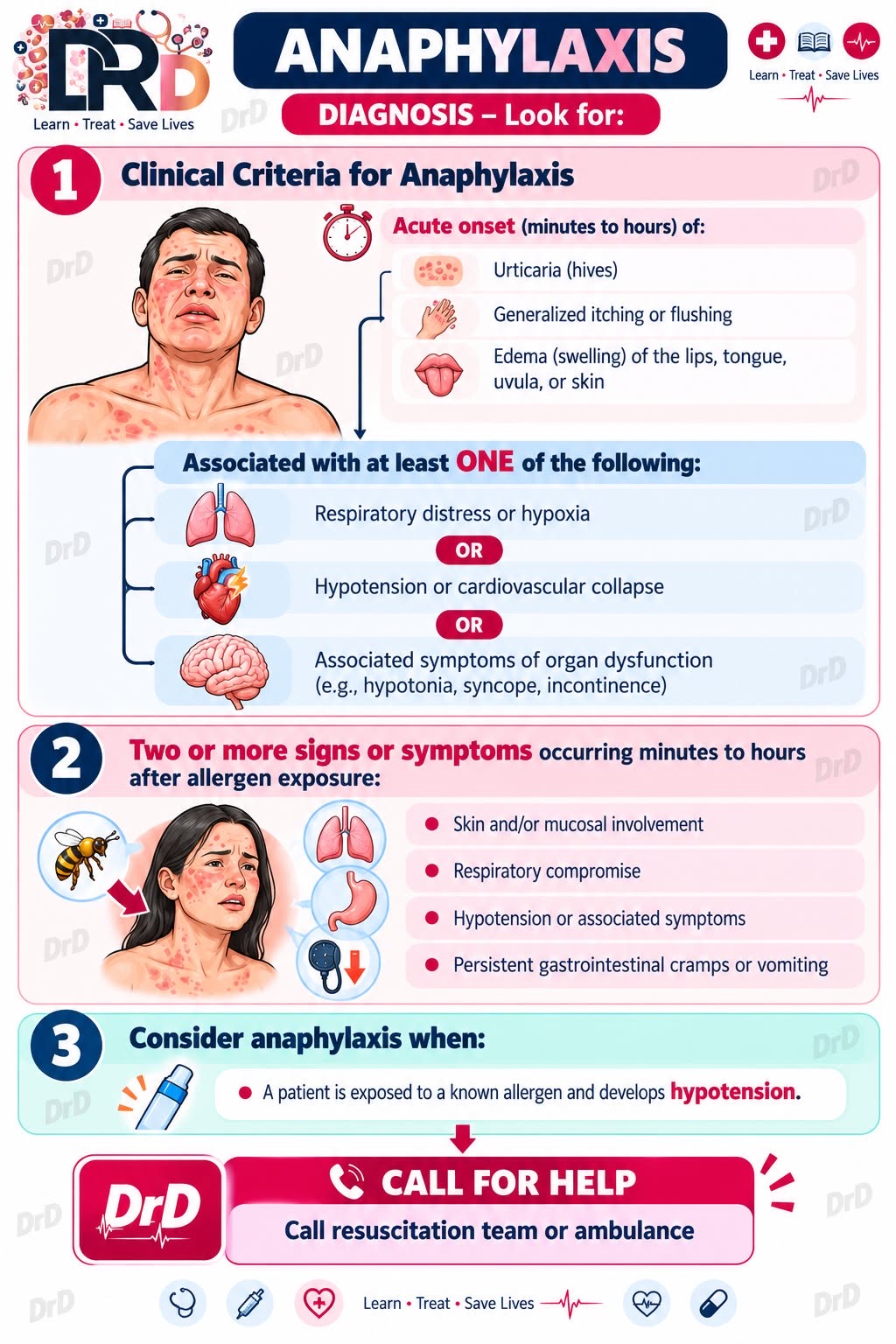
Rupture of a hepatic echinococcal (hydatid) cyst — spontaneous, traumatic or iatrogenic — releases highly antigenic cyst fluid and protoscolices. Intraperitoneal or intrabiliary rupture can precipitate ANAPHYLAXIS and seed secondary echinococcosis throughout the peritoneum. The two priorities are to treat anaphylaxis aggressively and to recognise biliary rupture (cholangitis/obstruction); definitive care combines antiparasitic therapy with surgery/drainage, avoiding uncontrolled spillage.
Figures & algorithms
Red flags
- Hypotension, bronchospasm, urticaria/angio-oedema (anaphylaxis)
- Jaundice/cholangitis (intrabiliary rupture)
- Peritonitis (intraperitoneal rupture)
- Recurrent/widespread cystic disease
Assessment
Differential diagnosis
- Anaphylaxis from other causes
- Ruptured viscus / biliary peritonitis
- Ascending cholangitis (intrabiliary rupture)
- Pyogenic or amoebic liver abscess
Investigations
- Recognise anaphylaxis clinically and treat immediately; monitor airway, breathing, circulation
- Ultrasound/CT: characteristic cyst with daughter cysts/membranes, collapse, free fluid, or contents in the biliary tree; serology supports echinococcosis
- LFTs (obstruction), FBC/eosinophilia, lactate; group & save if surgery likely
Management
- If anaphylaxis: give intramuscular adrenaline immediately, high-flow oxygen, IV fluids, and adjuncts; follow the anaphylaxis algorithm and repeat adrenaline as needed.
- Resuscitate and keep nil by mouth; involve surgery/hepatobiliary and infectious diseases urgently.
- Start antparasitic therapy (albendazole) per specialist advice to reduce the risk of secondary spread.
- Definitive management (specialist-led): surgery or PAIR (puncture–aspiration–injection–reaspiration) with a protoscolicidal agent and meticulous avoidance of spillage; peritoneal lavage if intraperitoneal rupture.
- For intrabiliary rupture with cholangitis/obstruction, arrange ERCP/biliary drainage and antibiotics.
- Continue peri-procedural albendazole and arrange long-term follow-up for recurrence/secondary echinococcosis.
Drugs & doses
Disposition
Complications & pitfalls
- Anaphylactic shock and death
- Secondary peritoneal echinococcosis
- Biliary obstruction and cholangitis
- Cyst infection / abscess
Exam pearls
- Hydatid cyst rupture is a classic cause of anaphylaxis — treat with IM adrenaline without delay.
- Give albendazole around any intervention to reduce secondary spread.
- Avoid uncontrolled spillage during any drainage/surgery — use protoscolicidal measures.
Educational — confirm all doses against local policy. Antibiotic doses per BNF (current edition); confirm choice in the in-app Antibiotic Dosing tool.
Disclaimer: Educational decision support for qualified clinicians and students — not a substitute for clinical judgement, local protocols or a full drug reference. Confirm every dose and contraindication against your formulary before prescribing.