Penoscrotal lymphoedema with cellulitis / buried penis infection
Bedside summary
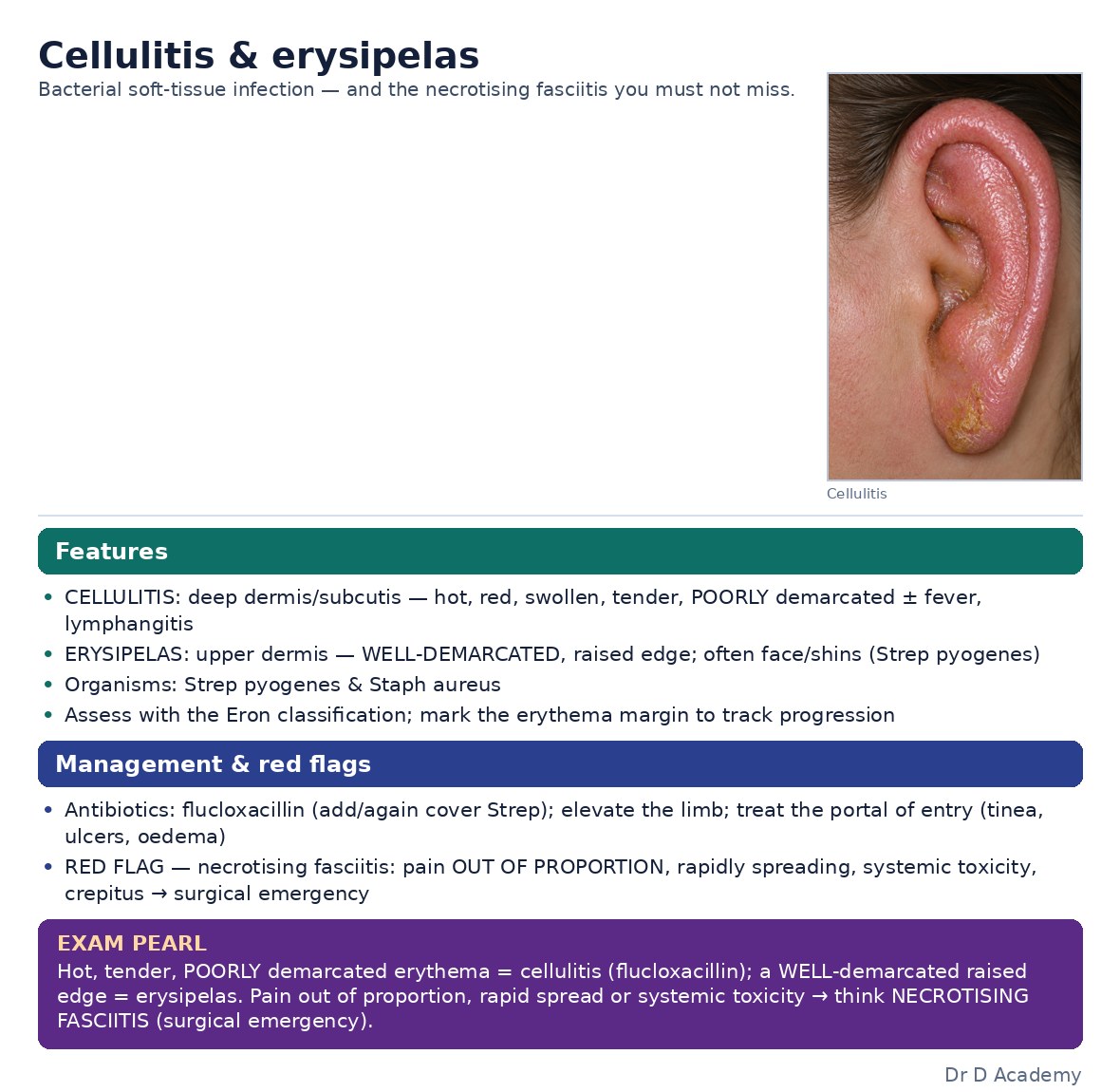
Chronic genital lymphoedema (from recurrent infection, surgery, radiotherapy, filariasis or obesity with a buried penis) causes massive penoscrotal swelling prone to recurrent cellulitis, skin maceration, intertrigo and difficulty voiding and with hygiene. Acute presentations are with cellulitis or deeper infection; the critical first step is to EXCLUDE Fournier gangrene, then treat the infection, skin and voiding. Definitive management is reconstructive surgery and lymphoedema care.
Figures & algorithms
Red flags
- Features of Fournier gangrene / necrotising infection
- Sepsis
- Urinary retention
- Rapidly spreading erythema
Assessment
Differential diagnosis
- Fournier gangrene (must exclude)
- Simple cellulitis; scrotal wall abscess
- Idiopathic scrotal oedema; hydrocele
- Filarial lymphoedema; contact / allergic dermatitis
Investigations
- Assess for necrotising infection: pain out of proportion, crepitus, systemic toxicity, skin necrosis
- FBC, CRP, U&E, glucose; blood cultures; wound swabs
- Imaging if a deep collection or necrotising infection is suspected; screen for diabetes
Management
- FIRST exclude Fournier gangrene — any crepitus, necrosis, pain out of proportion or sepsis mandates urgent surgical review and broad-spectrum antibiotics.
- For cellulitis, give antibiotics covering skin flora per local policy, with elevation and analgesia.
- Provide meticulous skin care: clean and dry the folds and treat intertrigo / candida.
- Manage voiding — a buried penis may need help with hygiene or catheterisation.
- Optimise contributing factors: weight, diabetes and lymphoedema care (compression where appropriate).
- Refer to reconstructive / plastic urology for definitive excision and reconstruction, and to lymphoedema services.
Drugs & doses
Disposition
Complications & pitfalls
- Recurrent cellulitis
- Fournier gangrene
- Abscess
- Urinary obstruction
- Chronic skin breakdown
Exam pearls
- Always exclude Fournier gangrene in infected lymphoedematous genitalia.
- Skin care and treating diabetes / intertrigo reduce recurrent cellulitis.
- Definitive treatment is surgical reconstruction.
Educational — confirm all doses against local policy. Antibiotic doses per BNF (current edition); confirm choice in the in-app Antibiotic Dosing tool.
Disclaimer: Educational decision support for qualified clinicians and students — not a substitute for clinical judgement, local protocols or a full drug reference. Confirm every dose and contraindication against your formulary before prescribing.