Infective endocarditis prophylaxis
IE prophylaxis · Infectious Disease
Physician-written · Verified by three sets of doctors · Reviewed November 2026
Bedside summary
Antibiotic prophylaxis before certain procedures is now restricted to patients at highest risk of adverse endocarditis outcomes undergoing invasive dental procedures. Universal oral and skin hygiene matters more than routine antibiotics for most.
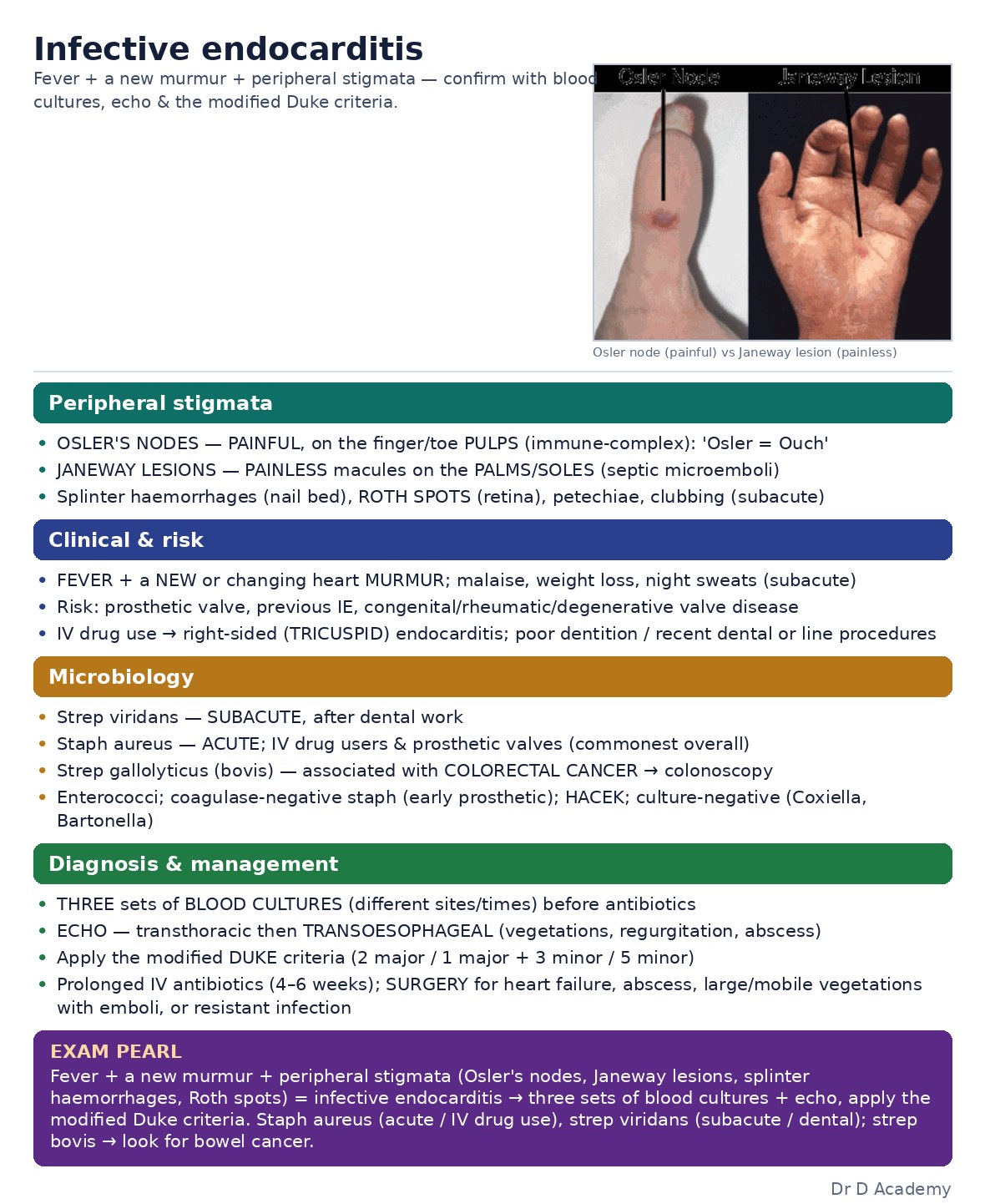
Figures & algorithms
Red flags
- Prosthetic valve or prosthetic repair material
- Previous infective endocarditis
- Unrepaired cyanotic congenital heart disease
- Unexplained fever after dental work in high-risk patient
- Active oral infection at time of procedure
Assessment
Differential diagnosis
- Low-risk patient not requiring prophylaxis
- High-risk cardiac condition requiring prophylaxis
- Active infection needing treatment rather than prophylaxis
- Prosthetic valve patient
- Previous endocarditis
Investigations
- Cardiac history to define risk category
- Review of prosthetic material / prior endocarditis / cyanotic disease
- Planned procedure type (dental manipulation of gingiva/periapex)
- Allergy history (penicillin)
- Dental and skin health assessment
Management
- Identify whether the patient is in a highest-risk category
- Confirm the planned procedure is one warranting prophylaxis (invasive dental manipulation)
- Emphasise good oral/dental hygiene and regular dental review as the main prevention
- Reserve antibiotic prophylaxis for highest-risk cardiac patients only
- Check penicillin allergy status before selecting an agent
- Give a single oral dose 30-60 minutes before the procedure
- Use IV route if the patient cannot take oral
- Avoid prophylaxis for routine non-dental GI/GU procedures without active infection
- Treat any established infection at a procedure site with therapeutic antibiotics
- Counsel patients to seek care promptly for unexplained fever
- Provide a patient alert card where appropriate
- Document decision and rationale
Drugs & doses
Amoxicillin 2 g PO single dose 30-60 min before procedure
Ampicillin 2 g IV/IM single dose (if oral not possible)
Clindamycin 600 mg PO (penicillin allergy) - note some guidelines now favour alternatives
Azithromycin 500 mg PO or cephalexin 2 g PO (penicillin-allergic alternatives)
Disposition
Outpatient / dental setting; cardiology advice for complex cases.
Complications & pitfalls
- Breakthrough endocarditis
- Antibiotic adverse reaction/anaphylaxis
- Clostridioides difficile from unnecessary antibiotics
- Antimicrobial resistance selection
- Delayed diagnosis if prophylaxis gives false reassurance
Exam pearls
- Highest-risk groups: prosthetic valves/material, prior endocarditis, certain congenital heart disease
- Guidelines markedly narrowed routine prophylaxis; oral hygiene is key
- Prophylaxis targets dental procedures manipulating gingiva or periapical region
- Clindamycin is being de-emphasised for allergy due to C. difficile risk
- Treat active infection therapeutically, not with single-dose prophylaxis
Disclaimer: Educational decision support for qualified clinicians and students — not a substitute for clinical judgement, local protocols or a full drug reference. Confirm every dose and contraindication against your formulary before prescribing.