Lyme neuroborreliosis
Bedside summary
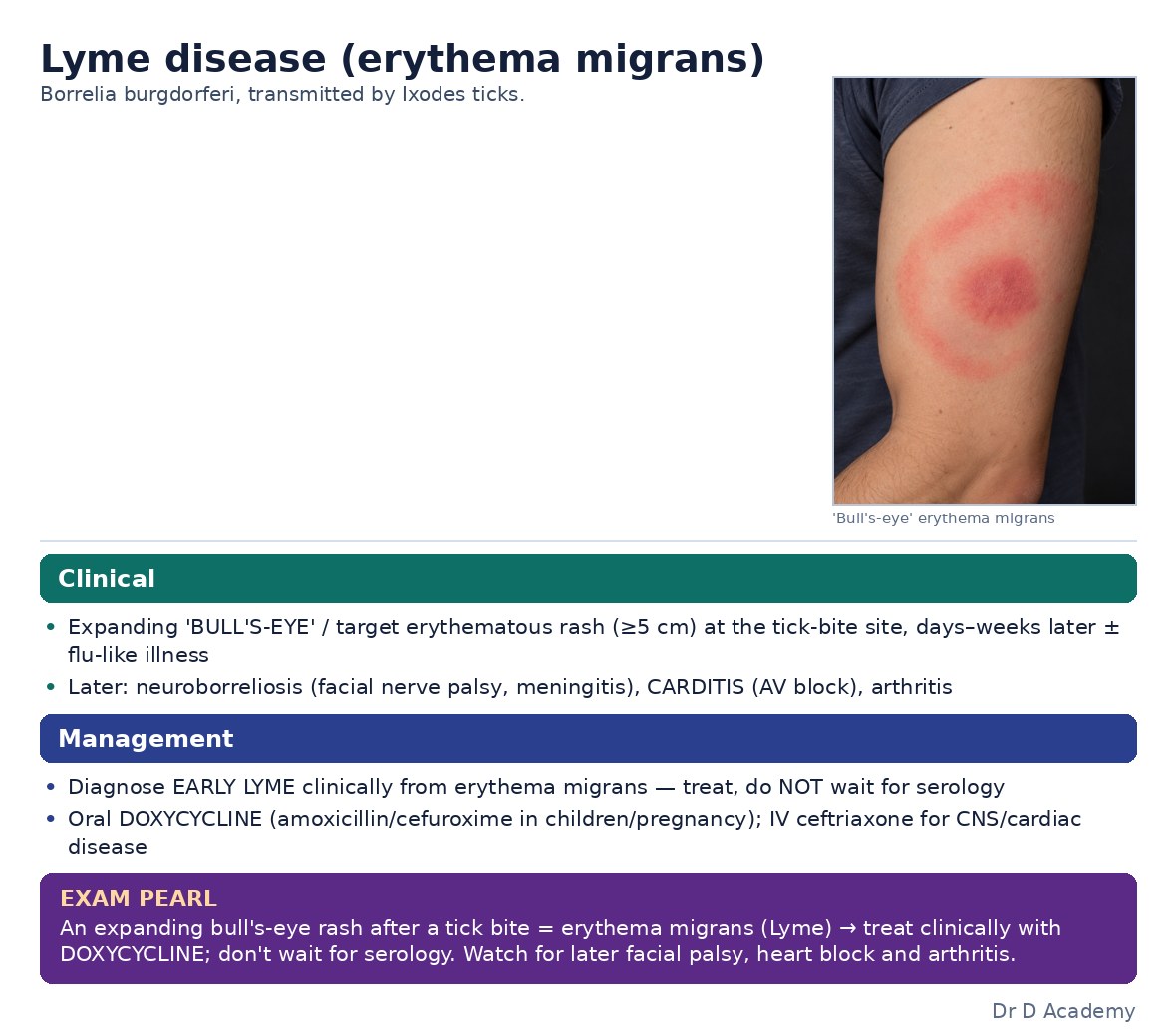
Neurological involvement in Lyme disease (Borrelia species; B. garinii is a common neurological cause in Europe) typically occurs in early-disseminated infection, weeks to months after a tick bite. The classic triad is cranial neuropathy (especially facial palsy, which may be bilateral), painful radiculitis (Bannwarth syndrome) and lymphocytic meningitis. Diagnosis combines serology with CSF showing pleocytosis and intrathecal antibody production; it responds well to appropriate antibiotics (oral doxycycline or IV ceftriaxone).
Figures & algorithms
Red flags
- Bilateral facial palsy (a classic clue to neuroborreliosis)
- Severe or progressive radicular pain / limb weakness
- Parenchymal CNS involvement (encephalomyelitis)
- Diagnostic uncertainty with a treatable alternative
Assessment
Differential diagnosis
- Other causes of facial palsy (idiopathic Bell palsy, zoster/Ramsay Hunt), other cranial neuropathies
- Other lymphocytic meningitides (viral, tick-borne encephalitis — shared vector), and radiculopathy from disc disease
- Consider exposure history and erythema migrans; co-infection with other tick-borne pathogens
Investigations
- Two-tier Lyme serology (EIA then immunoblot); interpret with timing (seroconversion may lag early disease)
- CSF: lymphocytic pleocytosis, raised protein, and intrathecal Borrelia antibody index (supports CNS involvement)
- MRI where focal deficits or alternative diagnoses are considered; assess for erythema migrans and other tick-borne co-infections
Management
- Take a tick-exposure history and look for erythema migrans or other Lyme features.
- Send two-tier serology and, where CNS disease is suspected, perform LP for pleocytosis and intrathecal antibody.
- Start antibiotics: oral doxycycline is effective for many cases; IV ceftriaxone (or cefotaxime/penicillin) for more severe or parenchymal CNS involvement.
- Manage facial palsy supportively (eye protection) and provide analgesia for painful radiculitis.
- Treat for an adequate course per guidelines and arrange neurology follow-up; most recover well.
- Consider and test for tick-borne co-infections where relevant.
Drugs & doses
Disposition
Complications & pitfalls
- Persistent cranial neuropathy or residual deficits
- Rare encephalomyelitis
- Delayed diagnosis from early seronegativity
- Missed tick-borne co-infection
Exam pearls
- Bilateral facial palsy should prompt consideration of Lyme neuroborreliosis.
- Diagnosis needs serology PLUS CSF intrathecal antibody — early serology can be negative.
- Both oral doxycycline and IV ceftriaxone are effective depending on severity.
Educational — confirm all doses against local policy.
Disclaimer: Educational decision support for qualified clinicians and students — not a substitute for clinical judgement, local protocols or a full drug reference. Confirm every dose and contraindication against your formulary before prescribing.