Chronic gout & urate-lowering therapy (ULT)
Crystal arthropathy · Rheumatology
Physician-written · Verified by three sets of doctors · Reviewed November 2026
Bedside summary
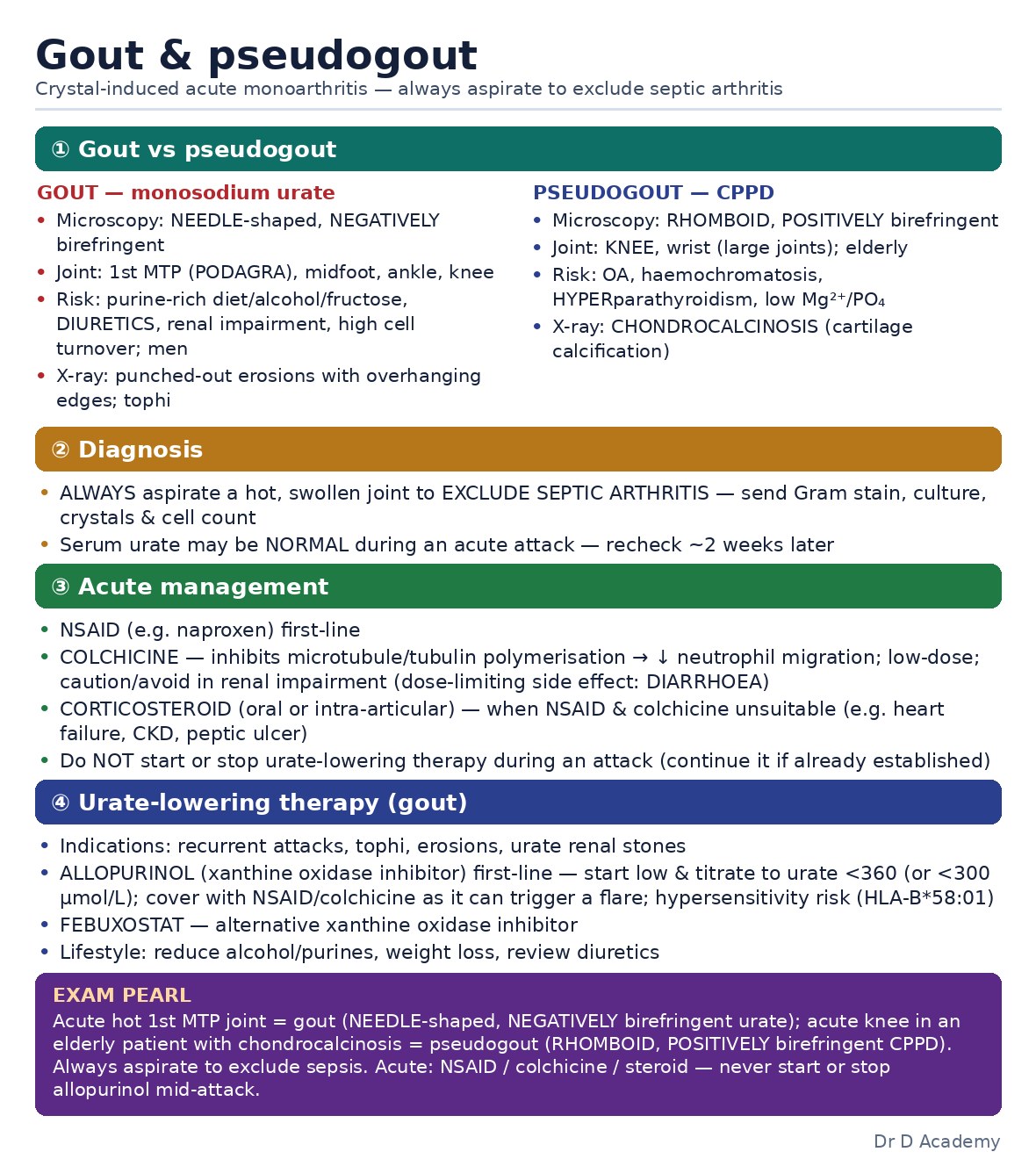
Long-term management to lower the serum urate below the saturation threshold, dissolve crystal deposits and prevent flares, tophi and joint damage. The strategy is TREAT-TO-TARGET: titrate urate-lowering therapy to a serum urate goal (<360 micromol/L, or <300 micromol/L for tophaceous/severe disease) with flare prophylaxis during the titration phase.
Figures & algorithms
Red flags
- Allopurinol hypersensitivity syndrome / DRESS — rash with fever, eosinophilia, organ involvement; stop immediately
- Rapidly progressive tophi or renal stones
- Flares misread as treatment failure leading to inappropriate ULT cessation
Assessment
Differential diagnosis
- Confirm the diagnosis of gout (crystal-proven ideally) before committing to lifelong therapy
- Distinguish recurrent gout from CPPD or other inflammatory arthritis
- Consider secondary causes of hyperuricaemia (diuretics, CKD, myeloproliferative disease, high purine intake, alcohol)
Investigations
- Serum urate at baseline and serially to titrate to target
- Renal function (dose allopurinol/febuxostat and guide colchicine prophylaxis)
- HLA-B*58:01 testing before allopurinol in higher-risk populations (e.g. Han Chinese, Thai, Korean/CKD) per local policy, due to severe cutaneous reaction risk
- Cardiometabolic screen (hypertension, diabetes, lipids, CKD)
Management
- Offer ULT to patients with recurrent flares (≥2/year), tophi, gouty erosions/joint damage, gout with CKD, or urate stones; discuss early after a first flare.
- First-line ULT is a xanthine oxidase inhibitor — allopurinol; start LOW and titrate up against serum urate (not a fixed dose).
- Co-prescribe FLARE PROPHYLAXIS when starting/titrating ULT (urate shifts provoke flares) — continue for ~3–6 months.
- Do NOT stop ULT during a flare; treat the flare and keep titrating ULT to target.
- If allopurinol is not tolerated or target not reached, switch to febuxostat (caution/review in significant cardiovascular disease); uricosurics (e.g. benzbromarone/probenecid) are an alternative/add-on per local availability.
- Address modifiable drivers: reduce alcohol (especially beer) and purine-rich foods, weight loss, review diuretics, treat comorbidities; losartan/amlodipine and fenofibrate have mild urate-lowering effects.
- Review adherence and serum urate periodically lifelong once at target.
Drugs & doses
Allopurinol — start 100 mg PO daily (50 mg if eGFR reduced), titrate up every 2–4 weeks to serum urate target; typical maintenance 300–600 mg/day, max per local policy — confirm against local policy
Febuxostat 80 mg PO daily, increase to 120 mg if target not met (review cardiovascular risk) — confirm against local policy
Flare prophylaxis: colchicine 500 micrograms PO once–twice daily (dose-reduce in renal impairment), OR low-dose NSAID with PPI, OR low-dose prednisolone — for ~3–6 months — confirm against local policy
Uricosuric (probenecid / benzbromarone / sulfinpyrazone) — alternative or add-on where appropriate
Pegloticase — for severe refractory tophaceous gout, specialist use
Disposition
Outpatient / primary-care managed with structured titration and monitoring; specialist referral for refractory, tophaceous or CKD-complicated disease or intolerance.
Complications & pitfalls
- Tophaceous deposits, bony erosions and deformity
- Urate nephrolithiasis / urate nephropathy
- Severe cutaneous adverse reactions to allopurinol
Exam pearls
- ULT is treat-to-target: titrate to a serum urate goal, do not use a one-size dose.
- Always co-prescribe flare prophylaxis when starting ULT, and warn the patient flares can increase initially.
- Consider HLA-B*58:01 screening before allopurinol in higher-risk groups.
Educational — confirm all doses against local policy.
Disclaimer: Educational decision support for qualified clinicians and students — not a substitute for clinical judgement, local protocols or a full drug reference. Confirm every dose and contraindication against your formulary before prescribing.