Acute ischaemic stroke
Figures & algorithms
Red flags
- Blood pressure > 185/110 mmHg — must be lowered BEFORE thrombolysis (otherwise permissive hypertension up to ~220/120 is usually tolerated in the first hours if not thrombolysing)
- Reduced/declining GCS or a fixed dilated pupil — haemorrhage, malignant oedema or herniation
- Rapid neurological deterioration after thrombolysis — suspect haemorrhagic transformation (stop the drug, urgent CT, reverse)
- Seizure at onset, or profound hypo/hyperglycaemia — reconsider a mimic
Assessment
Investigations
- Time is the priority — establish the LAST-KNOWN-WELL time, do a rapid ABCDE, check CAPILLARY GLUCOSE (hypoglycaemia is a stroke mimic), and score severity with the NIHSS
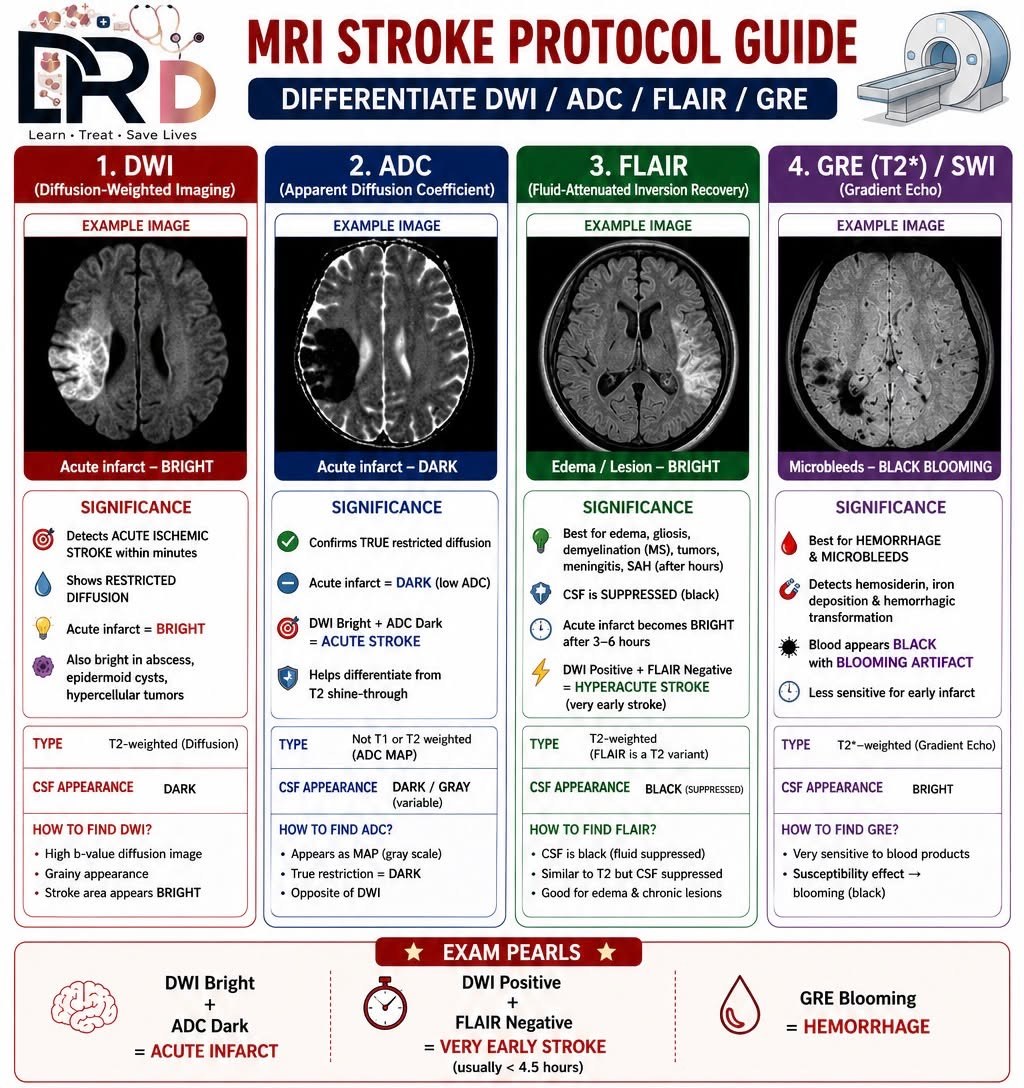
- IMMEDIATE non-contrast CT head to exclude haemorrhage; add CT ANGIOGRAPHY (± CT perfusion) to identify a large-vessel occlusion and select for thrombectomy (including extended-window imaging)
- Bloods (glucose, FBC, U&E, coagulation/INR), ECG (AF, concurrent MI), and a swallow screen before anything oral
- Determine eligibility/contraindications for reperfusion and involve the stroke team the moment stroke is suspected (pre-alert)
Disposition
Complications & pitfalls
- Haemorrhagic transformation of the infarct (especially after thrombolysis)
- Malignant middle-cerebral-artery oedema (large infarcts — may need decompressive craniectomy)
- Aspiration pneumonia (screen swallow), VTE, and pressure injury
- Post-stroke seizures; cardiac events (concurrent AF/MI)
Initial management is time-critical: protect ABCs, treat hypoglycaemia, fix the last-known-well time and NIHSS, and get an IMMEDIATE non-contrast CT (+ CTA/CTP) to exclude haemorrhage and select for reperfusion. THROMBOLYSE eligible patients within the window (lower BP to < 185/110 first) and refer large-vessel occlusions for THROMBECTOMY; give aspirin 300 mg once haemorrhage is excluded (24 h after thrombolysis). Nil-by-mouth until swallow screened, avoid over-lowering BP when not thrombolysing, maintain normoglycaemia/normothermia, and admit to a stroke unit.
Disclaimer: Educational decision support for qualified clinicians and students — not a substitute for clinical judgement, local protocols or a full drug reference. Confirm every dose and contraindication against your formulary before prescribing.