Concussion / mild traumatic brain injury
Head injury · Neurology
Physician-written · Verified by three sets of doctors · Reviewed November 2026
Bedside summary
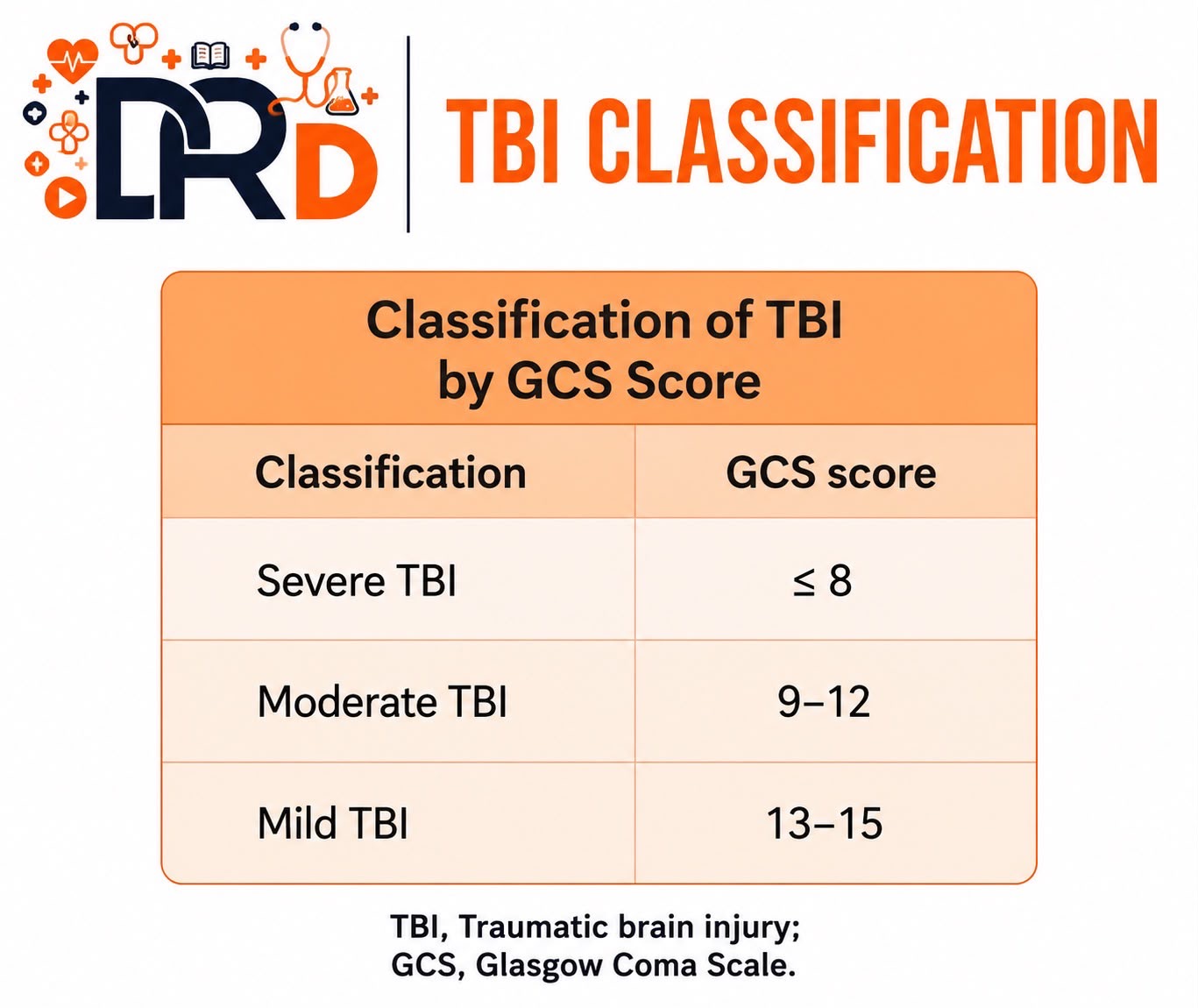
Mild TBI (concussion) is head trauma with a GCS of 13–15, often with brief loss of consciousness, amnesia, confusion or symptoms such as headache, dizziness and nausea. Most recover fully. The ED tasks are to identify the few with an intracranial injury needing CT/neurosurgery, and to give safe return-to-activity advice.
Figures & algorithms
Red flags
- Deteriorating GCS or focal neurological deficit
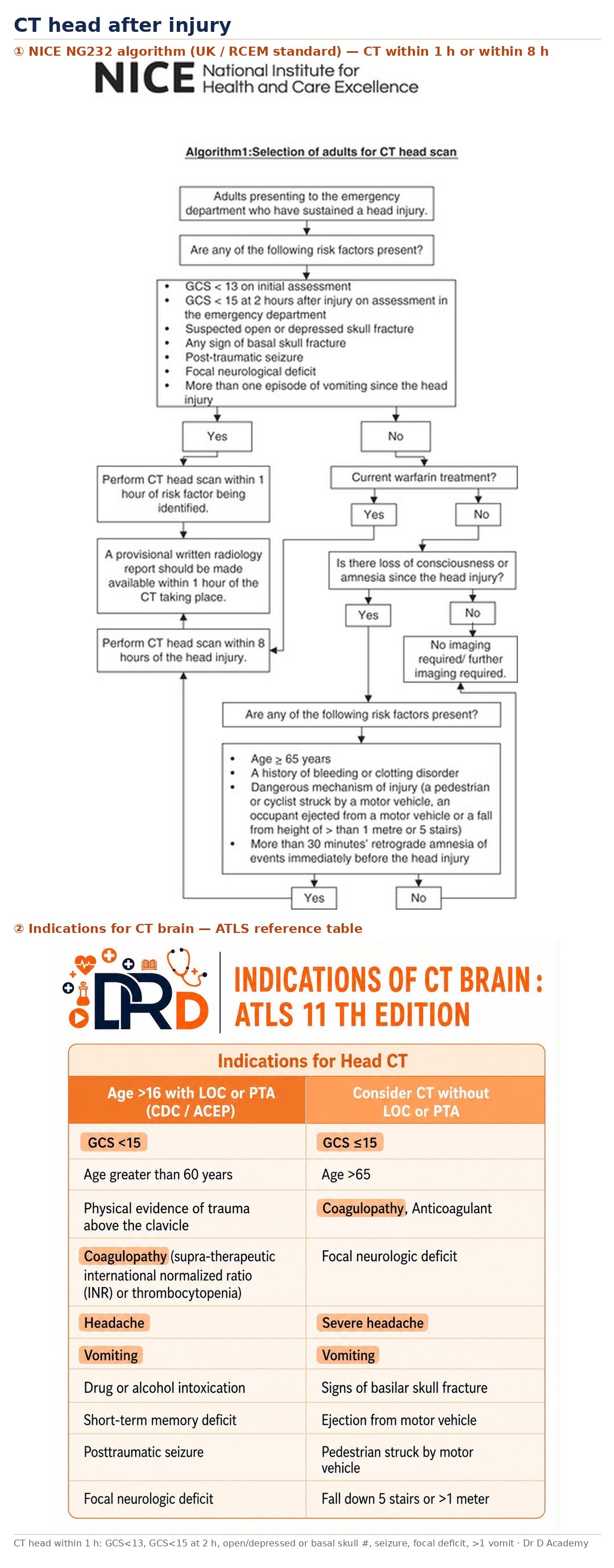
- GCS <15 at 2 h, suspected skull fracture, ≥2 vomits, seizure
- Anticoagulation / bleeding diathesis
- Severe or worsening headache; repeated vomiting
Assessment
Differential diagnosis
- Intracranial haematoma (deterioration after lucid interval)
- Skull fracture; cervical-spine injury
- Intoxication masking/mimicking TBI
- Post-traumatic seizure; other cause of collapse preceding the head strike
Investigations
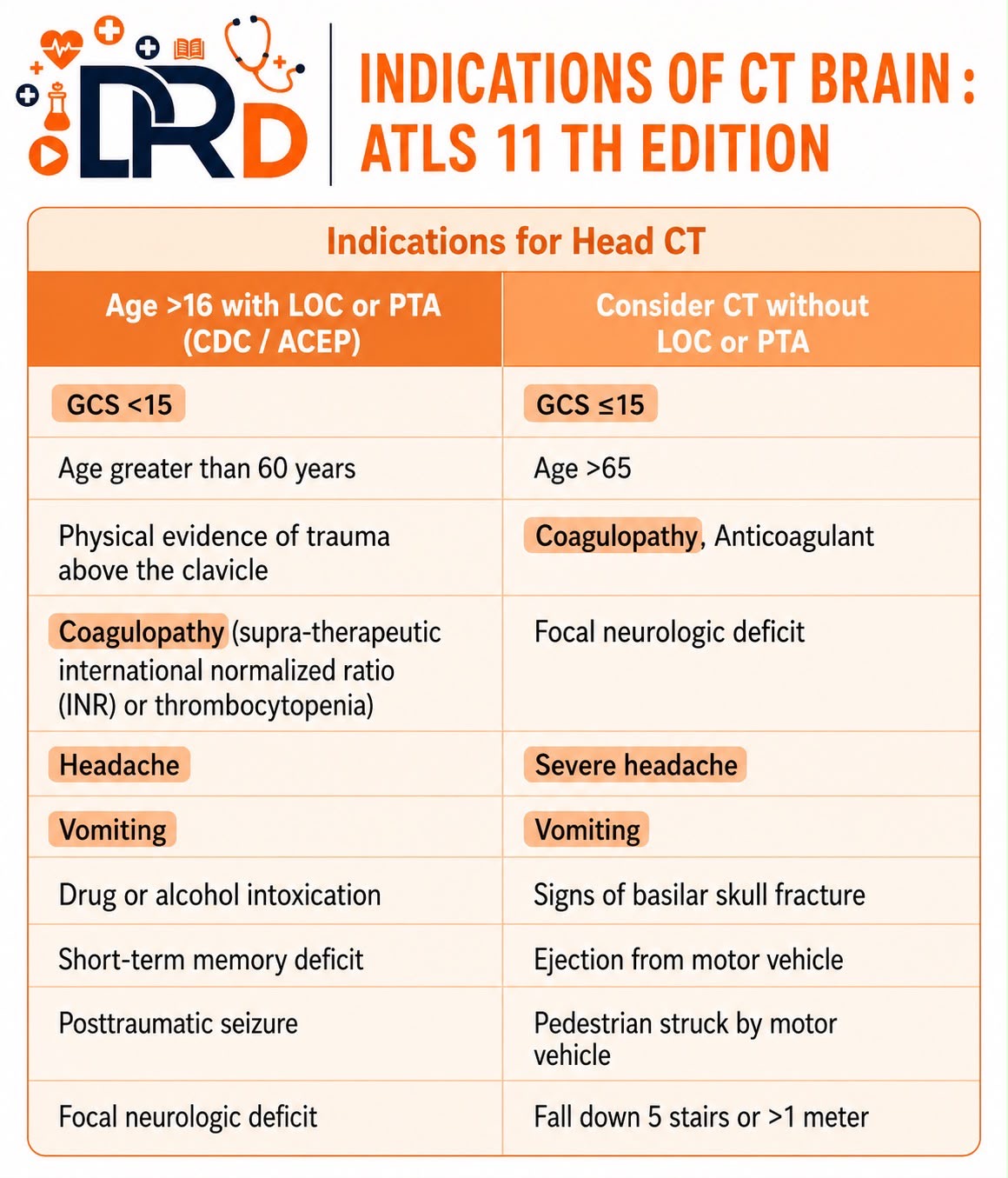
- Apply a validated CT-head decision rule (e.g. Canadian CT Head Rule): CT for GCS <15 at 2 h, suspected open/depressed or basal skull fracture, ≥2 vomiting episodes, age ≥65, dangerous mechanism, or amnesia/retrograde features per the rule
- LOWER the threshold — CT and observe — if on an anticoagulant or with a bleeding diathesis, even when initially well
- Assess and clear the cervical spine; check glucose and for intoxication
Management
- ABC and cervical-spine protection; assess GCS, pupils and focal neurology; look for scalp/skull-base signs.
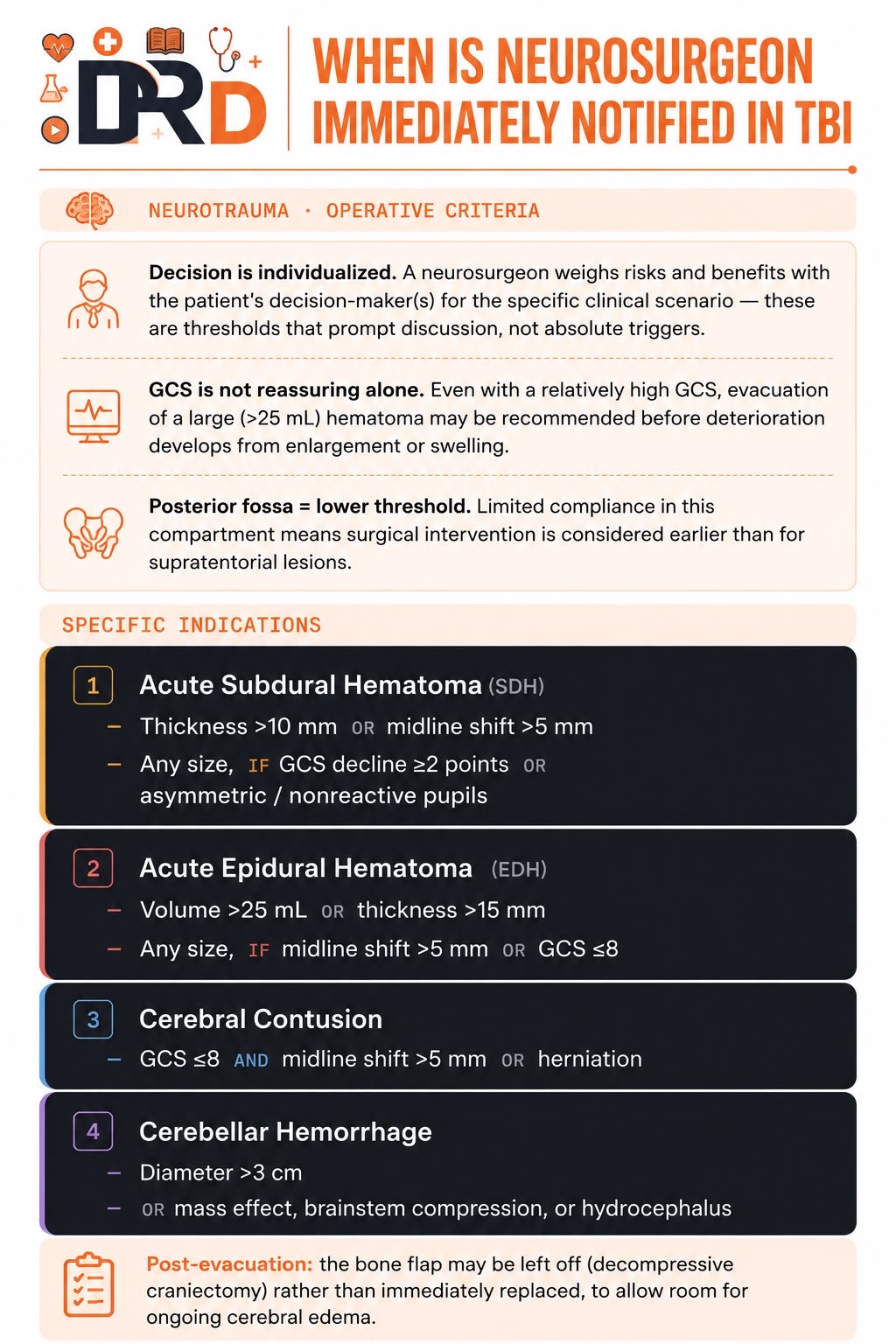
- Apply the CT-head rule; image and/or observe accordingly; involve neurosurgery for any intracranial injury or deterioration.
- Observe symptomatic patients; discharge only if GCS 15, improving, no red flags, and with a responsible adult and written head-injury advice.
- Advise graduated, symptom-limited return to school/work and a stepwise return-to-play protocol for athletes (no same-day return to sport).
- Safety-net: return immediately for worsening headache, repeated vomiting, drowsiness, focal weakness, seizure or confusion.
Drugs & doses
Simple analgesia (paracetamol); antiemetic as needed
Avoid sedating drugs that mask neurological assessment
Reverse anticoagulation if intracranial haemorrhage is confirmed
Disposition
Discharge low-risk patients with head-injury advice and a responsible adult; admit/observe for abnormal CT, persistent symptoms, anticoagulation or social concern; neurosurgery for intracranial injury.
Complications & pitfalls
- Intracranial haematoma (extradural/subdural/contusion)
- Post-concussion syndrome
- Second-impact syndrome (premature return to sport)
Exam pearls
- Neurological deterioration after mild TBI is an intracranial haematoma until proven otherwise.
- Anticoagulated patients need a CT and observation even if they look well.
- No same-day return to sport; use a graduated return-to-play protocol.
Adapted from UpToDate "Acute mild traumatic brain injury (concussion) in adults" and paediatric concussion topics (©2026). Use your local CT-head rule and head-injury guideline.
Disclaimer: Educational decision support for qualified clinicians and students — not a substitute for clinical judgement, local protocols or a full drug reference. Confirm every dose and contraindication against your formulary before prescribing.