Anaphylaxis in pregnancy & labour
Resuscitation · Obstetric
Physician-written · Verified by three sets of doctors · Reviewed November 2026
Bedside summary
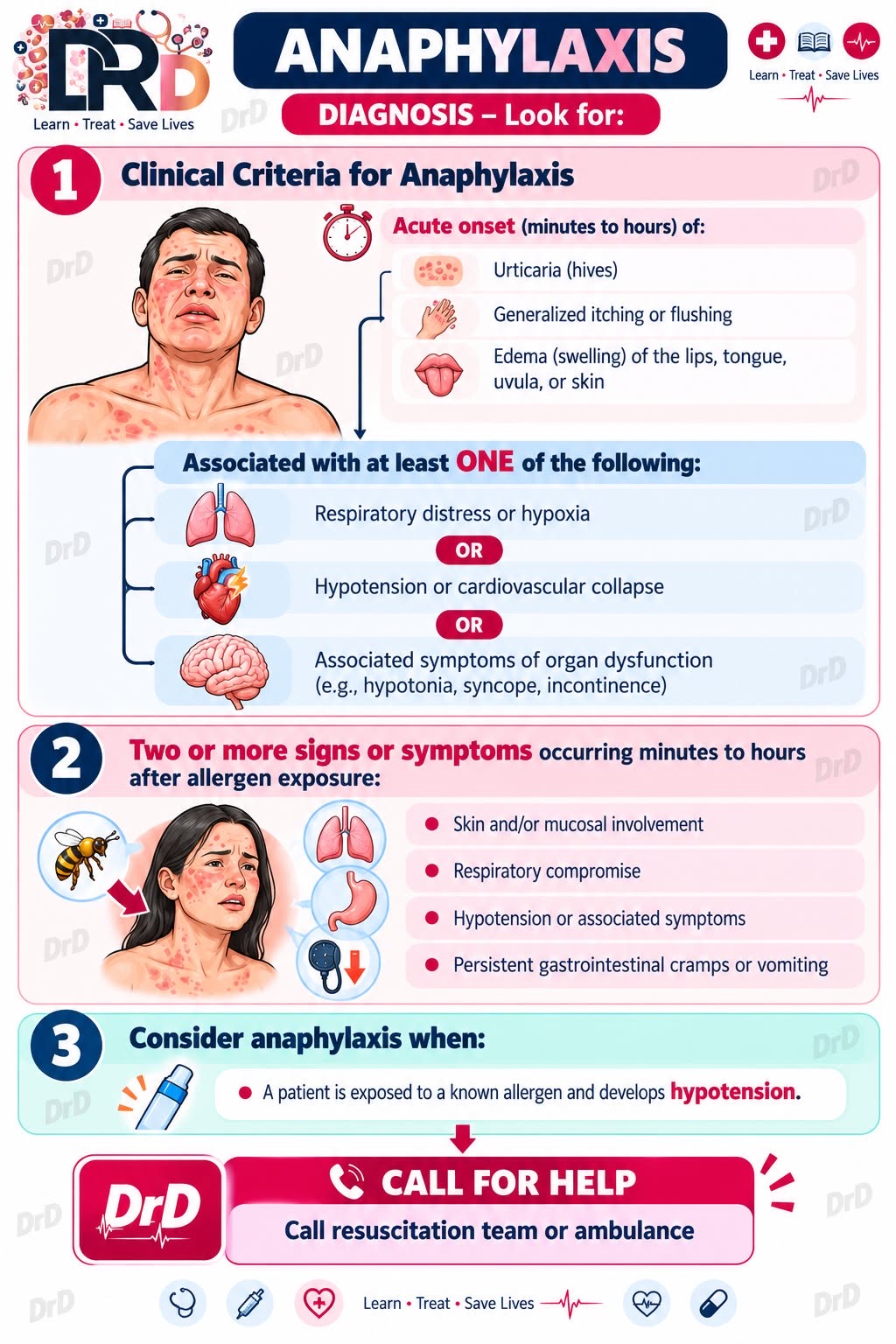
Anaphylaxis in a pregnant woman threatens two lives and is treated with the same priorities as in any adult — adrenaline is the first-line, life-saving drug — but with the added measures of left lateral tilt to relieve aortocaval compression and fetal monitoring. Common triggers in the peripartum period include antibiotics, latex, neuromuscular blockers/anaesthetic agents and, rarely, oxytocin.
Figures & algorithms
Red flags
- Airway compromise (stridor, angio-oedema)
- Hypotension/shock
- Severe bronchospasm/hypoxia
- Abnormal CTG
- Biphasic reaction
Assessment
Differential diagnosis
- Distinguish from amniotic fluid embolism, high/total spinal, pulmonary embolism, eclampsia, local anaesthetic toxicity, septic or haemorrhagic shock
- Common peripartum triggers: antibiotics (esp. beta-lactams), latex, chlorhexidine, muscle relaxants/anaesthetics, blood products, oxytocin
Investigations
- Clinical diagnosis — do not delay adrenaline for tests
- Serial mast cell tryptase (baseline soon after treatment, and later) to support the diagnosis retrospectively
- Continuous fetal monitoring (CTG) at viable gestations once the mother is being treated
Management
- Remove/stop the likely trigger (e.g. the infusion or antibiotic) and call for help.
- Give intramuscular ADRENALINE immediately into the anterolateral thigh; repeat every ~5 minutes if no improvement.
- Position in left lateral tilt (or manual uterine displacement) to relieve aortocaval compression; give high-flow oxygen and secure the airway early if angio-oedema/stridor.
- Establish large-bore IV access and give a rapid fluid bolus; place the patient supine with legs raised if hypotensive (with left tilt).
- If refractory, start an IV adrenaline infusion (critical care/anaesthetic-led) and consider additional vasopressors; adjuncts (antihistamine, corticosteroid) are secondary and must not delay adrenaline.
- Monitor the fetus; if the mother arrests or remains unstable undelivered, prepare for resuscitative hysterotomy. Observe for biphasic reactions.
Drugs & doses
Adrenaline 500 micrograms (0.5 mL of 1:1000) IM, repeated every ~5 min as needed (confirm against local policy)
High-flow oxygen; rapid IV crystalloid bolus (confirm against local policy)
IV adrenaline infusion for refractory anaphylaxis — specialist/critical care only (confirm against local policy)
Non-sedating antihistamine and corticosteroid as secondary adjuncts (do not delay adrenaline) (confirm against local policy)
Consider nebulised bronchodilator for bronchospasm (confirm against local policy)
Disposition
Admit for monitoring (risk of biphasic reaction); critical care if severe/refractory; allergy follow-up and documented trigger avoidance.
Complications & pitfalls
- Maternal hypoxia/cardiac arrest
- Fetal hypoxia and death
- Biphasic reaction
- Aspiration, airway loss
Exam pearls
- Adrenaline IM is the first and most important treatment — never delay it for antihistamines or steroids.
- Left lateral tilt / manual uterine displacement relieves aortocaval compression and improves resuscitation.
- Take serial tryptase and refer for allergy work-up to identify the trigger.
Educational — confirm all doses against local policy.
Disclaimer: Educational decision support for qualified clinicians and students — not a substitute for clinical judgement, local protocols or a full drug reference. Confirm every dose and contraindication against your formulary before prescribing.