Thyroid storm in pregnancy
Endocrine · Obstetric
Physician-written · Verified by three sets of doctors · Reviewed November 2026
Bedside summary
Decompensated thyrotoxicosis, often triggered by infection, labour or delivery, with fever, tachyarrhythmia, agitation and organ dysfunction. Life-threatening for mother and fetus.
Figures & algorithms
Red flags
- High fever with cardiovascular collapse
- Arrhythmia or heart failure
- Reduced consciousness
- Fetal distress
Assessment
Differential diagnosis
- Sepsis
- Pre-eclampsia/eclampsia
- Pulmonary embolism
- Phaeochromocytoma
- Amniotic fluid embolism
Investigations
- TFTs (suppressed TSH, high free T4/T3)
- ECG and cardiac monitoring
- FBC, U&E, LFTs, glucose
- Septic screen for precipitant
- Continuous fetal monitoring if viable
Management
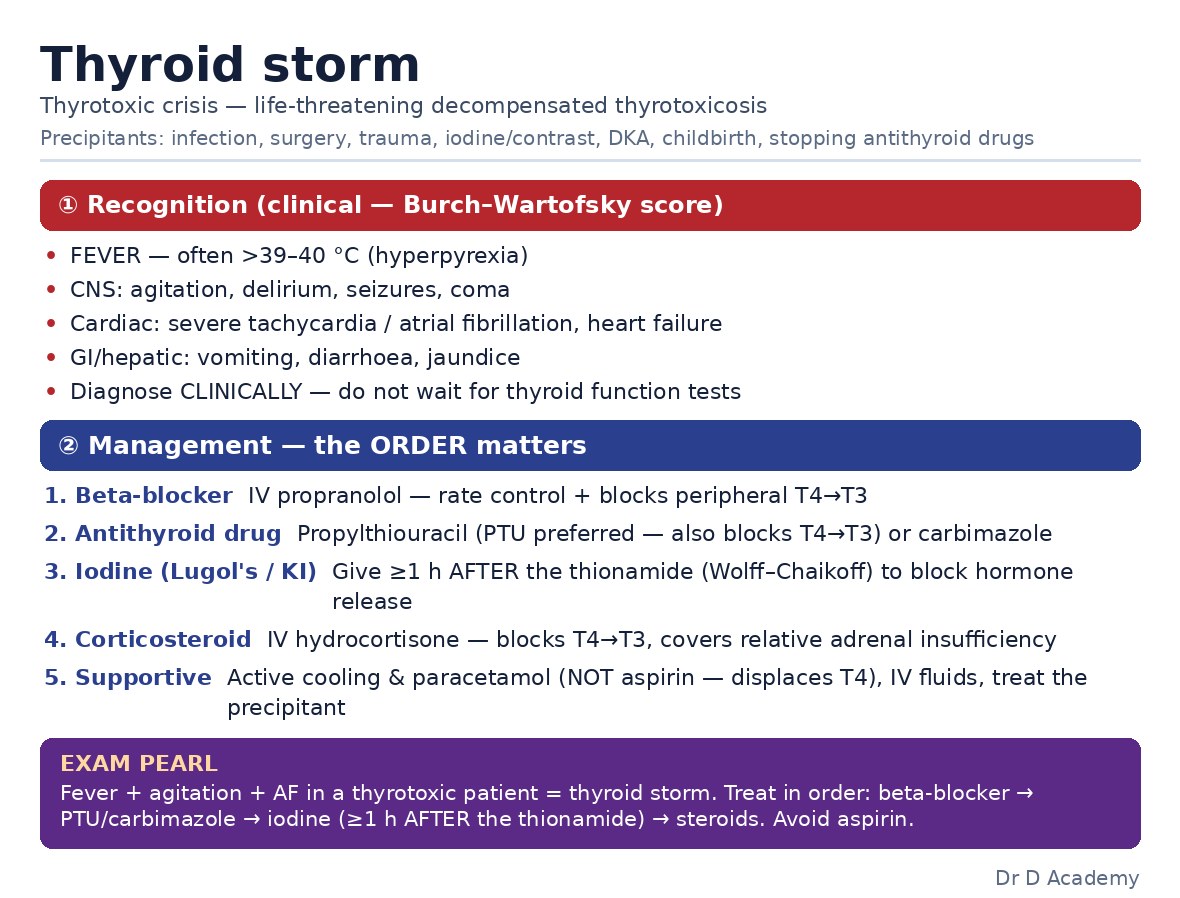
- Resuscitate; cool actively for hyperthermia; monitor mother and fetus
- Give beta-blockade for adrenergic symptoms/tachyarrhythmia
- Start antithyroid drug (propylthiouracil in first trimester, then carbimazole)
- Give iodine at least one hour after antithyroid drug to block hormone release
- Corticosteroids to reduce peripheral T4 to T3 conversion
- Treat precipitant; involve endocrinology, obstetrics and critical care
Drugs & doses
Propranolol (or esmolol) for adrenergic control
Propylthiouracil (first trimester) or carbimazole
Potassium iodide/Lugol iodine given after antithyroid drug
Hydrocortisone
Paracetamol for fever (avoid aspirin)
Disposition
Admit to ICU/HDU with endocrine and obstetric co-management.
Complications & pitfalls
- High-output cardiac failure/arrhythmia
- Maternal death
- Fetal loss/prematurity
Exam pearls
- Give iodine only after antithyroid drug (avoid substrate for hormone synthesis)
- Avoid aspirin (displaces thyroid hormone)
- Treat the mother - fetal status usually improves
Disclaimer: Educational decision support for qualified clinicians and students — not a substitute for clinical judgement, local protocols or a full drug reference. Confirm every dose and contraindication against your formulary before prescribing.