Paediatric hyperkalaemia
Electrolyte emergency · Paediatric
Physician-written · Verified by three sets of doctors · Reviewed November 2026
Bedside summary
A high potassium in a child (AKI, CAH, tumour lysis, rhabdomyolysis, haemolysed sample) risks fatal arrhythmia. Confirm it is real, protect the heart and shift/remove potassium.
Figures & algorithms
Assessment
Investigations
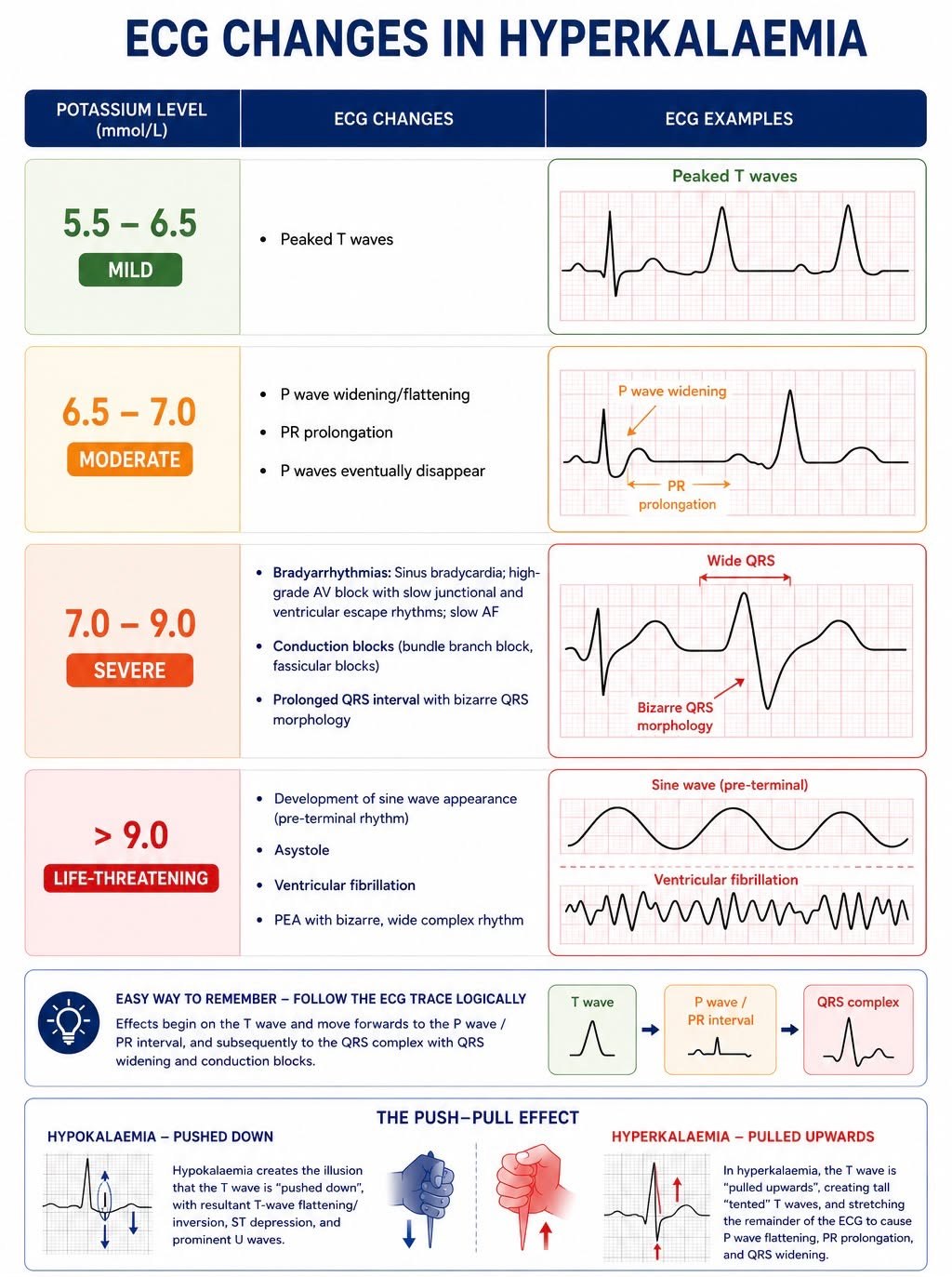
- Confirm on a non-haemolysed sample; ECG (peaked T waves, widening)
- Identify the cause; U&E, gas, glucose
- Continuous cardiac monitoring
Management
- Cardiac monitoring; if ECG changes give calcium gluconate to protect the myocardium
- Shift potassium intracellularly: salbutamol nebuliser, insulin-dextrose
- Remove potassium (resonium; dialysis if refractory)
- Stop potassium intake and exacerbating drugs
- Treat the underlying cause; paediatric/nephrology involvement
Drugs & doses
Calcium gluconate (ECG changes)
Salbutamol neb + insulin-dextrose
Dialysis (refractory)
Disposition
Paediatrics; monitored bed.
Confirm a child's high potassium is real, then protect the heart with calcium if the ECG is abnormal and shift it with salbutamol and insulin-dextrose.
Disclaimer: Educational decision support for qualified clinicians and students — not a substitute for clinical judgement, local protocols or a full drug reference. Confirm every dose and contraindication against your formulary before prescribing.