Varicella (chickenpox) & its complications
Bedside summary
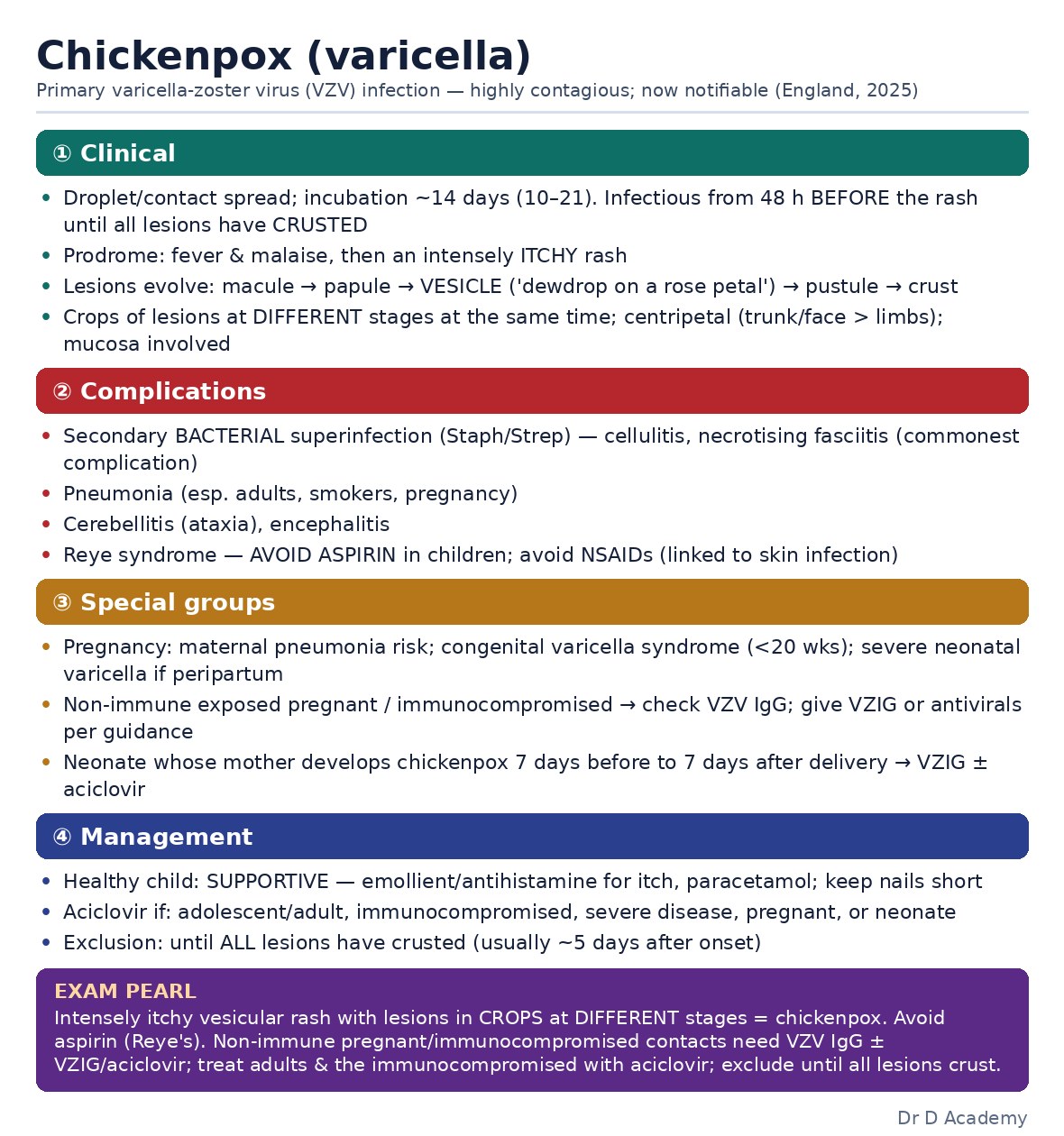
Primary varicella-zoster virus infection causing fever and an itchy vesicular rash in successive crops (lesions at different stages). It is usually mild and self-limiting in healthy children but can cause serious COMPLICATIONS — secondary bacterial skin infection (including invasive group A strep), pneumonia, cerebellar ataxia and encephalitis — and is dangerous in neonates, the immunocompromised and pregnancy. Treat the vulnerable and watch for the deteriorating child.
Figures & algorithms
Red flags
- Severe pain, rapidly spreading erythema or systemic toxicity (invasive group A strep / necrotising infection)
- Respiratory distress (varicella pneumonia)
- Drowsiness, seizures, ataxia (CNS involvement)
- Neonate, immunocompromised child, or exposed pregnant/immunocompromised contact
Assessment
Differential diagnosis
- Other vesicular/papular rashes: hand-foot-and-mouth, impetigo, insect bites, disseminated HSV, eczema herpeticum
- Assess host risk (neonate, immunocompromised, pregnancy contact)
Investigations
- Clinical diagnosis from the typical crops of vesicles at different stages
- In complicated/atypical or immunocompromised cases, PCR of vesicle fluid; investigate complications (e.g. chest X-ray, neuro-imaging/LP) as indicated
- Look for secondary bacterial infection (cellulitis, rapidly worsening red/painful area suggesting invasive strep)
Management
- For the healthy child: supportive care — antipyretics (use PARACETAMOL; avoid NSAIDs which are associated with increased severe skin/soft-tissue infection), fluids, and itch relief; keep away from vulnerable contacts.
- Give aciclovir to those at higher risk of severe disease or with complications (e.g. immunocompromised, neonates, severe/complicated varicella); timing matters — most benefit when started early.
- Treat secondary BACTERIAL infection promptly with antibiotics; have a high index of suspicion for invasive group A streptococcal infection (severe pain, rapidly spreading erythema, systemic toxicity).
- Assess for and manage specific complications: cerebellar ataxia (usually self-limiting), encephalitis, varicella pneumonia, dehydration.
- Manage EXPOSED vulnerable contacts (neonates, pregnant, immunocompromised) with post-exposure prophylaxis — varicella-zoster immunoglobulin and/or aciclovir per eligibility and timing.
- Advise on infectivity (until lesions crust) and school/nursery exclusion.
Drugs & doses
Disposition
Complications & pitfalls
- Secondary bacterial skin/soft-tissue infection (incl. invasive group A strep)
- Varicella pneumonia
- Cerebellar ataxia and encephalitis
- Severe disseminated disease in the immunocompromised/neonate
Exam pearls
- Use paracetamol, not NSAIDs — NSAIDs are linked to severe skin/soft-tissue infection in varicella.
- A disproportionately painful, rapidly spreading area signals invasive streptococcal infection.
- Protect vulnerable contacts early with VZIG and/or aciclovir.
Educational — confirm all doses against local policy. Antibiotic doses per BNF (current edition); confirm choice in the in-app Antibiotic Dosing tool.
Disclaimer: Educational decision support for qualified clinicians and students — not a substitute for clinical judgement, local protocols or a full drug reference. Confirm every dose and contraindication against your formulary before prescribing.