Superior vena cava obstruction (malignant)
Oncological · Respiratory
Physician-written · Verified by three sets of doctors · Reviewed November 2026
Bedside summary
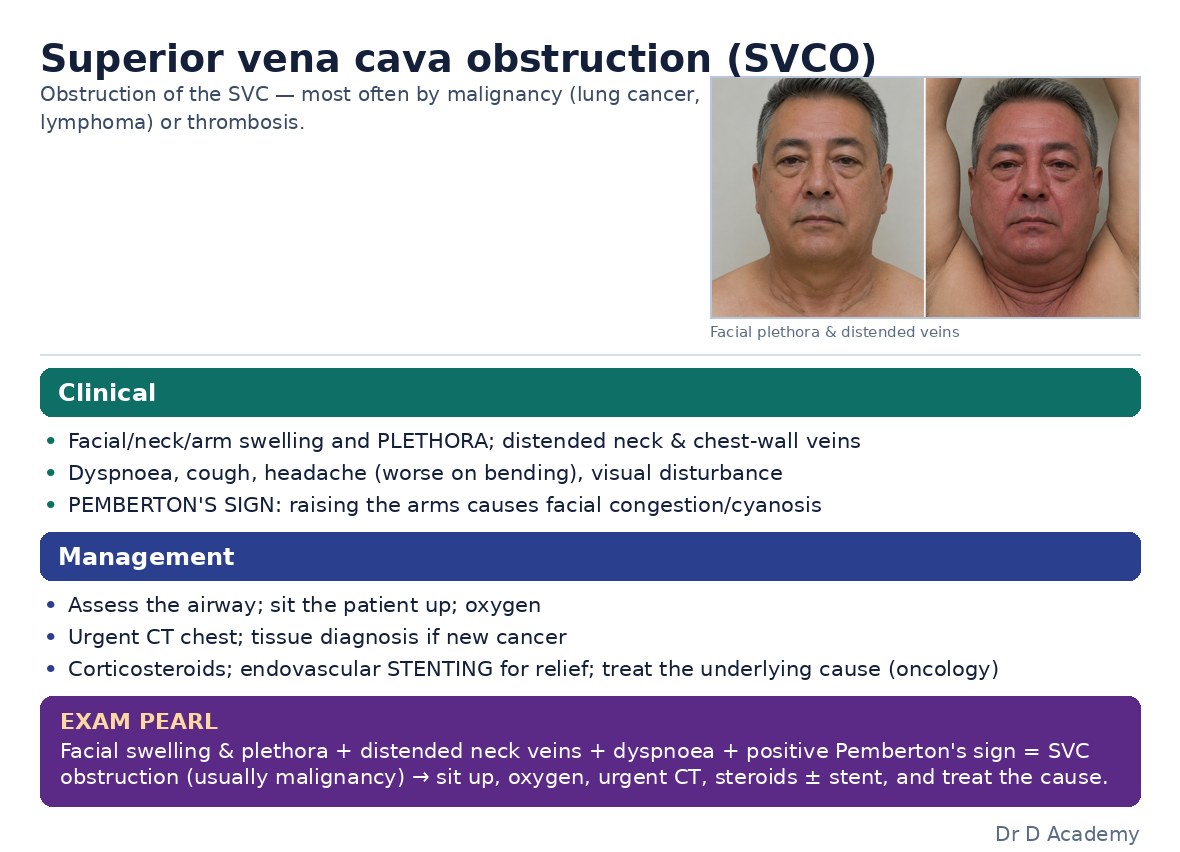
Obstruction of the SVC, usually by mediastinal tumour (lung cancer, lymphoma) or thrombus, causing facial/arm swelling, distended neck and chest veins, breathlessness and, when severe, airway or cerebral oedema.
Figures & algorithms
Red flags
- Stridor or airway compromise
- Reduced consciousness (cerebral oedema)
- Haemodynamic compromise
- Rapid progression of symptoms
Assessment
Differential diagnosis
- Cardiac tamponade
- Mediastinal mass without obstruction
- Angioedema
- Central venous thrombosis (line-related)
- Congestive cardiac failure
Investigations
- CT chest with contrast (level and cause of obstruction)
- CXR (mediastinal widening)
- Histological diagnosis (biopsy) before treatment where safe
- FBC, coagulation
- Assessment for airway/cerebral compromise
Management
- Sit the patient up and give oxygen
- Assess for the emergency features of airway compromise, stridor or reduced consciousness (rare but life-threatening)
- Obtain a tissue diagnosis before starting treatment when the patient is stable (guides therapy)
- For chemosensitive tumours (lymphoma, small-cell), treat the tumour; otherwise consider endovascular stenting for rapid relief
- Anticoagulate if thrombus is present or a stent is placed
- Use corticosteroids selectively and involve oncology urgently
Drugs & doses
Oxygen
Corticosteroids (dexamethasone) in selected steroid-responsive tumours or for oedema - avoid if it will obscure a lymphoma diagnosis
Anticoagulation if thrombus / post-stent
Tumour-directed therapy (chemotherapy/radiotherapy) as appropriate
Disposition
Admit; oncology and interventional radiology involvement; ICU/airway support if compromised.
Complications & pitfalls
- Airway obstruction
- Cerebral oedema
- Venous thrombosis / stent complications
- Tumour lysis when treatment started
Exam pearls
- SVC obstruction is rarely an immediate emergency - securing a tissue diagnosis first usually improves outcomes
- Endovascular stenting gives the fastest symptom relief when urgent
- True airway compromise or altered consciousness upgrades it to a genuine emergency
Disclaimer: Educational decision support for qualified clinicians and students — not a substitute for clinical judgement, local protocols or a full drug reference. Confirm every dose and contraindication against your formulary before prescribing.