Acute upper GI / variceal haemorrhage with shock
Resuscitation · Shock / Sepsis
Physician-written · Verified by three sets of doctors · Reviewed November 2026
Bedside summary
Shock from acute upper gastrointestinal bleeding (peptic ulcer or, in portal hypertension, oesophageal/gastric varices) requires simultaneous resuscitation and early endoscopy. Variceal bleeding carries high mortality and needs a vasoactive drug plus antibiotics BEFORE endoscopy. Use a restrictive transfusion strategy in haemodynamically stable patients, but resuscitate aggressively with blood products in active exsanguinating haemorrhage.
Figures & algorithms
Red flags
- Haemodynamic instability / ongoing haematemesis or melaena
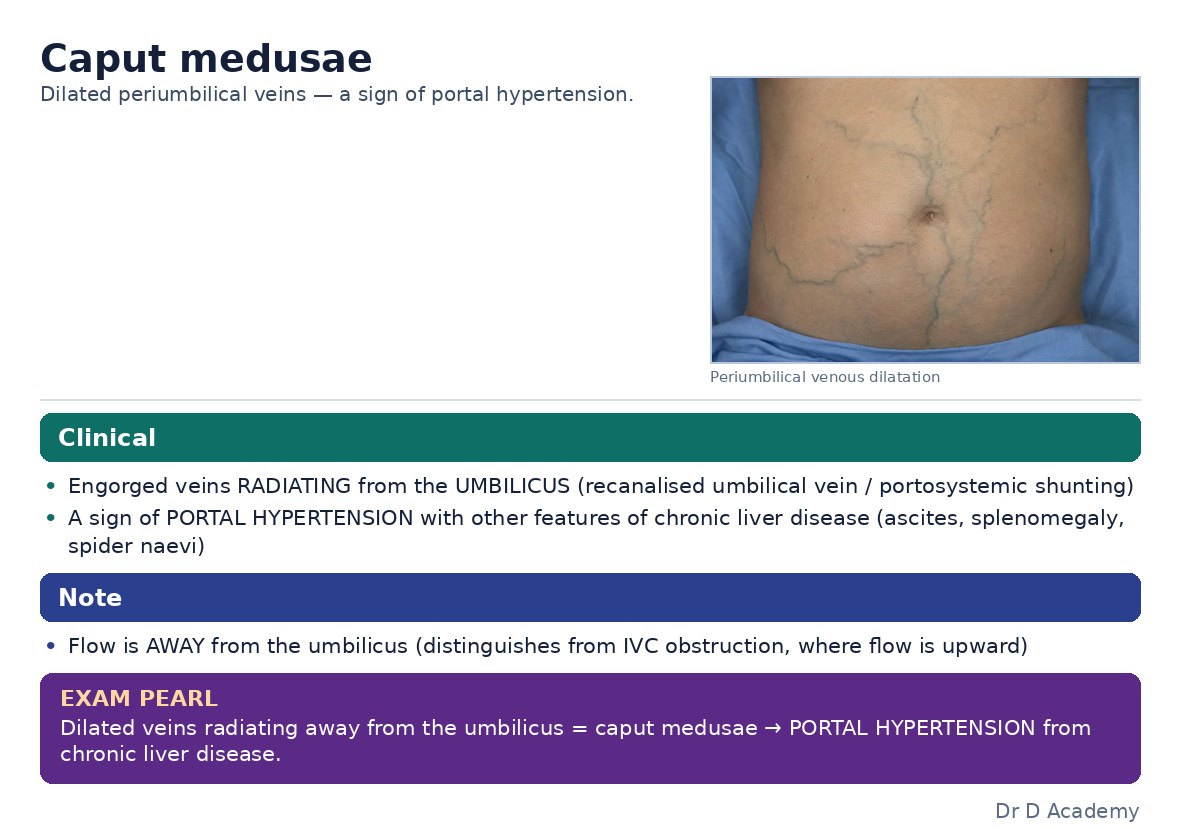
- Known cirrhosis/portal hypertension (variceal source likely)
- Fresh red haematemesis with shock (massive bleed)
- Rebleeding after endoscopic therapy
Assessment
Differential diagnosis
- Non-variceal: peptic ulcer, erosive disease, Mallory-Weiss tear, malignancy, aortoenteric fistula
- Variceal: oesophageal/gastric varices in chronic liver disease / portal hypertension
- Swallowed blood (epistaxis/haemoptysis) mimicking haematemesis
Investigations
- FBC, urea (raised in upper GI bleed), LFTs, coagulation/fibrinogen, group & crossmatch, venous lactate
- Risk scores (e.g. Glasgow-Blatchford) for triage; do not let low scores distract from an unstable patient
- Urgent upper GI endoscopy for diagnosis and haemostasis once resuscitated
Management
- Resuscitate: two large-bore cannulae, activate major haemorrhage if exsanguinating, and transfuse to targets.
- Use a RESTRICTIVE transfusion threshold (around Hb 70 g/L) in stable patients; transfuse liberally in active massive bleeding (confirm against local policy).
- Correct coagulopathy/thrombocytopenia and reverse anticoagulants per protocol; give platelets/fibrinogen as indicated.
- If VARICEAL bleeding is suspected (known liver disease), start a splanchnic vasoconstrictor (terlipressin or octreotide) AND prophylactic antibiotics immediately — before endoscopy.
- Arrange urgent endoscopy (ideally within 24 h; sooner if unstable) for band ligation (varices) or injection/clip/thermal therapy (ulcer); give a PPI for non-variceal/ulcer bleeds.
- For uncontrolled variceal bleeding, consider balloon tamponade as a bridge and refer for TIPS/interventional radiology.
Drugs & doses
Terlipressin (or octreotide) IV for suspected variceal bleeding — start before endoscopy (confirm against local policy)
Prophylactic antibiotics (e.g. ceftriaxone) in variceal bleeding / cirrhosis (confirm against local policy)
Proton pump inhibitor for peptic ulcer bleeding (per local policy on pre-endoscopy use)
Blood products to targets; tranexamic acid is NOT routinely recommended for GI bleeding
Reverse anticoagulants and correct coagulopathy per local protocol
Disposition
Critical care / HDU with gastroenterology; endoscopy and, for varices, interventional radiology/TIPS pathways.
Complications & pitfalls
- Exsanguination and aspiration
- Hepatic decompensation / hepatorenal syndrome in cirrhosis
- Rebleeding
- Transfusion-related complications
Exam pearls
- Suspected varices: vasoactive drug + antibiotics BEFORE the scope.
- Restrictive transfusion (~70 g/L) improves outcomes in stable upper GI bleeding.
- Balloon tamponade is a temporary bridge to TIPS/endoscopy for torrential variceal bleeding.
Educational — confirm all doses against local policy.
Disclaimer: Educational decision support for qualified clinicians and students — not a substitute for clinical judgement, local protocols or a full drug reference. Confirm every dose and contraindication against your formulary before prescribing.