Pit-viper (Crotalinae) snakebite
Bedside summary
Rattlesnakes, cottonmouths/water moccasins and copperheads. Venom causes local tissue injury (pain, progressive swelling, ecchymosis, blistering), haematotoxicity (thrombocytopenia, hypofibrinogenaemia, prolonged PT → bleeding) and sometimes systemic/neurotoxic effects. Severity ranges from a “dry bite” to limb- and life-threatening envenomation.
Figures & algorithms
Red flags
- Rapidly progressive swelling or systemic bleeding
- Hypotension / shock
- Falling fibrinogen or platelets, rising PT/INR
- Compartment syndrome (tense compartment, disproportionate pain)
- Airway/neurotoxic features
Assessment
Differential diagnosis
- Non-venomous snakebite / dry bite
- Cellulitis or other bite/sting
- Compartment syndrome from another cause
- Local allergic reaction
- Coral (elapid) envenomation (neurotoxic, different antivenom)
Investigations
- FBC/platelets, PT/INR, FIBRINOGEN (repeat serially — may crash within an hour)
- CK, U&E, group & save; urinalysis (myoglobin)
- Mark the LEADING EDGE of swelling with the time and re-mark hourly; measure limb circumferences
- D-dimer / FDP if fibrinogen unavailable; compartment pressures if compartment syndrome suspected
Management
- Move away from the snake; keep the patient calm and still; remove rings, watches and tight clothing.
- Immobilise the limb in a splint and keep it at roughly heart level; transport rapidly to a facility with antivenom.
- Do NOT apply a tourniquet, do NOT cut/suck/apply ice or electric shock, and do NOT use pressure-immobilisation bandaging (used for elapids, harmful here — it concentrates local venom).
- Resuscitate shock; large-bore IV access in an UNAFFECTED limb; analgesia (opioids, not NSAIDs — bleeding risk).
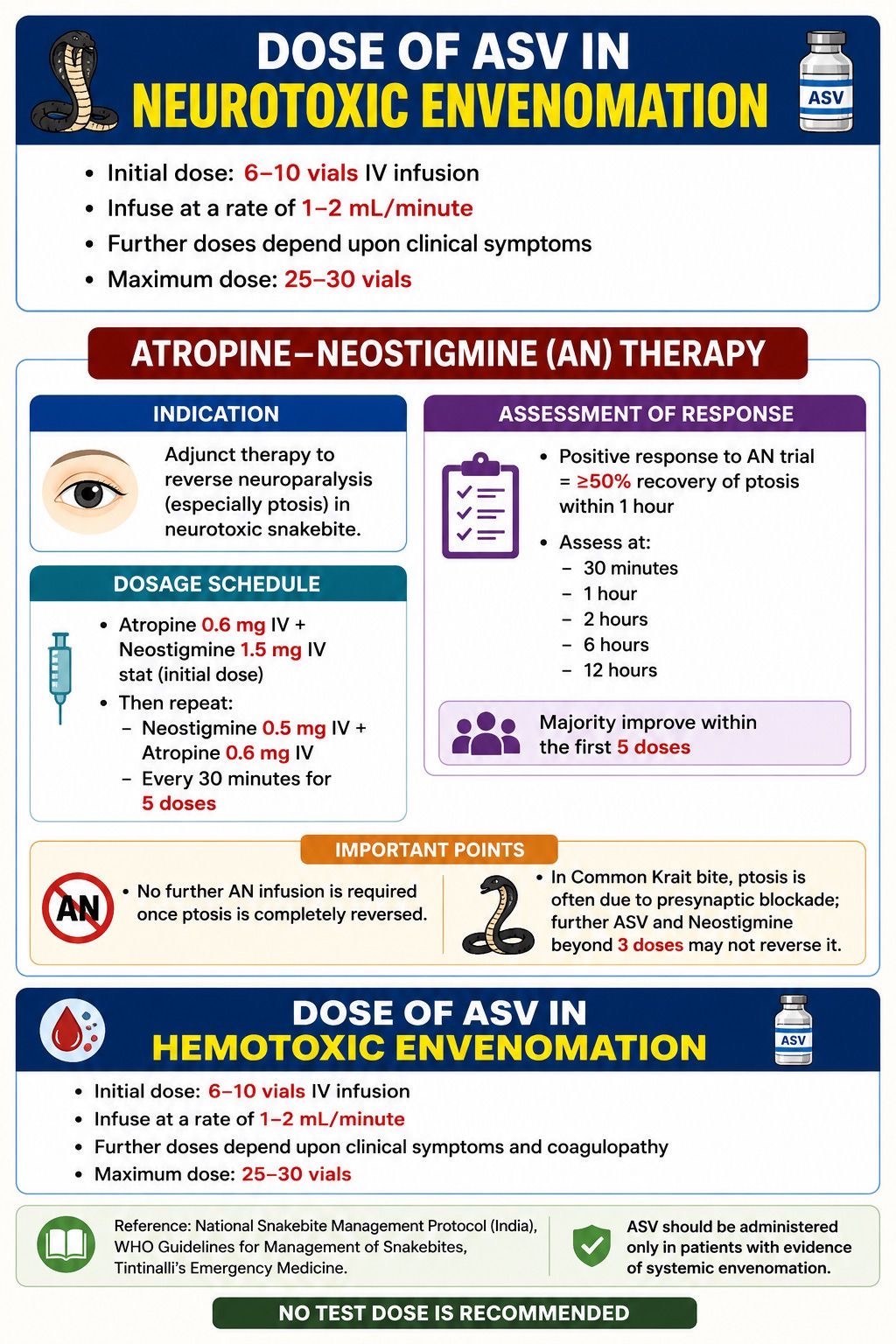
- Give ANTIVENOM for progressive swelling, coagulopathy (↓fibrinogen/↓platelets/↑PT) or systemic toxicity: CroFab (ovine Fab) 4–6 vials to achieve initial control, repeat until controlled, then maintenance 2 vials at 6, 12 and 18 h; or Anavip (equine F(ab’)₂) per protocol.
- Recheck bloods 1 h after each antivenom dose; observe an apparent dry bite for ≥ 8–12 h with serial exams and labs before discharge.
Drugs & doses
Disposition
Complications & pitfalls
- Coagulopathy and haemorrhage (may recur days later)
- Tissue necrosis; secondary infection
- Compartment syndrome (rare — antivenom first, fasciotomy seldom needed)
- Antivenom anaphylaxis / serum sickness
- Recurrent thrombocytopenia after discharge
Exam pearls
- Antivenom — not fasciotomy — is the treatment for the coagulopathy and most swelling; measure pressures before cutting.
- Pressure-immobilisation bandages are for ELAPID bites; they worsen local Crotalinae injury.
- A benign-looking bite can develop coagulopathy hours later — observe and repeat labs.
- Watch for recurrent/late coagulopathy after Fab antivenom — arrange follow-up bloods.
No tourniquet, no cut-and-suck, no ice, no pressure bandage. Immobilise, mark the swelling, and give antivenom for progression, coagulopathy or systemic toxicity — repeating labs after each dose.
Disclaimer: Educational decision support for qualified clinicians and students — not a substitute for clinical judgement, local protocols or a full drug reference. Confirm every dose and contraindication against your formulary before prescribing.