Trauma — ATLS 11th edition quick reference
Reference · Trauma
Physician-written · Verified by three sets of doctors · Reviewed November 2026
Bedside summary
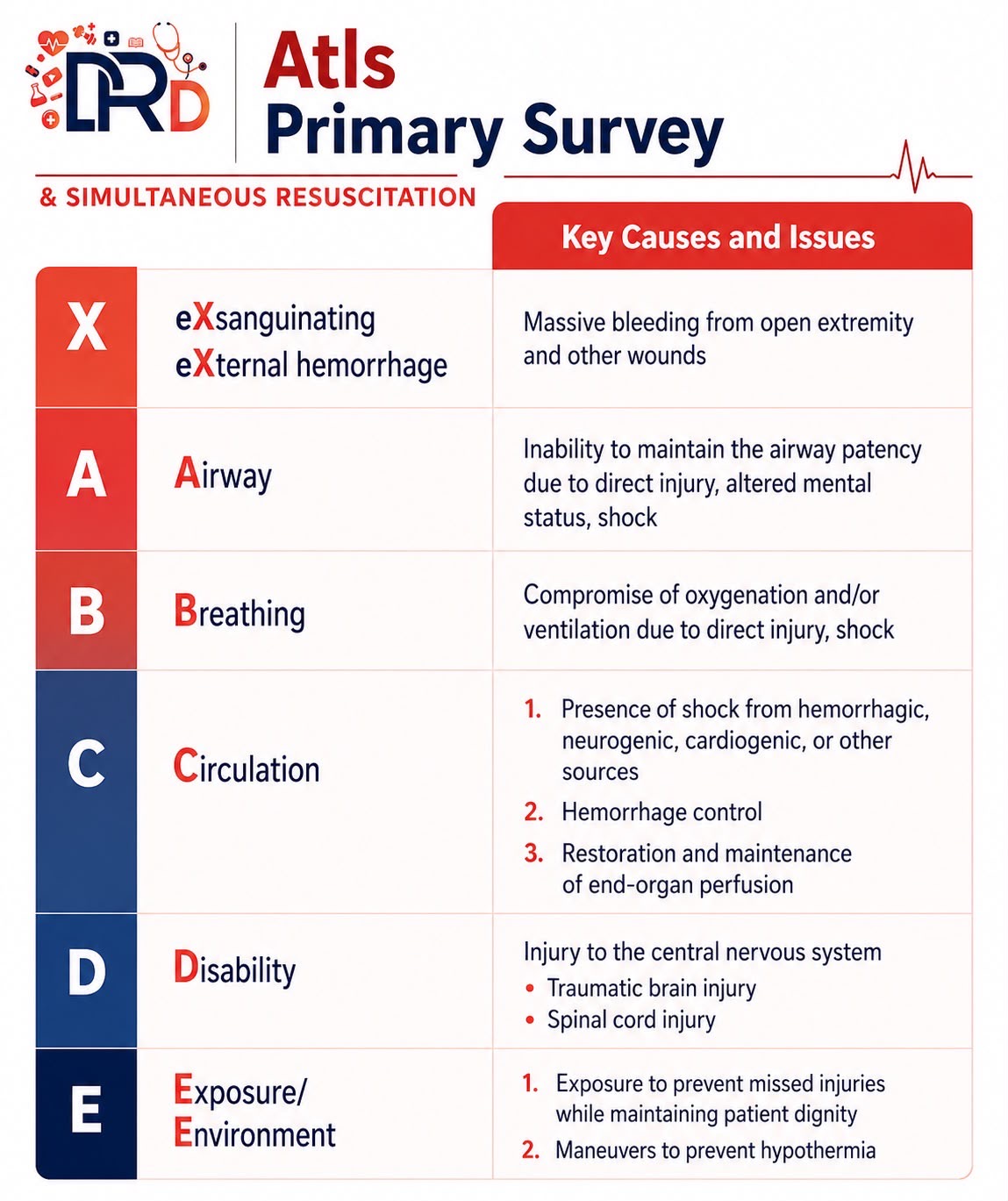
A visual quick-reference to the current ATLS (11th edition) trauma approach: the xABCDE primary survey with simultaneous resuscitation, recognising and controlling haemorrhage, and safe handover. Use it alongside the individual trauma protocols (primary survey, traumatic brain injury, pelvic fracture, major burns).
Figures & algorithms
Red flags
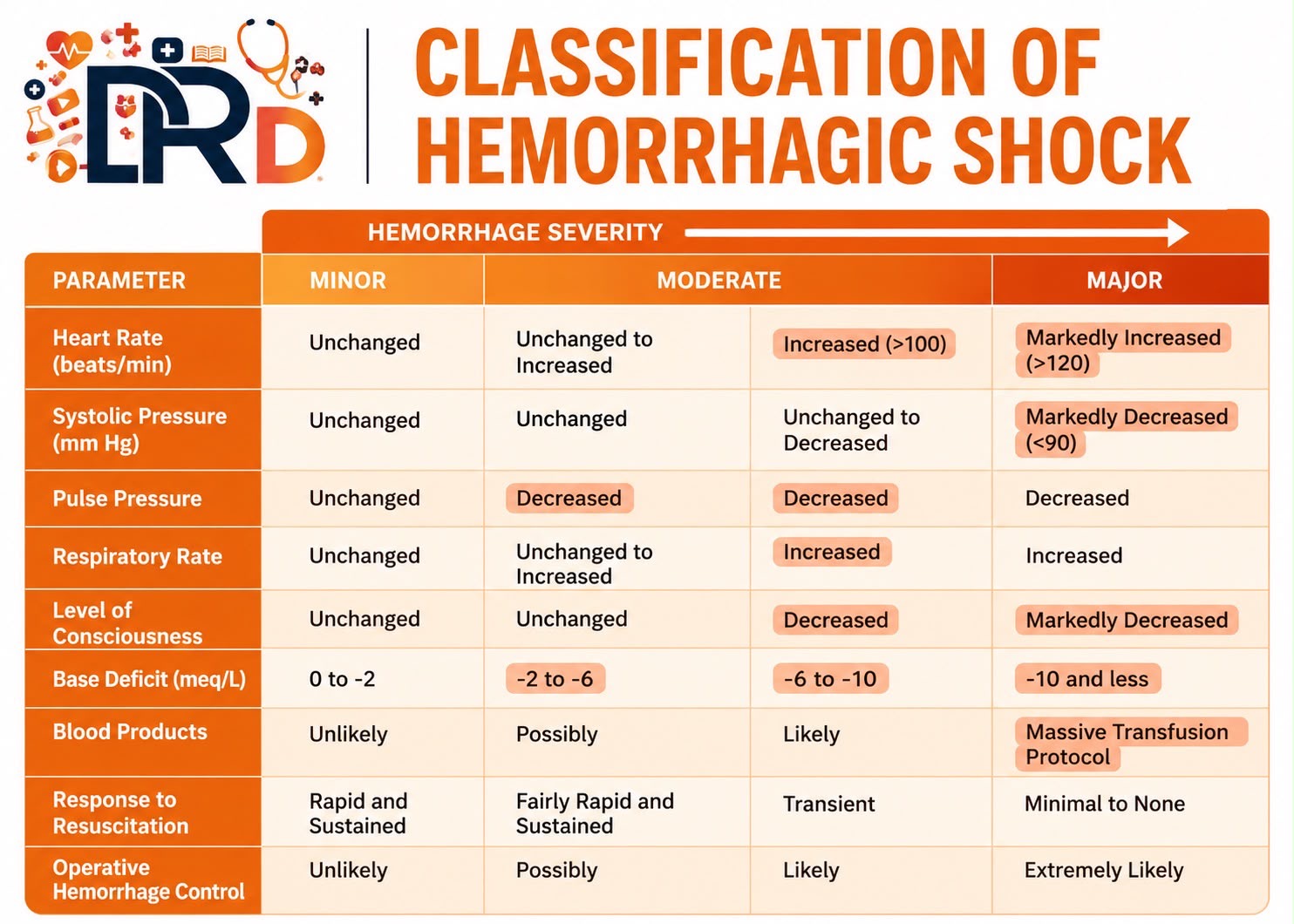
- Haemorrhagic shock — HR >120, SBP <90, base deficit worse than −10 → MAJOR class, activate massive transfusion
- Catastrophic external haemorrhage (tourniquet before airway)
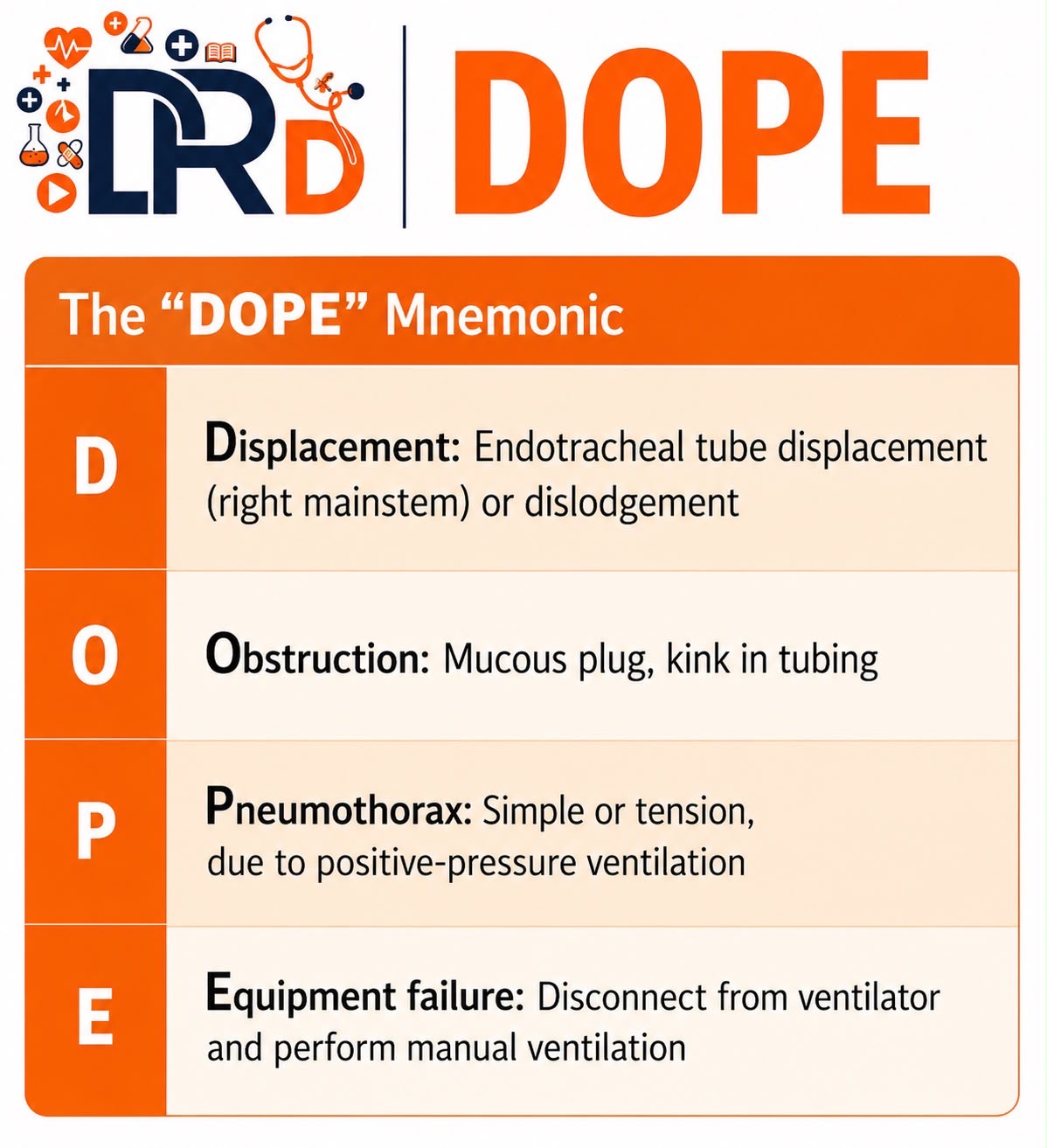
- Sudden deterioration in a ventilated patient → think DOPE (Displacement, Obstruction, Pneumothorax, Equipment)
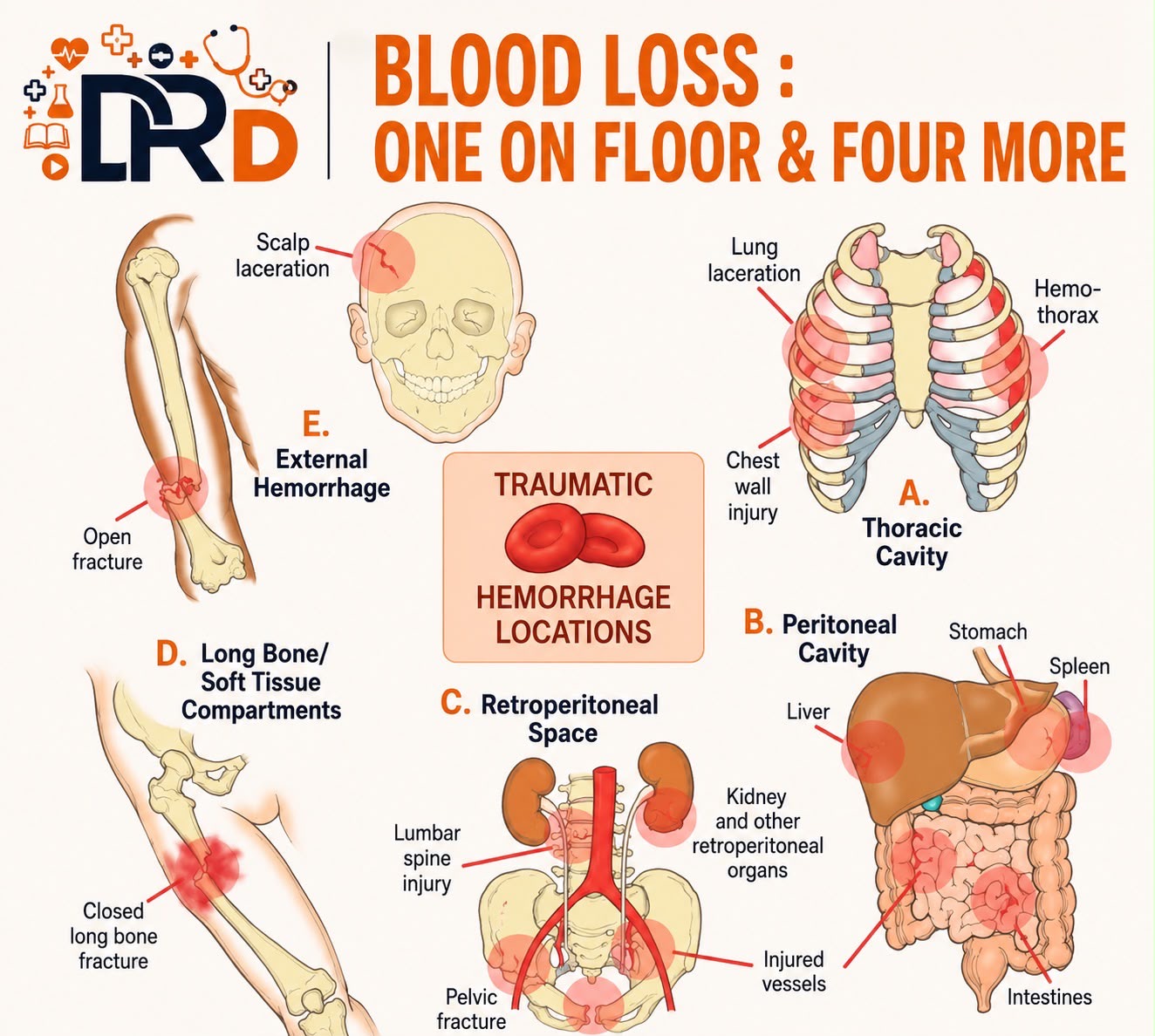
- Occult bleeding: "one on the floor and four more" — chest, abdomen/peritoneum, retroperitoneum/pelvis, long bones/soft tissue, plus external
Management
- xABCDE primary survey with SIMULTANEOUS resuscitation:
- X — eXsanguinating external haemorrhage: control FIRST (direct pressure, tourniquet, haemostatic dressing).
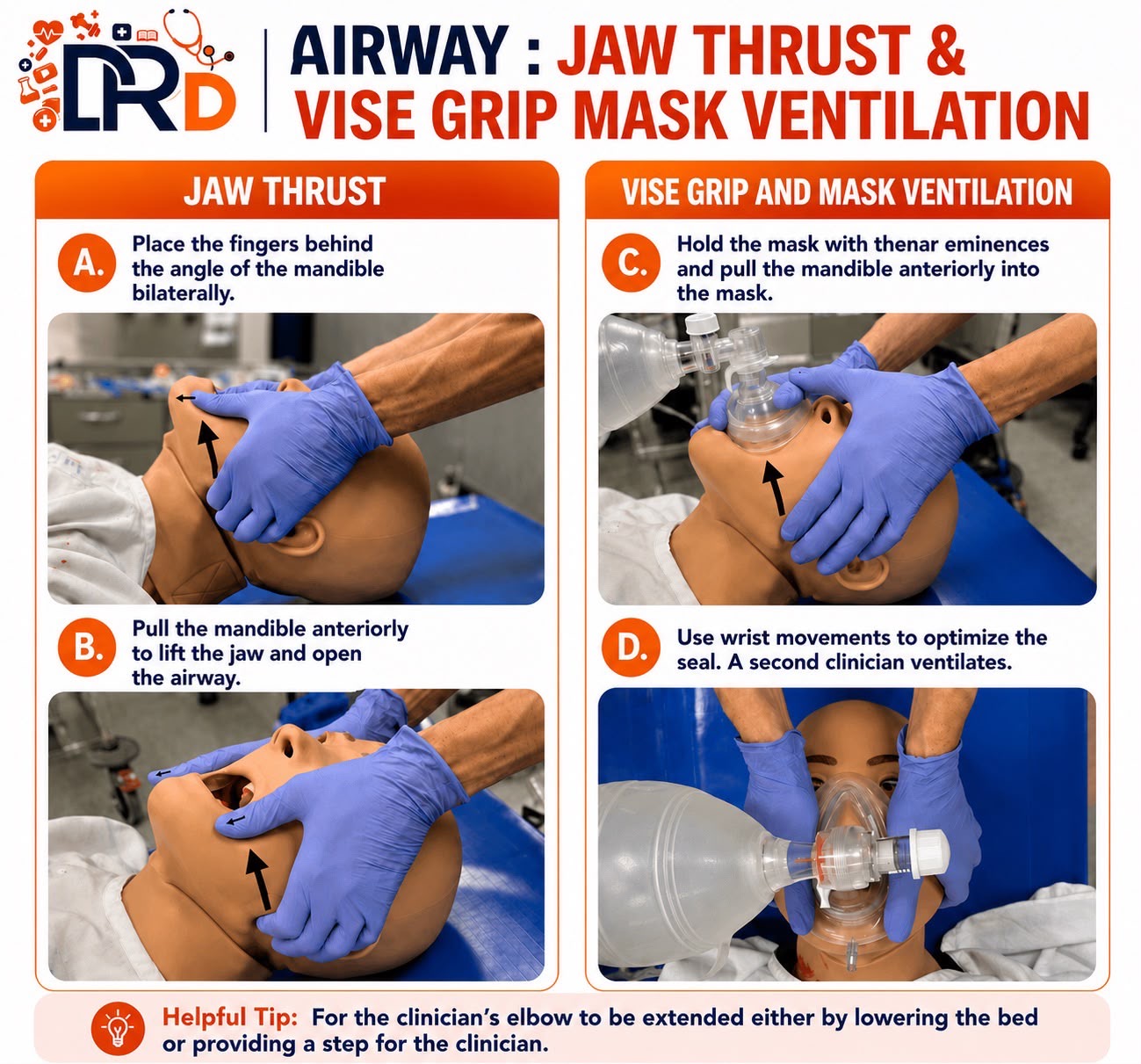
- A — Airway with C-spine protection: jaw thrust, suction, adjuncts; definitive airway if needed (and high-flow O2).
- B — Breathing: find and treat tension pneumothorax, open chest wound (3-sided dressing), massive haemothorax.
- C — Circulation: two large-bore IV/IO, control haemorrhage, pelvic binder, balanced blood products (1:1:1) + TXA; identify bleeding (see "one on the floor and four more").
- D — Disability: GCS, pupils, glucose; protect from secondary brain injury.
- E — Exposure/Environment: expose to find injuries, then prevent hypothermia; maintain dignity.
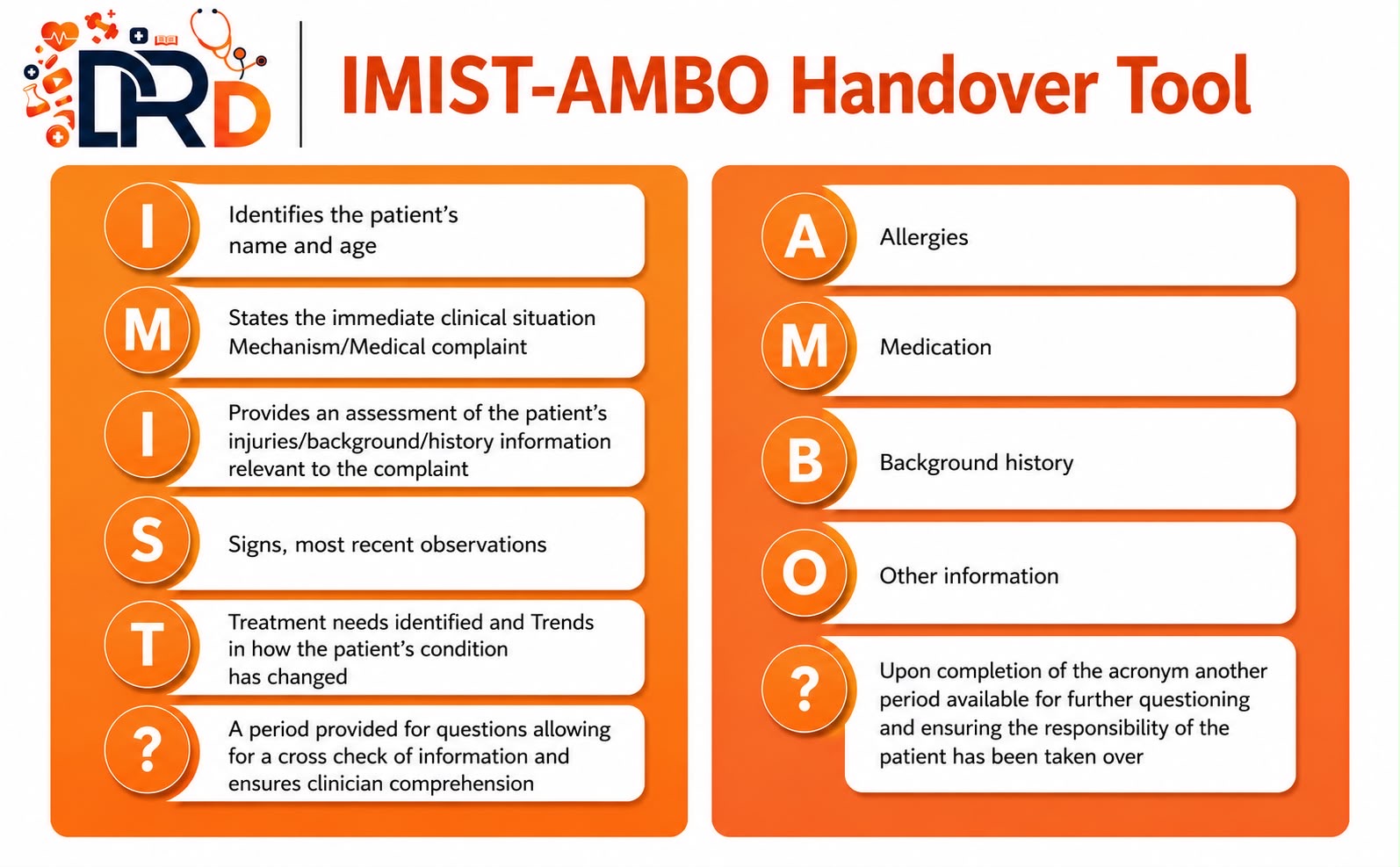
- Reassess continuously; escalate to trauma team / theatre / interventional radiology; hand over with IMIST-AMBO.
Drugs & doses
Tranexamic acid 1 g IV (then 1 g over 8 h) — give early in significant trauma haemorrhage
Balanced blood products (1:1:1 RBC:FFP:platelets) via massive transfusion protocol
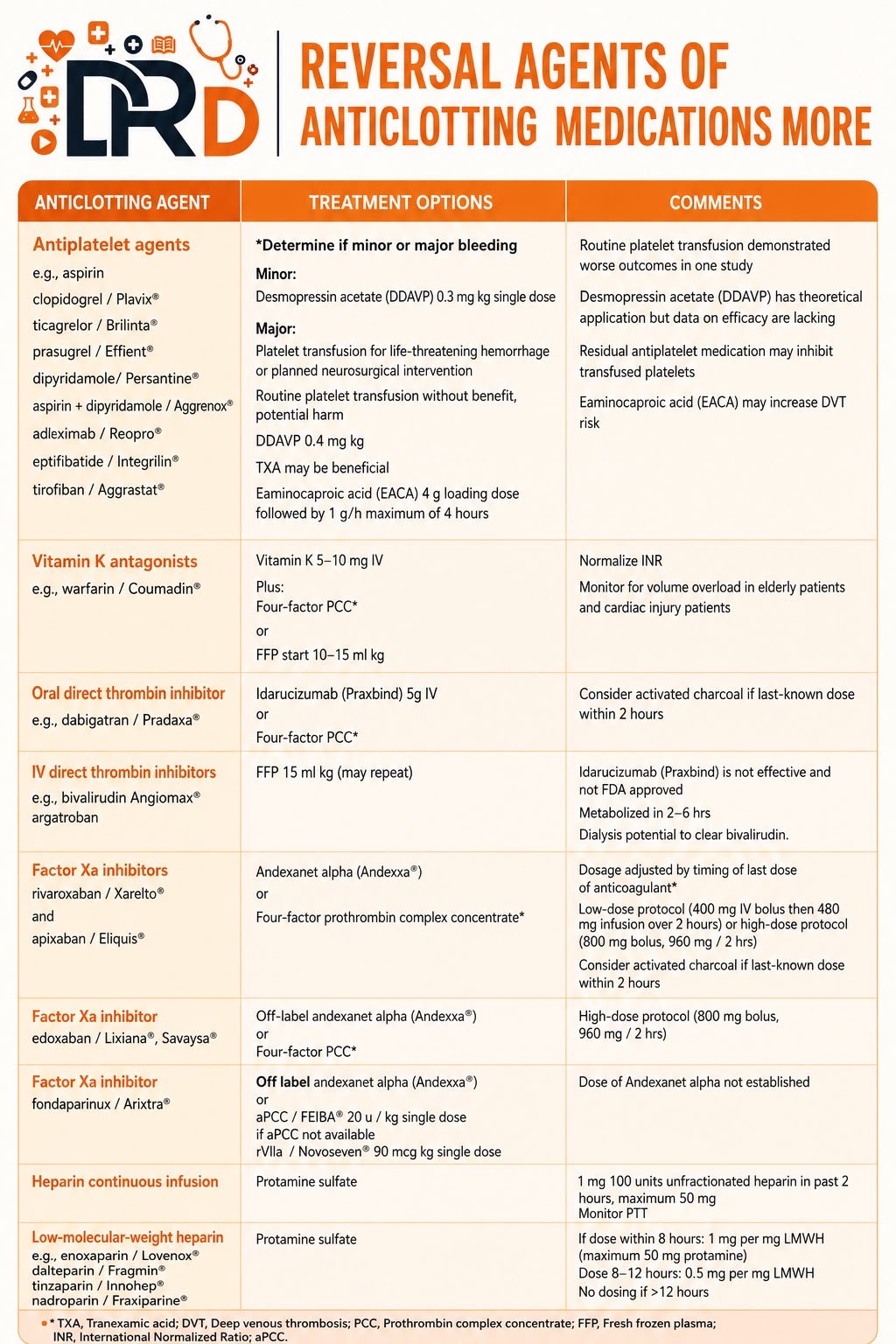
Anticoagulant reversal (see image): warfarin → vitamin K + 4-factor PCC; dabigatran → idarucizumab; factor-Xa inhibitors → andexanet alfa or 4-factor PCC; heparin → protamine
Disposition
Trauma team activation; theatre / interventional radiology / CT per stability; transfer to a major-trauma centre when indicated. ICU post-stabilisation.
Complications & pitfalls
- Exsanguination and traumatic cardiac arrest
- Hypothermia–acidosis–coagulopathy ("lethal triad")
- Missed occult haemorrhage
Exam pearls
- ATLS 11th ed puts eXsanguinating haemorrhage FIRST (xABCDE) — a tourniquet can come before the airway.
- Bleeding hides in five places: "one on the floor and four more" (chest, abdomen, pelvis/retroperitoneum, long bones, external).
- Haemorrhagic-shock class (HR/SBP/base deficit) drives the transfusion decision — see the classification image.
- In a crashing ventilated trauma patient, run DOPE before anything else.
- Hand over structured: IMIST-AMBO.
Adapted from ATLS 11th edition and WSES/guideline tables (Dr D Academy infographics). Educational decision support — follow ATLS and local major-trauma protocols; confirm all doses.
Disclaimer: Educational decision support for qualified clinicians and students — not a substitute for clinical judgement, local protocols or a full drug reference. Confirm every dose and contraindication against your formulary before prescribing.