ACE-inhibitor angioedema
Angioedema · Allergy / Immunology
Physician-written · Verified by three sets of doctors · Reviewed November 2026
Bedside summary
Bradykinin-mediated angioedema (not histaminergic) from ACE inhibitors — may occur years into therapy. Typically non-urticarial swelling of lips, tongue, larynx; poorly responsive to adrenaline/steroids/antihistamines.
Figures & algorithms
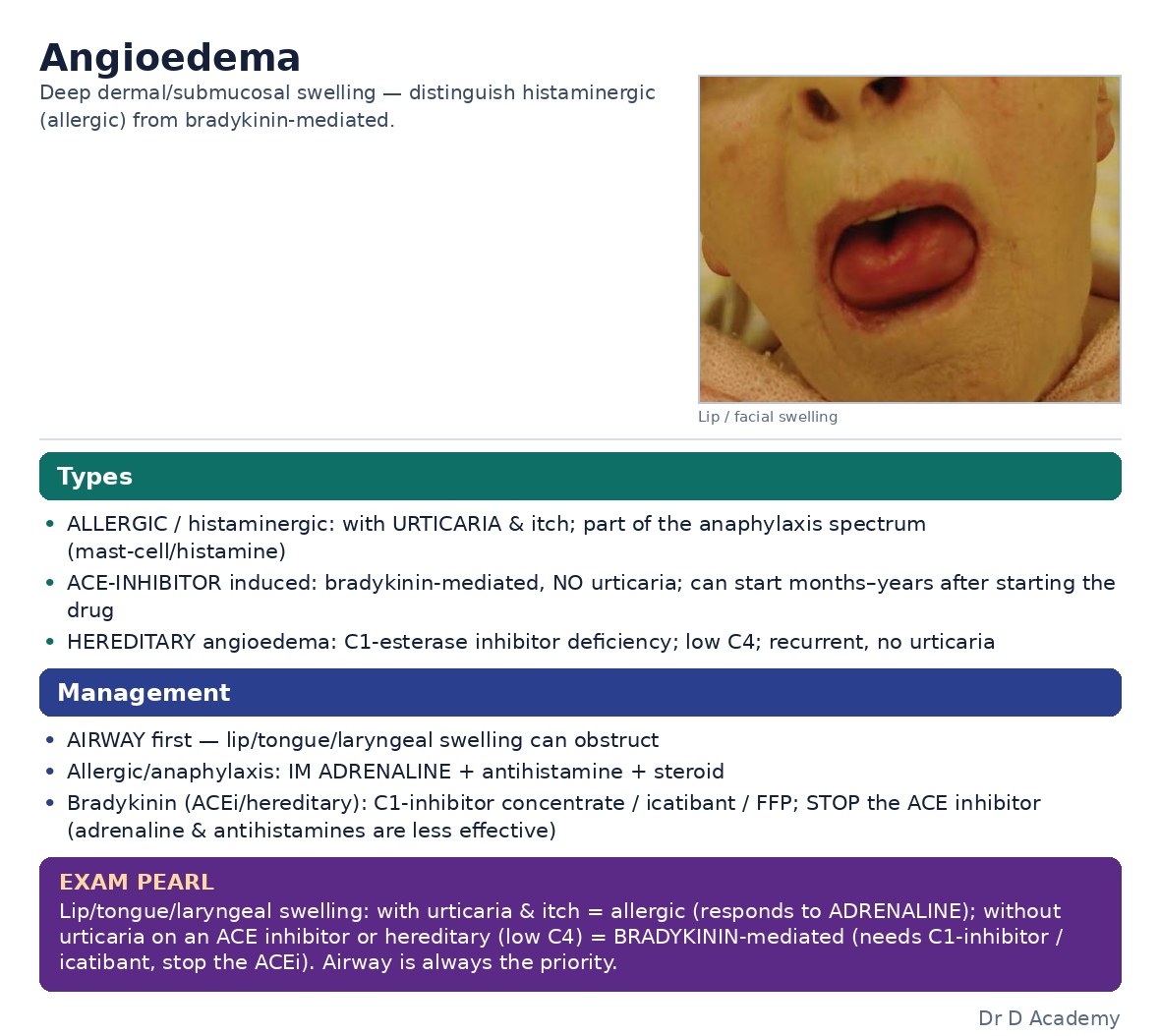
Red flags
- Tongue/floor-of-mouth or laryngeal swelling
- Voice change, stridor, drooling
- Rapid progression
Assessment
Differential diagnosis
- Allergic (histaminergic) angioedema/anaphylaxis
- Hereditary/acquired C1-esterase deficiency
- Idiopathic angioedema
- Ludwig’s angina
- Cellulitis of the face
Investigations
- Clinical diagnosis; airway assessment
- C4 / C1-esterase inhibitor level if recurrent (exclude HAE)
- Nasendoscopy to assess laryngeal involvement
Management
- Assess and secure the AIRWAY early — senior anaesthetics/ENT
- STOP the ACE inhibitor permanently
- Standard anaphylaxis drugs often ineffective but give if any doubt about allergic cause
- Consider bradykinin-targeted therapy (icatibant) or C1-INH/FFP in severe/progressive cases
- Observe — swelling can progress over hours
Drugs & doses
Icatibant or C1-esterase inhibitor / FFP (severe)
Adrenaline/steroids/antihistamine (give if allergic cause not excluded)
Airway adjuncts
Disposition
Admit/observe for airway; ICU if laryngeal involvement; document drug allergy.
Complications & pitfalls
- Airway obstruction
- Recurrence if drug continued
Exam pearls
- Bradykinin-mediated — does not respond well to adrenaline/antihistamine/steroid
- Can begin years after starting the ACE inhibitor
- Airway management is the priority; the drug must be stopped for life
Think bradykinin, not histamine: secure the airway, stop the ACE inhibitor, consider icatibant/C1-INH.
Disclaimer: Educational decision support for qualified clinicians and students — not a substitute for clinical judgement, local protocols or a full drug reference. Confirm every dose and contraindication against your formulary before prescribing.