Allergen immunotherapy (subcutaneous) anaphylaxis / systemic reaction
Iatrogenic anaphylaxis · Allergy / Immunology
Physician-written · Verified by three sets of doctors · Reviewed November 2026
Bedside summary
Systemic allergic reaction to subcutaneous allergen immunotherapy (allergy shots), ranging from urticaria to life-threatening anaphylaxis with bronchospasm, respiratory failure and hypotension. Most reactions begin within 30 minutes of injection; rare but occasionally fatal. DRAFT for clinician review.
Figures & algorithms
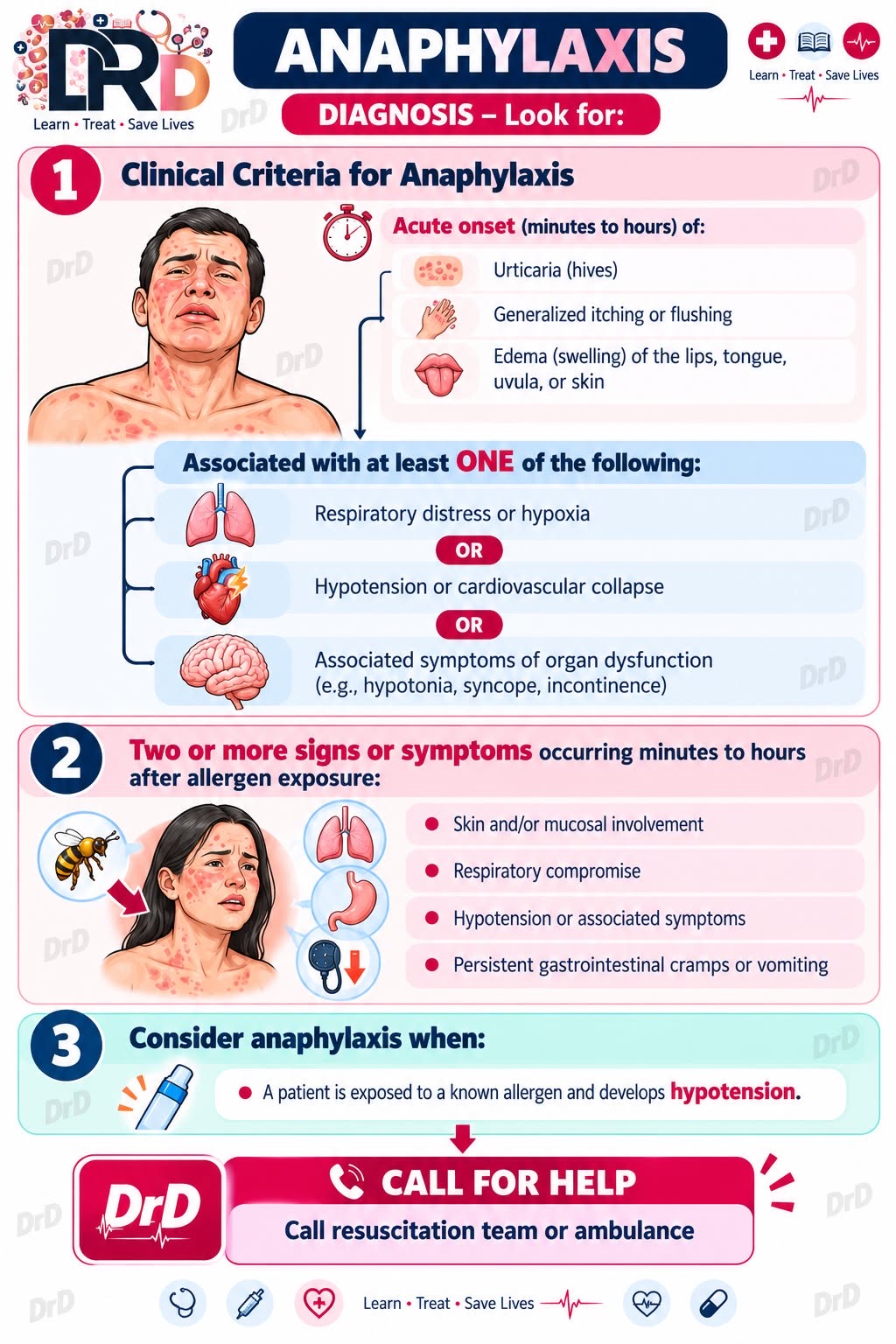
Red flags
- Hypotension
- Bronchospasm / respiratory failure
- Rapidly progressive symptoms
- Known asthma, especially uncontrolled or FEV1 <70% predicted (strongest risk factor for fatal/near-fatal reactions)
- Late-onset reaction (>30 minutes)
- Patient on a beta-blocker or ACE inhibitor
Assessment
Differential diagnosis
- Anaphylaxis from another cause
- Vasovagal reaction
- Large local injection-site reaction (not systemic)
- Asthma exacerbation
- Panic attack
Investigations
- Clinical diagnosis — do not delay treatment; this is anaphylaxis management
- Review which allergen/dose was given, asthma status (pre-injection FEV1/PEF), and beta-blocker / ACE-inhibitor use
Management
- Immediate anaphylaxis treatment — IM epinephrine first-line, airway/oxygen, IV fluids, supine positioning
- Observe for biphasic reaction
- For beta-blocked patients not responding to epinephrine, consider glucagon
- After recovery, arrange allergist review of dose/schedule and asthma control
- Ensure higher-risk patients carry self-injectable epinephrine
Drugs & doses
IM epinephrine — first-line and time-critical (delayed or omitted epinephrine is associated with fatal outcomes). Treat per the Anaphylaxis entry (adjuncts: oxygen, IV fluids, antihistamines, inhaled bronchodilators, corticosteroids per protocol).
Glucagon — for refractory anaphylaxis in patients on beta-blockers (impaired epinephrine response).
Note: premedication (H1 antihistamine ± montelukast ± prednisone) reduces reactions mainly in accelerated/cluster build-up — a prevention measure, not acute treatment.
Disposition
Resuscitate and observe for a biphasic reaction (typically ≥4–6 hours, longer per severity). Discharge with an anaphylaxis action plan and epinephrine autoinjector for higher-risk patients; refer back to the prescribing allergist for dose adjustment, asthma optimisation and review before resuming immunotherapy.
Complications & pitfalls
- Anaphylaxis
- Biphasic reaction (10–23%)
- Respiratory failure / death (rare — roughly 1 fatal per 6 million injections)
- Complications of under-treatment
Exam pearls
- 85–90% of serious reactions start within 30 minutes — hence the mandated 30-minute post-injection observation; the remainder within ~6 hours
- Uncontrolled asthma is the dominant risk for fatal reactions — SCIT should be withheld when asthma is poorly controlled
- Timely epinephrine is the key determinant of outcome (delayed in ~30% of fatal vs ~6% of near-fatal reactions)
- Beta-blockers can make anaphylaxis refractory — consider glucagon
- SCIT should only be given where staff/equipment can treat anaphylaxis; home administration is not recommended
Disclaimer: Educational decision support for qualified clinicians and students — not a substitute for clinical judgement, local protocols or a full drug reference. Confirm every dose and contraindication against your formulary before prescribing.