Gangrene (wet / dry / gas)
Tissue necrosis · Vascular
Physician-written · Verified by three sets of doctors · Reviewed November 2026
Bedside summary
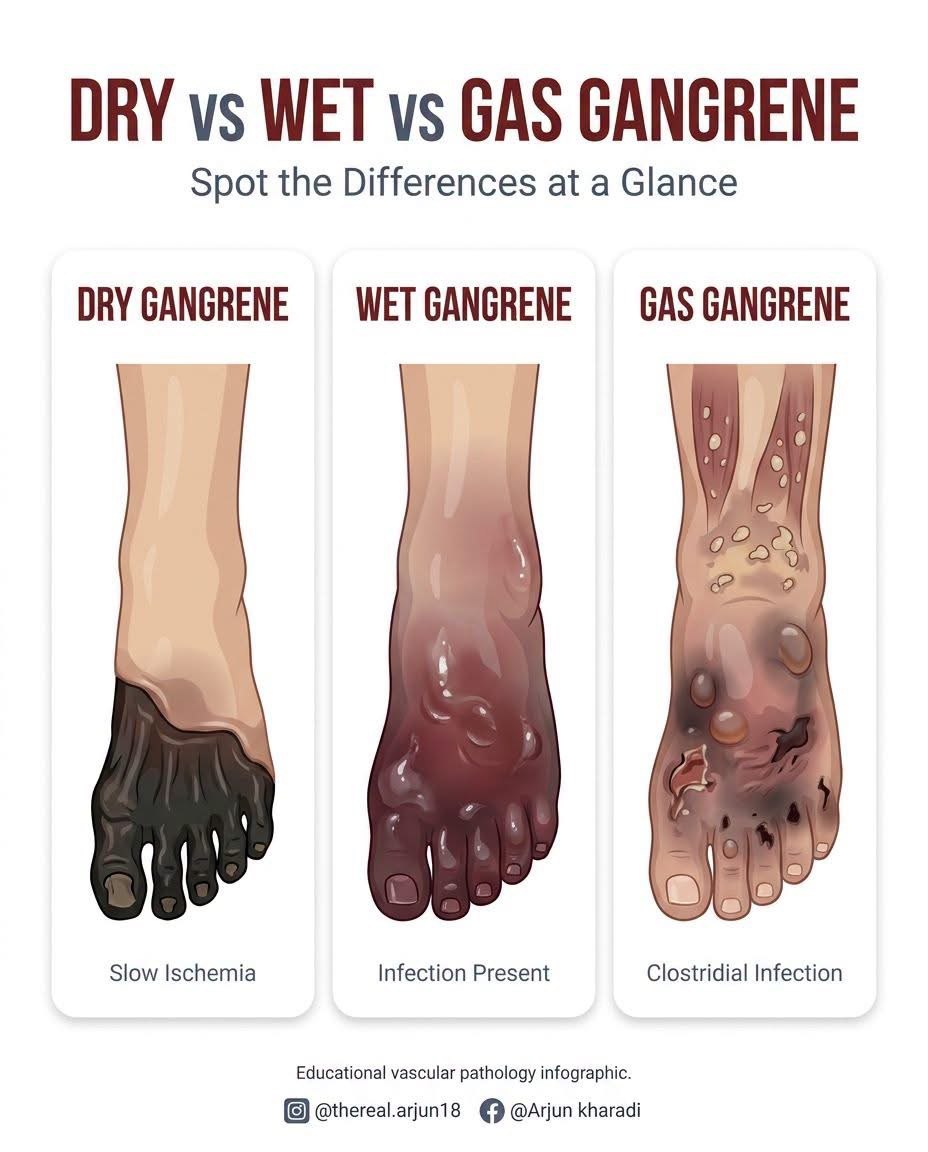
Tissue death from ischaemia (dry), superimposed infection (wet) or clostridial/gas-forming organisms (gas gangrene = surgical emergency with rapid systemic toxicity).
Figures & algorithms
Red flags
- Crepitus / gas in tissues
- Rapidly spreading necrosis, systemic toxicity
- Pain out of proportion
- Septic shock
Assessment
Differential diagnosis
- Necrotising fasciitis
- Cellulitis
- Critical limb ischaemia
- Deep abscess
- Calciphylaxis
- Pyoderma gangrenosum
Investigations
- FBC, CRP, U&E, glucose, lactate, blood cultures, creatine kinase
- X-ray/CT for soft-tissue gas
- Arterial imaging for ischaemic cause
- Wound swab/tissue for microbiology
Management
- Resuscitate; sepsis six if septic; analgesia
- Broad-spectrum IV antibiotics (cover anaerobes — e.g. include clindamycin/penicillin for clostridia)
- URGENT surgical review — debridement/amputation for wet or gas gangrene
- Revascularisation assessment for ischaemic (dry) gangrene
- Consider hyperbaric oxygen for clostridial gas gangrene (adjunct, do not delay surgery)
Drugs & doses
Broad-spectrum antibiotics + anaerobic cover (e.g. piperacillin-tazobactam + clindamycin)
IV fluids; analgesia
Disposition
Emergency surgical admission/theatre; ICU for systemic toxicity.
Complications & pitfalls
- Sepsis, multi-organ failure
- Limb loss
- Death (gas gangrene) without urgent surgery
Exam pearls
- Gas gangrene = surgical emergency; antibiotics alone are not enough
- Clindamycin reduces clostridial toxin production
- Dry gangrene needs revascularisation; wet/gas needs the knife
Wet and gas gangrene are surgical emergencies — antibiotics buy time, surgery saves life and limb.
Disclaimer: Educational decision support for qualified clinicians and students — not a substitute for clinical judgement, local protocols or a full drug reference. Confirm every dose and contraindication against your formulary before prescribing.