Spontaneous retroperitoneal / rectus sheath haematoma (anticoagulant-associated)
Bedside summary
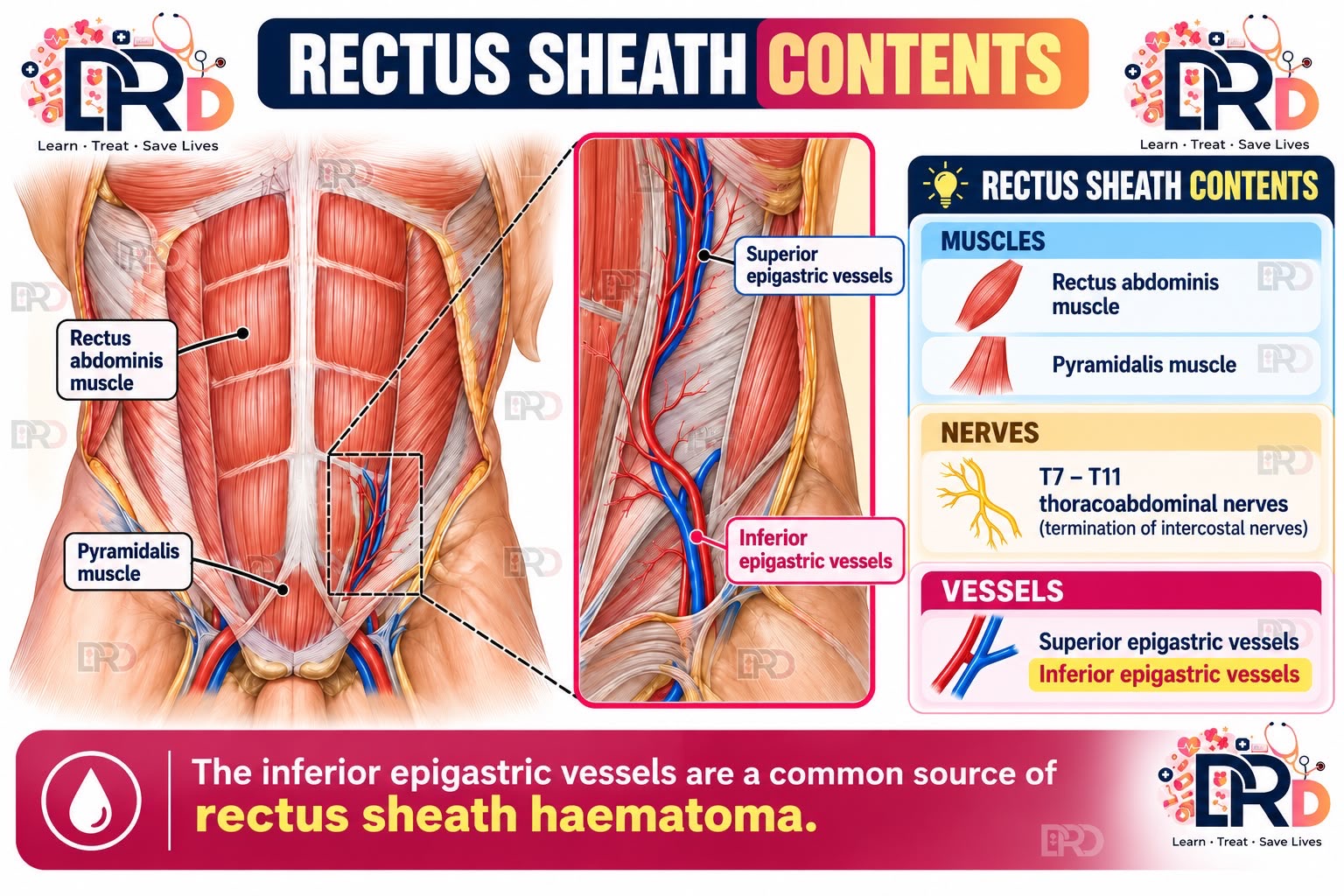
Spontaneous bleeding into the retroperitoneum or rectus sheath occurs typically in anticoagulated or antiplatelet-treated patients (often elderly), sometimes after coughing, straining or minor trauma, or following femoral arterial puncture. It can cause occult, large-volume blood loss with flank/abdominal pain, a tender mass and haemodynamic instability. Early recognition, reversal of anticoagulation and haemorrhage control prevent deterioration; many settle with conservative management.
Figures & algorithms
Red flags
- Haemodynamic instability / falling haemoglobin
- Active contrast extravasation on CT
- Expanding abdominal/flank mass
- Signs of abdominal compartment syndrome or femoral nerve palsy (large iliopsoas bleed)
Assessment
Differential diagnosis
- Ruptured/leaking abdominal aortic aneurysm
- Acute abdomen (appendicitis, diverticulitis), renal colic
- Femoral/iliac arterial injury or pseudoaneurysm post-catheterisation
- Other intra-abdominal haemorrhage (splenic, ovarian)
Investigations
- Contrast CT of the abdomen/pelvis is the key test (defines haematoma, active contrast extravasation/"blush", source)
- FBC (serial Hb), coagulation/INR, group & save/crossmatch, renal function
- Ultrasound may show a rectus sheath mass but CT is superior for retroperitoneal bleeds and active extravasation
Management
- Resuscitate: large-bore IV access, crossmatch, and transfuse to haemodynamic targets using a restrictive strategy; activate the major haemorrhage protocol if unstable.
- STOP the offending anticoagulant/antiplatelet and REVERSE it: vitamin K plus prothrombin complex concentrate for warfarin; specific reversal agents for DOACs; consider protamine for heparin; platelets/tranexamic acid as appropriate.
- Most stable patients are managed CONSERVATIVELY with monitoring, analgesia and correction of coagulopathy.
- For ongoing bleeding/instability or active extravasation on CT, arrange transcatheter arterial EMBOLISATION (interventional radiology) — the preferred control for most of these bleeds.
- Reserve surgery for failed embolisation, abdominal compartment syndrome, or expanding haematoma threatening viability.
- Reassess the indication for anticoagulation and restart only when safe; manage pain and the underlying trigger.
Drugs & doses
Disposition
Complications & pitfalls
- Haemorrhagic shock and death
- Abdominal compartment syndrome
- Femoral neuropathy (retroperitoneal/iliopsoas haematoma)
- Thrombosis if anticoagulation withheld for the original indication
Exam pearls
- Think spontaneous retroperitoneal bleed in an anticoagulated patient with unexplained flank/abdominal pain and a falling Hb — image with contrast CT.
- Reverse anticoagulation and resuscitate; most stable bleeds settle conservatively.
- Active extravasation → interventional radiology embolisation before considering surgery.
Educational — confirm all doses against local policy.
Disclaimer: Educational decision support for qualified clinicians and students — not a substitute for clinical judgement, local protocols or a full drug reference. Confirm every dose and contraindication against your formulary before prescribing.