Superior vena cava obstruction
Oncological/Vascular · Vascular
Physician-written · Verified by three sets of doctors · Reviewed November 2026
Bedside summary
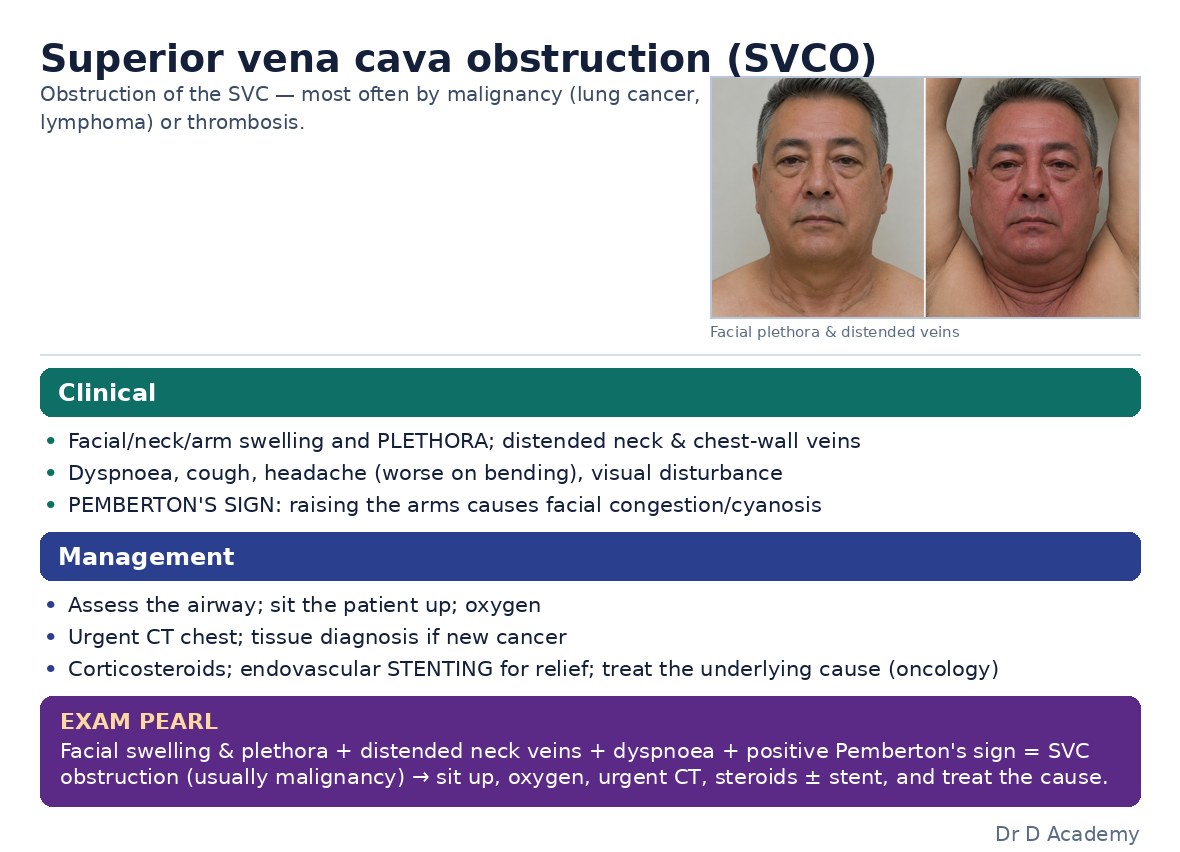
Obstruction of SVC flow (usually malignancy, e.g. lung cancer/lymphoma; also thrombus around lines) — facial/arm swelling, distended neck veins, dyspnoea.
Figures & algorithms
Red flags
- Stridor/airway compromise
- Cerebral oedema (headache, confusion, visual change)
- Rapid progression
Assessment
Differential diagnosis
- Cardiac tamponade
- Heart failure
- Angioedema
- Mediastinal mass without obstruction
Investigations
- CXR (mediastinal mass); CT chest with contrast
- Assess airway and cerebral oedema
- Bloods; tissue diagnosis if no prior cancer
Management
- Sit the patient up; oxygen; assess airway and cerebral signs
- Urgent oncology/respiratory + interventional radiology referral
- Corticosteroids (esp. steroid-responsive tumours) per specialist advice
- Endovascular stenting for severe/airway-threatening cases
- Treat the underlying malignancy; anticoagulate if line thrombus
Drugs & doses
Corticosteroids (specialist-directed)
Oxygen; anticoagulation if thrombotic
Disposition
Admit; oncology/respiratory + interventional radiology.
Complications & pitfalls
- Airway obstruction
- Cerebral oedema
- Death (rare, severe)
Exam pearls
- Usually the first presentation of a thoracic malignancy
- Sit up + steroids + urgent imaging; stenting for severe cases
- Consider line-associated thrombus as a cause
Sit up, image with contrast CT, involve oncology/IR, and stent or steroid severe/airway-threatening cases.
Disclaimer: Educational decision support for qualified clinicians and students — not a substitute for clinical judgement, local protocols or a full drug reference. Confirm every dose and contraindication against your formulary before prescribing.