Traumatic brain injury — ICU targets (BTF)
TBI targets · Critical Care
Physician-written · Verified by three sets of doctors · Reviewed November 2026
Bedside summary
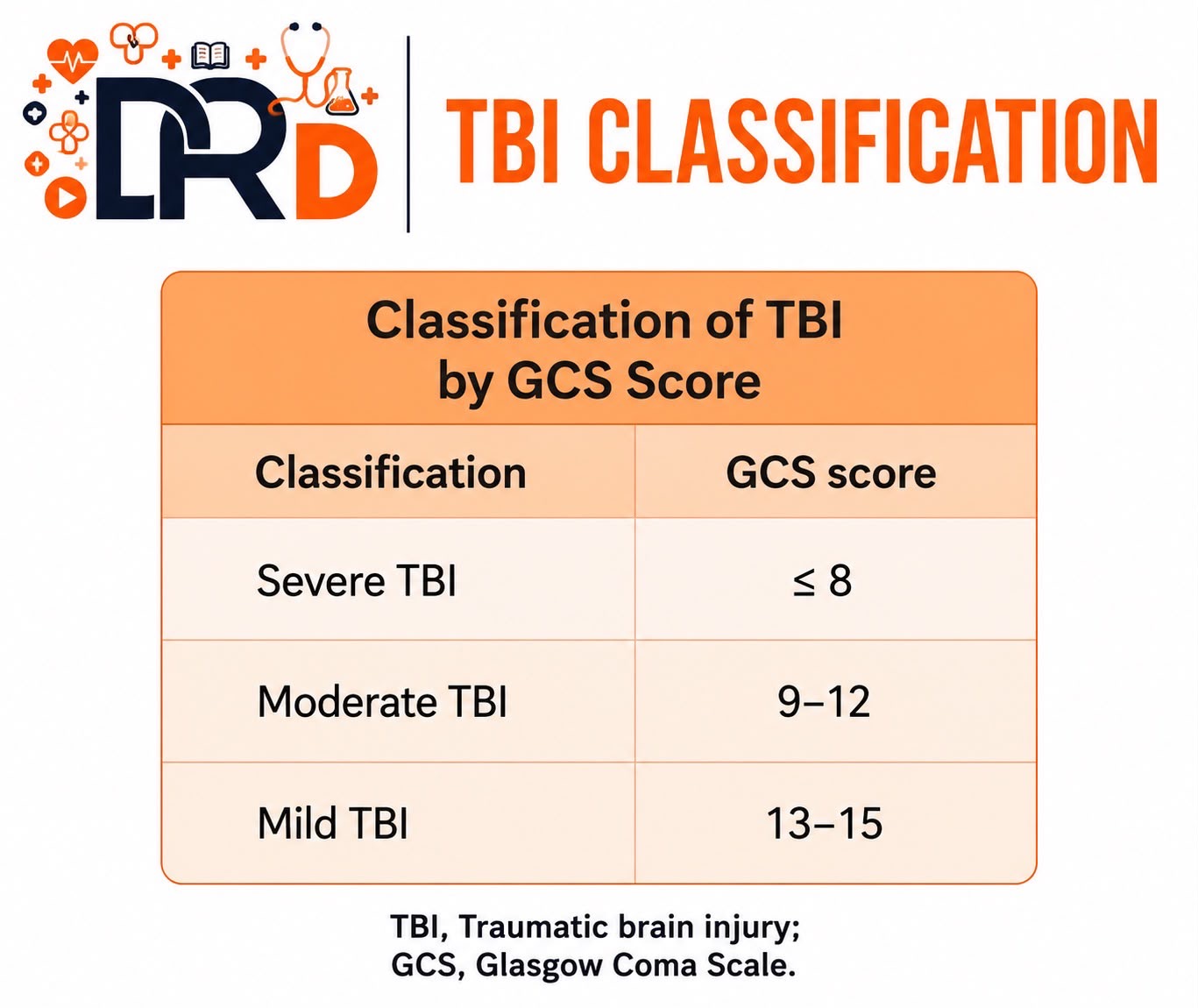
After severe traumatic brain injury, ICU care focuses on preventing secondary injury by protecting cerebral perfusion and oxygenation.
Figures & algorithms
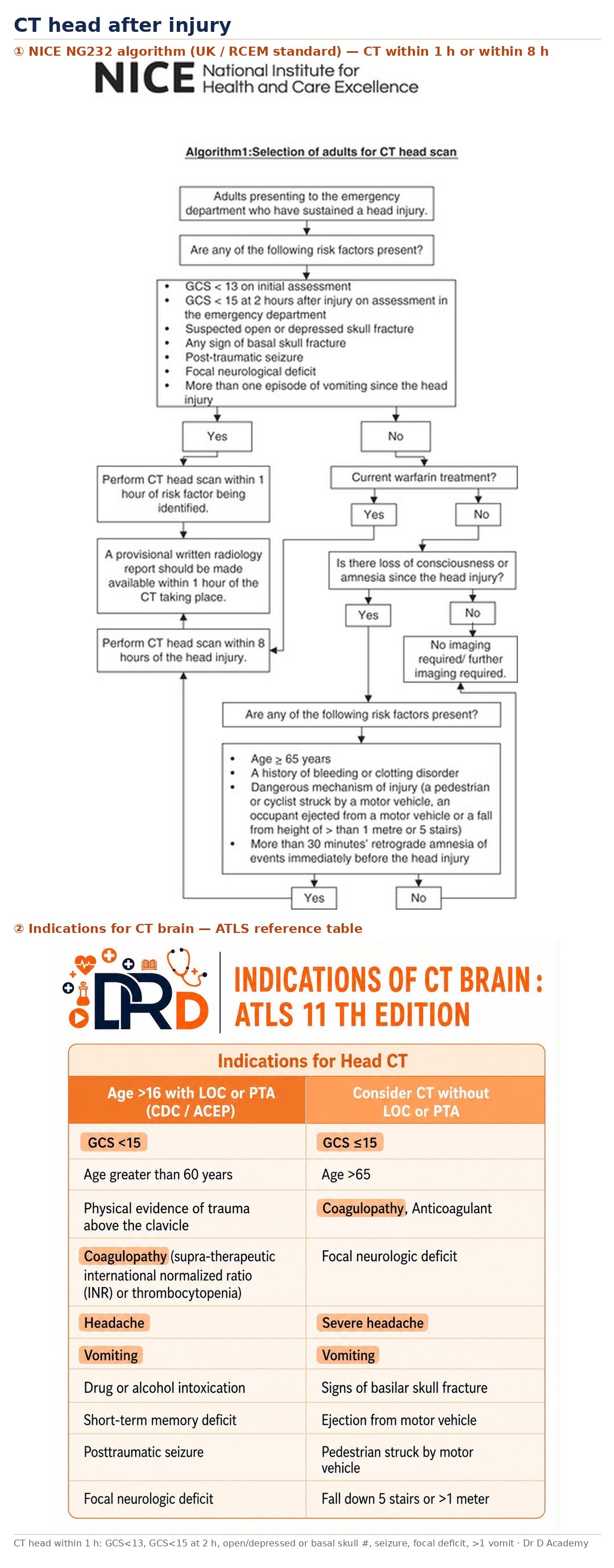
Assessment
Investigations
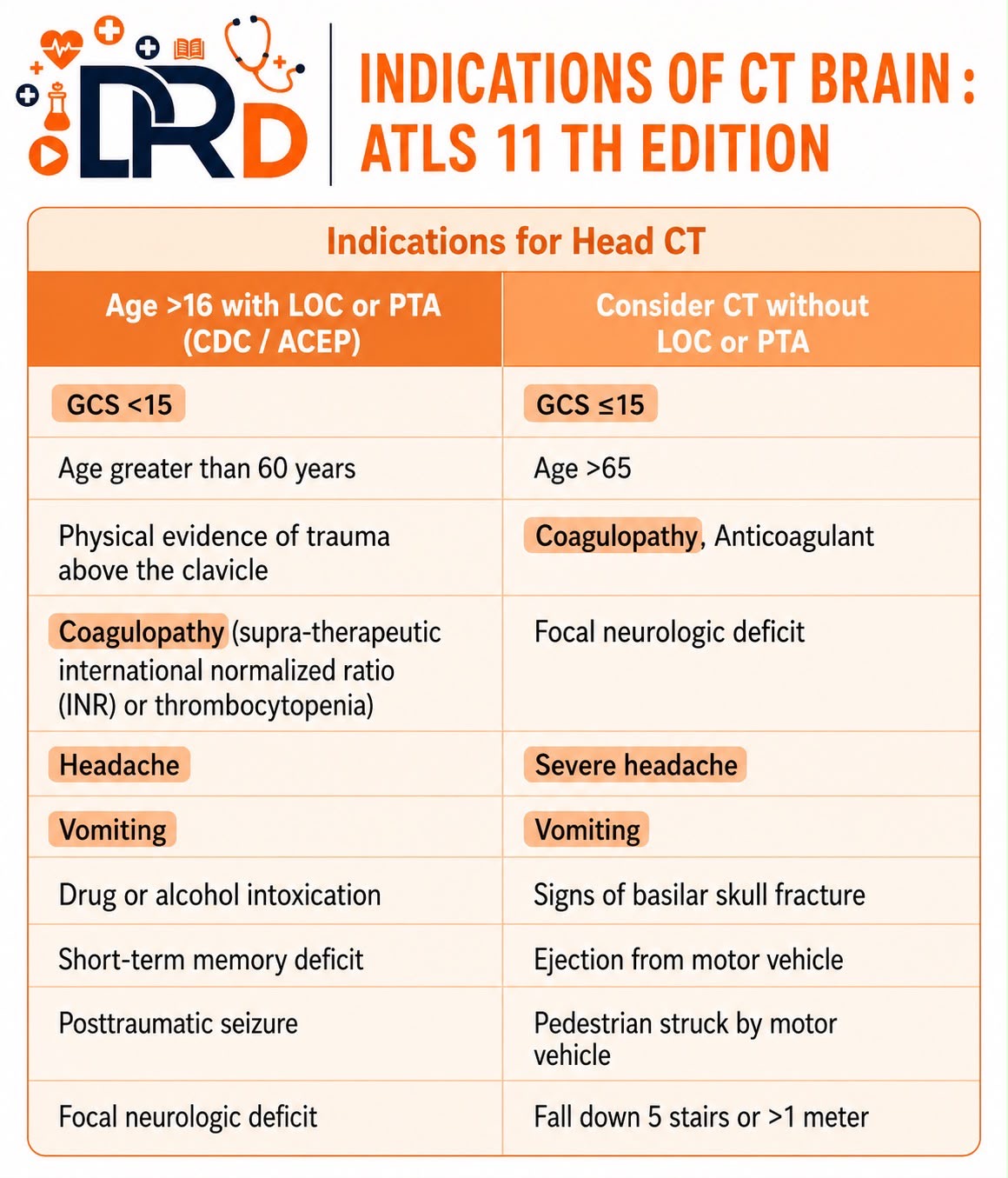
- CT head and repeat imaging
- Intracranial pressure monitor
- Continuous arterial pressure for cerebral perfusion pressure
- Pupils, GCS and sedation holds where safe
- Sodium, glucose and coagulation
Management
- Secure the airway and avoid hypoxia and hypotension
- Nurse head-up 30 degrees with neutral neck
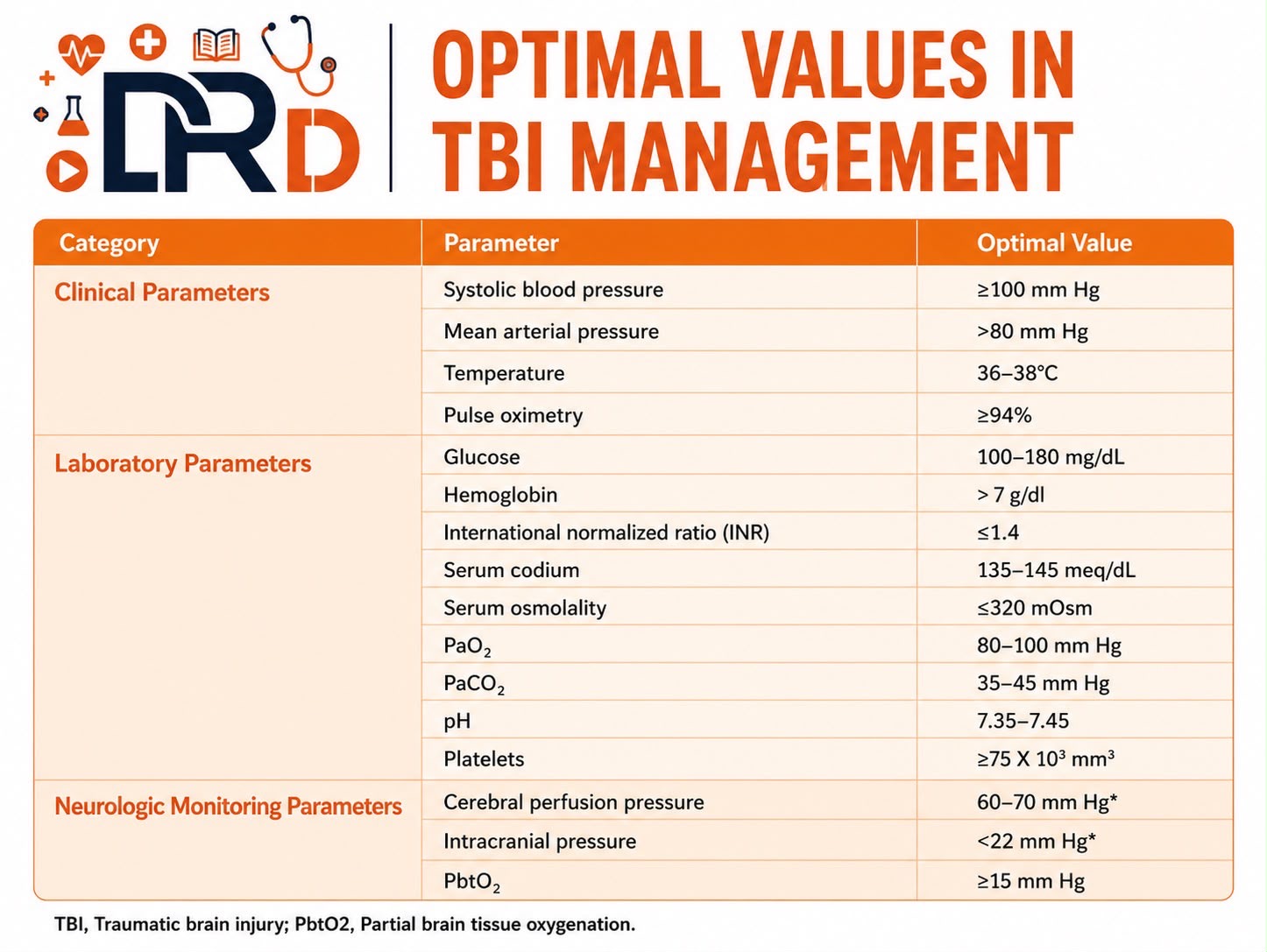
- Keep intracranial pressure <22 mmHg
- Maintain cerebral perfusion pressure 60-70 mmHg
- Target normocapnia and treat surges with sedation and osmotherapy
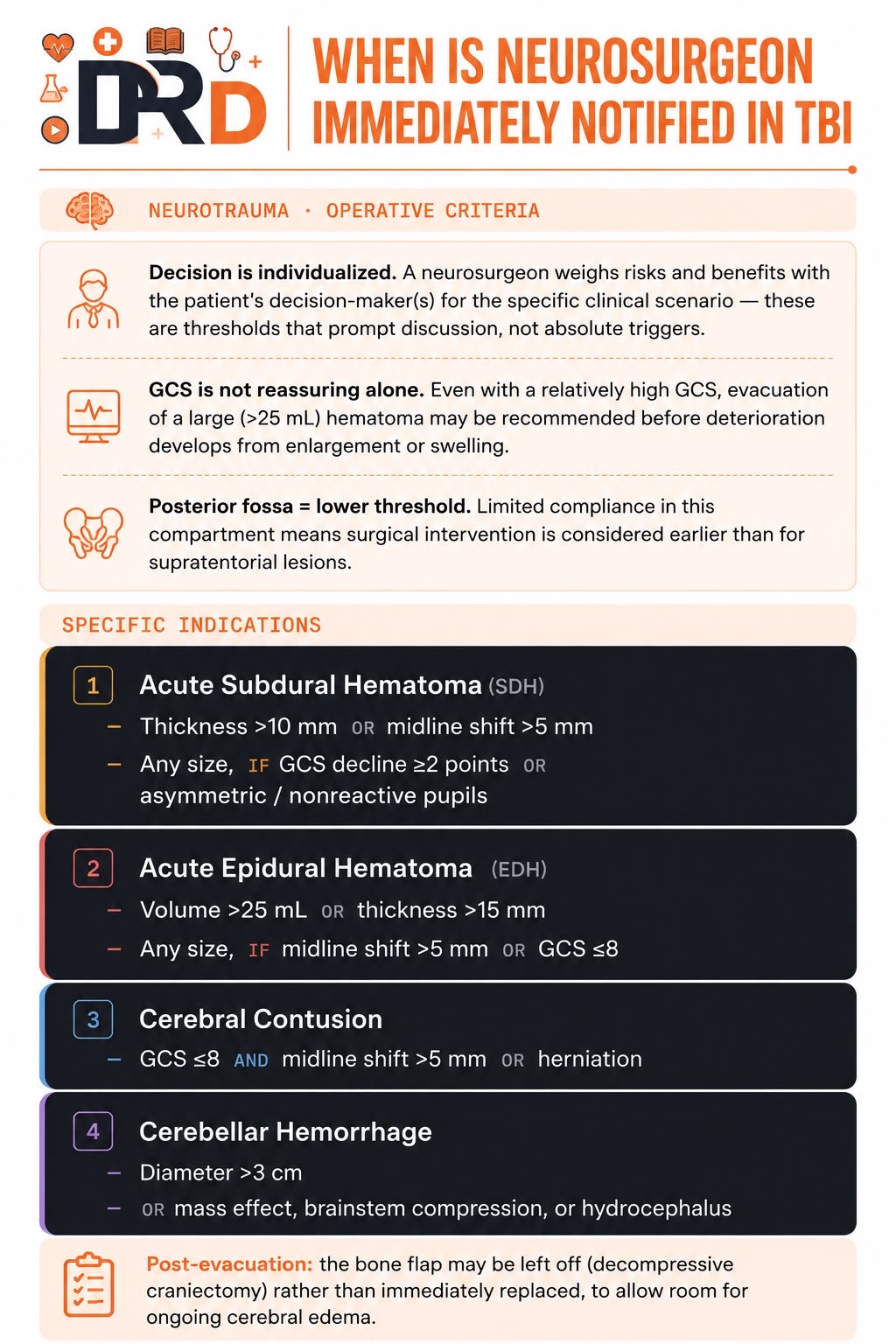
- Escalate stepwise to hyperosmolar therapy and surgery
- Give tranexamic acid early if within 3 h
Drugs & doses
Hypertonic saline or mannitol for raised pressure
Tranexamic acid: 1 g over 10 min then 1 g over 8 h
Disposition
ICU; neurosurgical liaison.
Brain Trauma Foundation: ICP <22, CPP 60-70; avoid prophylactic hyperventilation.
Disclaimer: Educational decision support for qualified clinicians and students — not a substitute for clinical judgement, local protocols or a full drug reference. Confirm every dose and contraindication against your formulary before prescribing.