Giant cell arteritis with acute visual loss
Vascular · Ophthalmology
Physician-written · Verified by three sets of doctors · Reviewed November 2026
Bedside summary
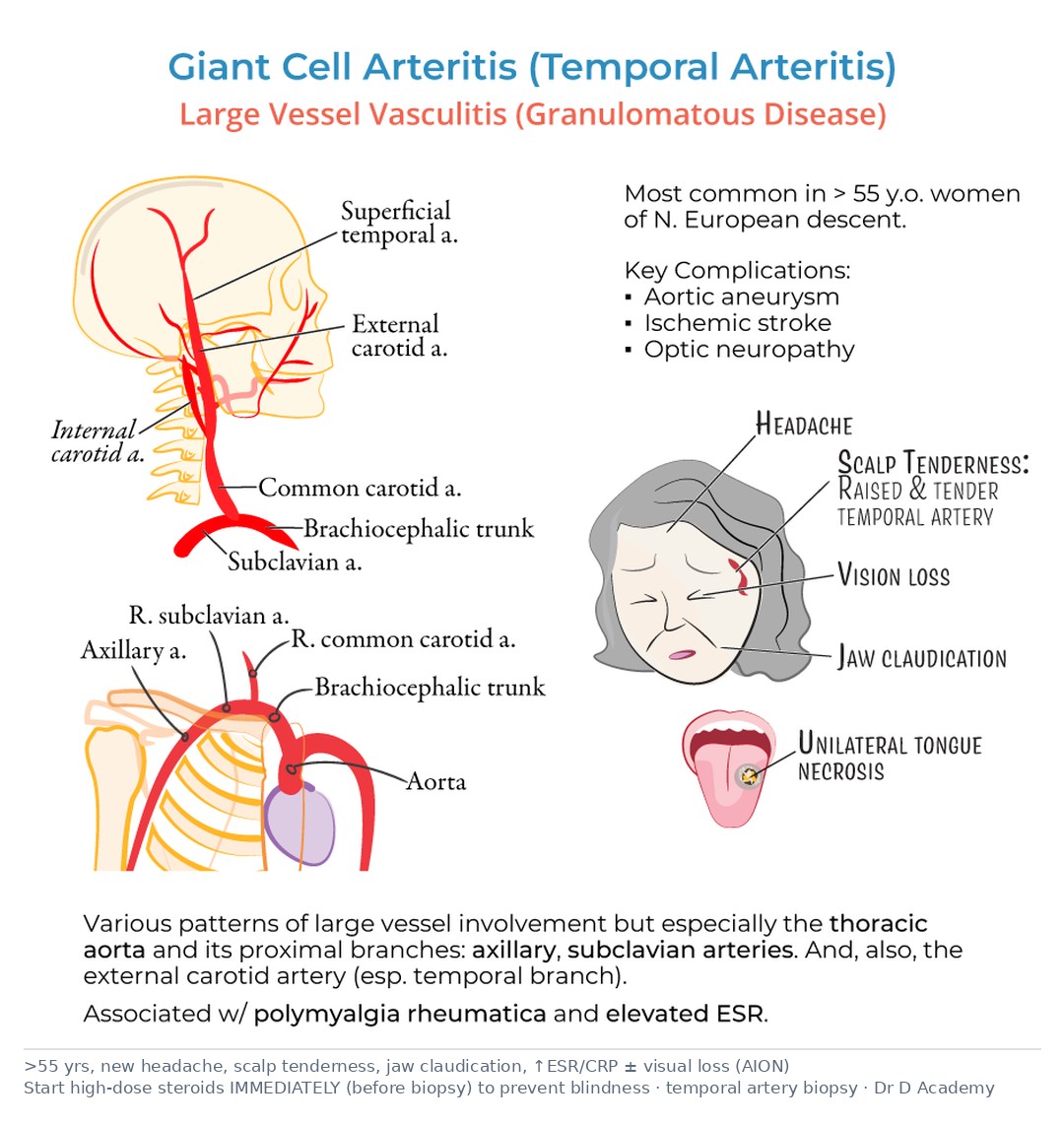
Giant cell (temporal) arteritis is a large/medium-vessel vasculitis of older adults that can cause sudden, often irreversible visual loss (classically arteritic anterior ischaemic optic neuropathy) and threatens the fellow eye within days. The overriding principle: do NOT wait for biopsy or inflammatory markers — start high-dose corticosteroids immediately on clinical suspicion to protect sight.
Figures & algorithms
Red flags
- Visual loss in one eye (fellow eye at imminent risk)
- Jaw claudication; diplopia
- New severe headache; markedly raised ESR/CRP
- Features of large-vessel involvement (limb claudication, bruits)
Assessment
Differential diagnosis
- New headache, scalp tenderness, jaw claudication, polymyalgia, malaise/weight loss
- Tender, thickened or non-pulsatile temporal artery; pale swollen optic disc (arteritic AION); amaurosis/diplopia
- Distinguish from non-arteritic ischaemic optic neuropathy (younger, less systemic illness, normal ESR/CRP)
Investigations
- ESR, CRP and platelets, FBC — but do NOT delay steroids for results
- Temporal artery biopsy (can stay positive for ~1–2 weeks after steroids); temporal/axillary artery ultrasound (halo sign)
Management
- Suspect GCA in any patient ≥50 with new visual loss, diplopia or amaurosis plus cranial/systemic symptoms.
- Start high-dose corticosteroid IMMEDIATELY — do not wait for ESR/CRP or biopsy; visual loss and fellow-eye involvement are the emergency.
- For established visual loss, IV methylprednisolone is commonly used, followed by high-dose oral prednisolone; use high-dose oral prednisolone if there is no visual loss.
- Add gastroprotection, bone protection and consider low-dose aspirin; arrange urgent rheumatology/ophthalmology and temporal artery biopsy within ~1–2 weeks.
- Taper steroids slowly over months guided by symptoms and markers; consider tocilizumab as a steroid-sparing agent.
Drugs & doses
IV methylprednisolone 500–1000 mg daily for up to 3 days for acute visual loss (confirm against local policy), then oral prednisolone ~1 mg/kg/day
Oral prednisolone 40–60 mg daily if there is no visual loss (confirm against local policy)
Low-dose aspirin; PPI gastroprotection; bone protection (calcium/vitamin D ± bisphosphonate)
Tocilizumab as a steroid-sparing agent (specialist-initiated)
Disposition
Admit or arrange urgent same-day specialist review; start steroids before referral and ensure fast-track biopsy/ultrasound.
Complications & pitfalls
- Bilateral blindness
- Stroke
- Aortic aneurysm/dissection
- Steroid toxicity
Exam pearls
- Treat on clinical suspicion — steroids first, biopsy later (it stays positive for days to a couple of weeks).
- Jaw claudication and the fellow-eye threat drive the need to act fast.
- A normal ESR/CRP does not completely exclude GCA.
Educational — confirm all doses against local policy.
Disclaimer: Educational decision support for qualified clinicians and students — not a substitute for clinical judgement, local protocols or a full drug reference. Confirm every dose and contraindication against your formulary before prescribing.