Papilloedema from raised intracranial pressure
Neuro-ophthalmic · Ophthalmology
Physician-written · Verified by three sets of doctors · Reviewed November 2026
Bedside summary
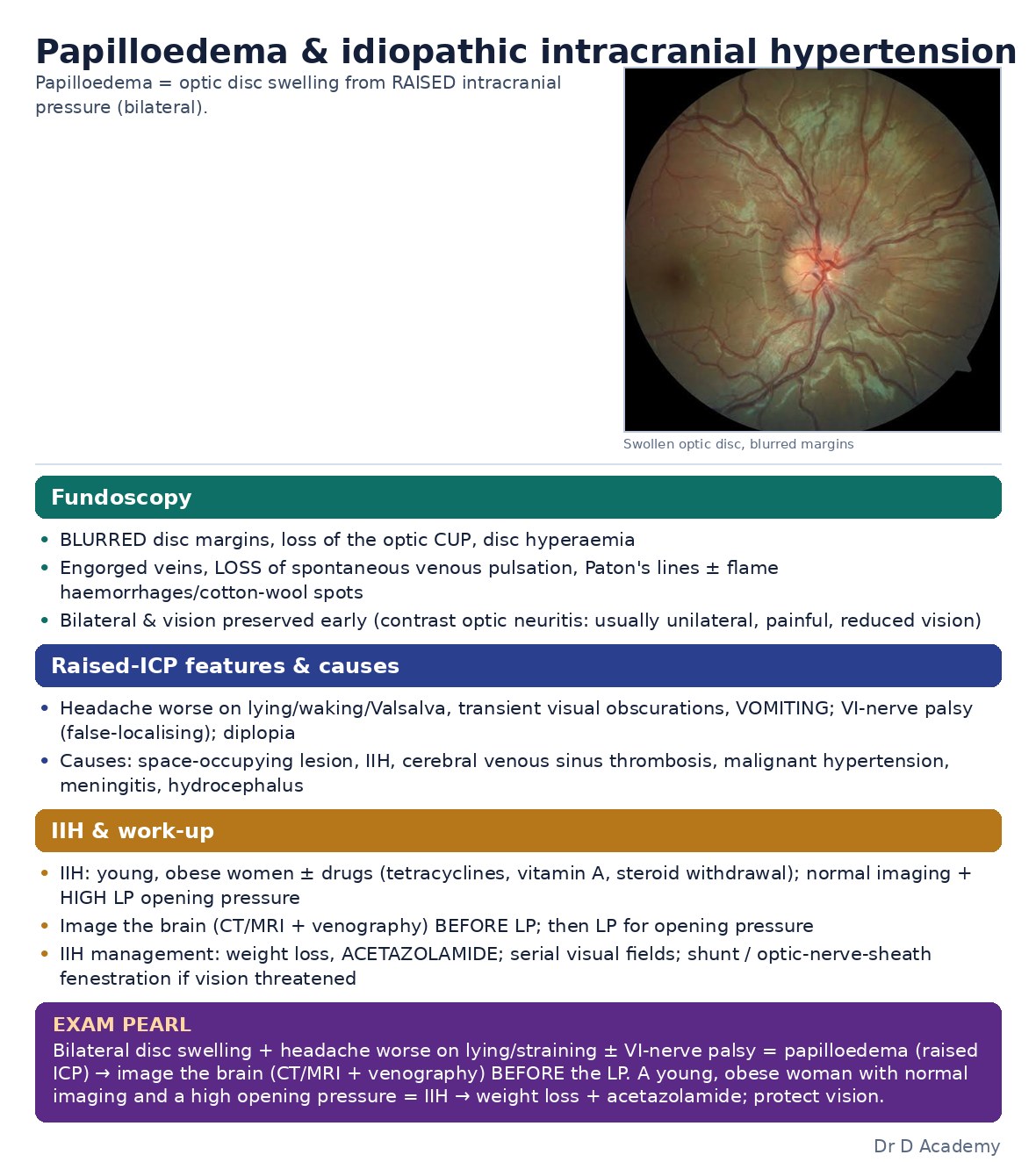
Bilateral optic disc swelling due to raised intracranial pressure. May reflect a space-occupying lesion, venous thrombosis or idiopathic intracranial hypertension; threatens vision if untreated.
Figures & algorithms
Red flags
- Reduced consciousness or focal deficit
- Rapidly deteriorating vision
- Sixth nerve palsy
- Signs of impending herniation
Assessment
Differential diagnosis
- Idiopathic intracranial hypertension
- Intracranial mass/hydrocephalus
- Cerebral venous sinus thrombosis
- Malignant hypertension
- Pseudopapilloedema (drusen)
Investigations
- Fundoscopy (bilateral disc swelling)
- Urgent CT/MRI brain with venography
- Blood pressure
- Lumbar puncture with opening pressure (after imaging)
- Visual acuity and fields
Management
- Assess for focal neurology, headache and visual symptoms
- Check blood pressure to exclude malignant hypertension
- Urgent neuroimaging (CT/MRI + venography) to exclude mass/thrombosis
- Lumbar puncture with opening pressure once safe (mass excluded)
- Refer to neurology/neurosurgery and ophthalmology
- Treat the underlying cause; monitor vision closely
Drugs & doses
Treat cause-specific (e.g. acetazolamide for idiopathic intracranial hypertension)
Antihypertensives if malignant hypertension
Anticoagulation if venous sinus thrombosis
Analgesia for headache
Disposition
Refer urgently to neurology/neurosurgery and ophthalmology; admit per cause.
Complications & pitfalls
- Permanent visual loss/optic atrophy
- Herniation (if mass)
- Progression of underlying disease
Exam pearls
- Image before lumbar puncture to exclude a mass
- Always check blood pressure - malignant hypertension can cause disc swelling
- Visual field monitoring guides urgency of intervention
Disclaimer: Educational decision support for qualified clinicians and students — not a substitute for clinical judgement, local protocols or a full drug reference. Confirm every dose and contraindication against your formulary before prescribing.