Uveitis-glaucoma-hyphaema (UGH) syndrome
Anterior segment · Ophthalmology
Physician-written · Verified by three sets of doctors · Reviewed November 2026
Bedside summary
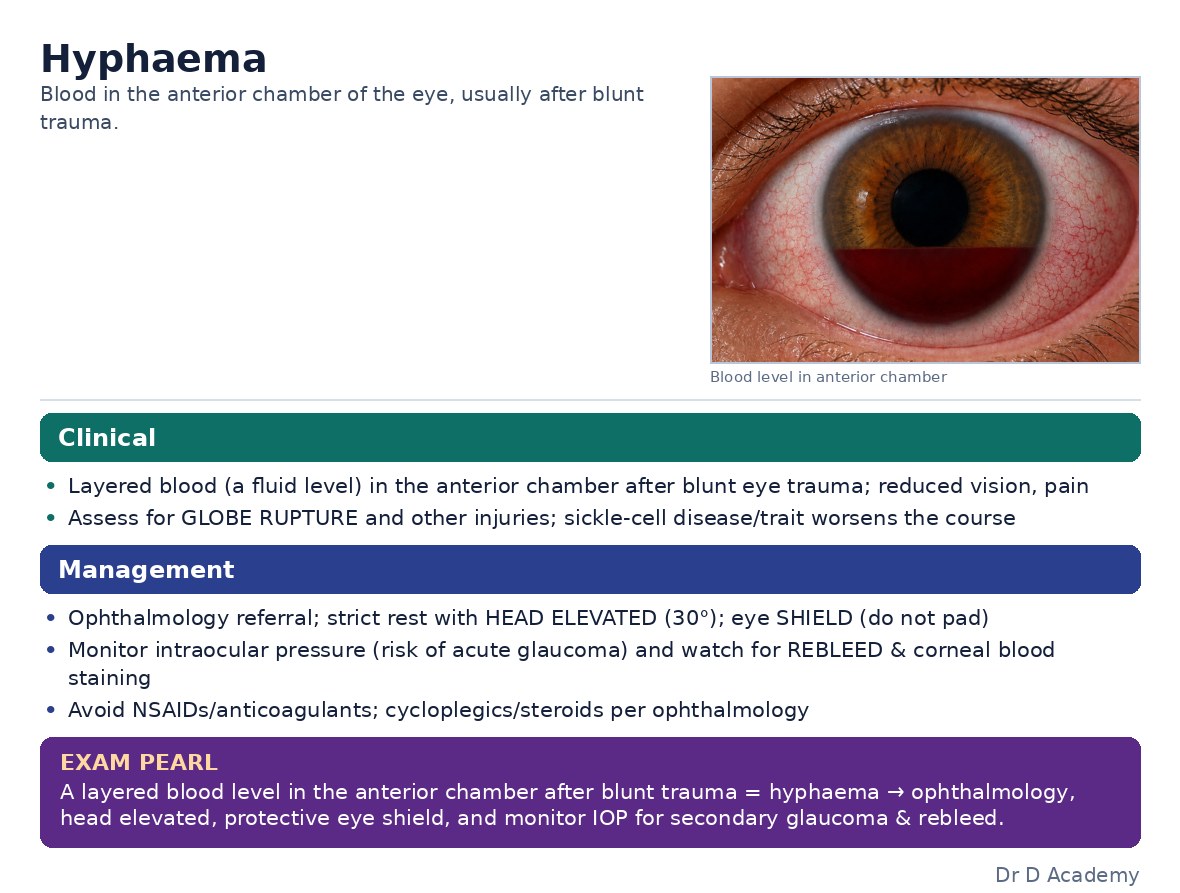
Chronic mechanical chafing by an intraocular lens implant causing recurrent uveitis, raised intraocular pressure and hyphaema.
Figures & algorithms
Red flags
- Very high intraocular pressure
- Large or rebleeding hyphaema
- Severe vision loss
- Signs of endophthalmitis
Assessment
Differential diagnosis
- Traumatic hyphaema
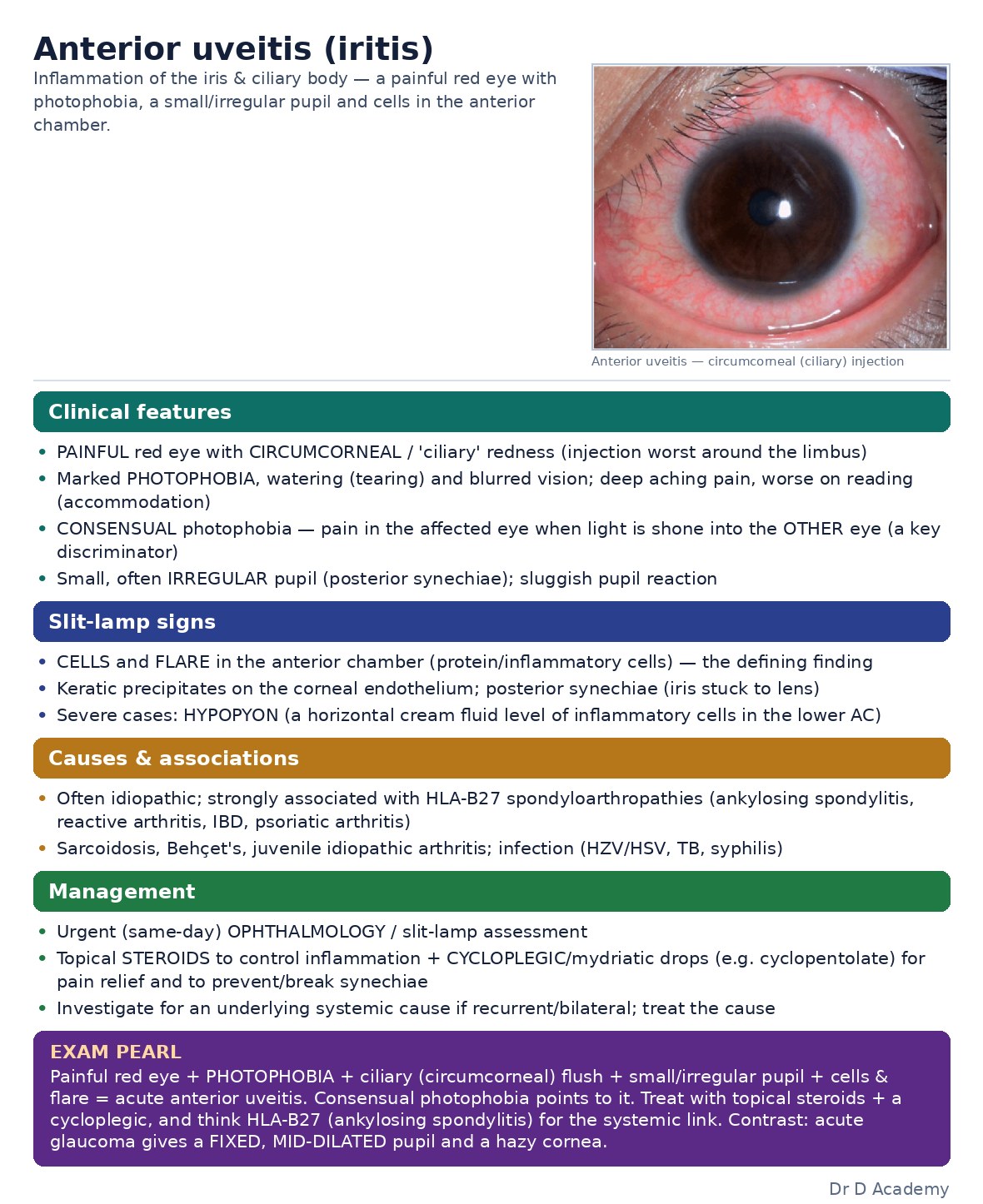
- Acute anterior uveitis
- Acute angle-closure glaucoma
- Neovascular glaucoma
- Endophthalmitis
Investigations
- Visual acuity and intraocular pressure
- Slit-lamp examination (hyphaema, cells, lens position)
- Gonioscopy / anterior segment imaging
- Surgical history (IOL type)
- Ophthalmology assessment
Management
- Measure and control intraocular pressure
- Topical steroids for the inflammation
- Manage the hyphaema (rest, avoid antiplatelets if possible)
- Identify malpositioned intraocular lens
- Ophthalmology / surgical referral
- Consider IOL repositioning or exchange for recurrent disease
Drugs & doses
Topical corticosteroids
IOP-lowering drops (avoid pilocarpine)
Cycloplegic drops
Disposition
Ophthalmology referral.
Complications & pitfalls
- Glaucomatous optic damage
- Recurrent hyphaema
- Corneal blood staining
Exam pearls
- Consider UGH in a pseudophakic eye with recurrent hyphaema and raised pressure.
- Definitive treatment is often lens repositioning or exchange.
Disclaimer: Educational decision support for qualified clinicians and students — not a substitute for clinical judgement, local protocols or a full drug reference. Confirm every dose and contraindication against your formulary before prescribing.