Anaphylaxis - adult (Resuscitation Council UK)
Anaphylaxis · Allergy / Immunology
Physician-written · Verified by three sets of doctors · Reviewed November 2026
Bedside summary
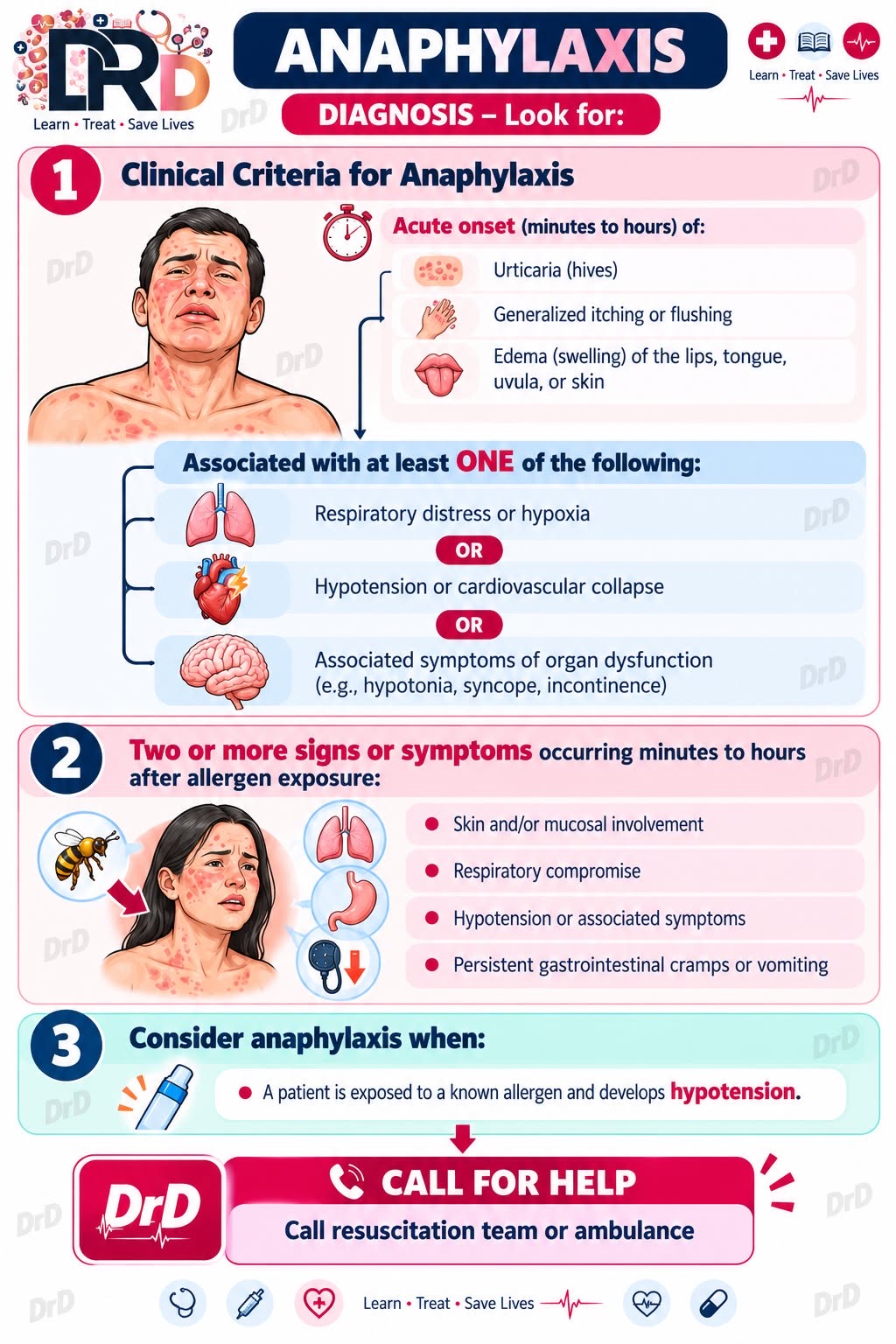
Adult anaphylaxis managed to the Resuscitation Council UK 2021 algorithm: a sudden Airway, Breathing or Circulation problem (usually with skin changes) after exposure. Intramuscular adrenaline is first-line and must not be delayed; steroids and antihistamines are NO LONGER routine.
Figures & algorithms
Assessment
Investigations
- Recognise sudden ABC compromise + likely allergen; skin changes support but are not required
- Monitor SpO2, BP, ECG
- Serial mast-cell tryptase (at presentation, 1-2 h, and baseline >24 h)
Management
- Remove the trigger; ABCDE; high-flow oxygen
- Adrenaline 500 micrograms IM (0.5 mL of 1:1000) anterolateral thigh - repeat after 5 min if no improvement
- Position: lie flat with legs raised (sit up if breathing difficulty; left lateral if pregnant) - do not stand the patient up
- IV fluid bolus 500-1000 mL crystalloid, repeat as needed
- Refractory (no better after 2 IM doses): start an IV adrenaline infusion with monitoring/expert help and give further fluids
- A non-sedating antihistamine may be given AFTER stabilisation for skin symptoms; routine steroids are no longer recommended
- Observe for a biphasic reaction (risk-based: ~2 h if good single-dose response, 6-12 h if 2 doses/severe/biphasic history/severe asthma)
- Before discharge: adrenaline auto-injector(s) with training, written advice, and allergy-clinic referral
Drugs & doses
Adrenaline 500 micrograms IM (0.5 mL 1:1000)
IV crystalloid 500-1000 mL bolus
IV adrenaline infusion (refractory, expert)
Adrenaline auto-injector at discharge
Disposition
Observe (risk-based); allergy referral.
IM adrenaline first and fast - lie the patient flat with legs raised, never sit or stand them up, and remember steroids/antihistamines are no longer routine.
Disclaimer: Educational decision support for qualified clinicians and students — not a substitute for clinical judgement, local protocols or a full drug reference. Confirm every dose and contraindication against your formulary before prescribing.