Anaphylaxis in pregnancy
Anaphylaxis · Allergy / Immunology
Physician-written · Verified by three sets of doctors · Reviewed November 2026
Bedside summary
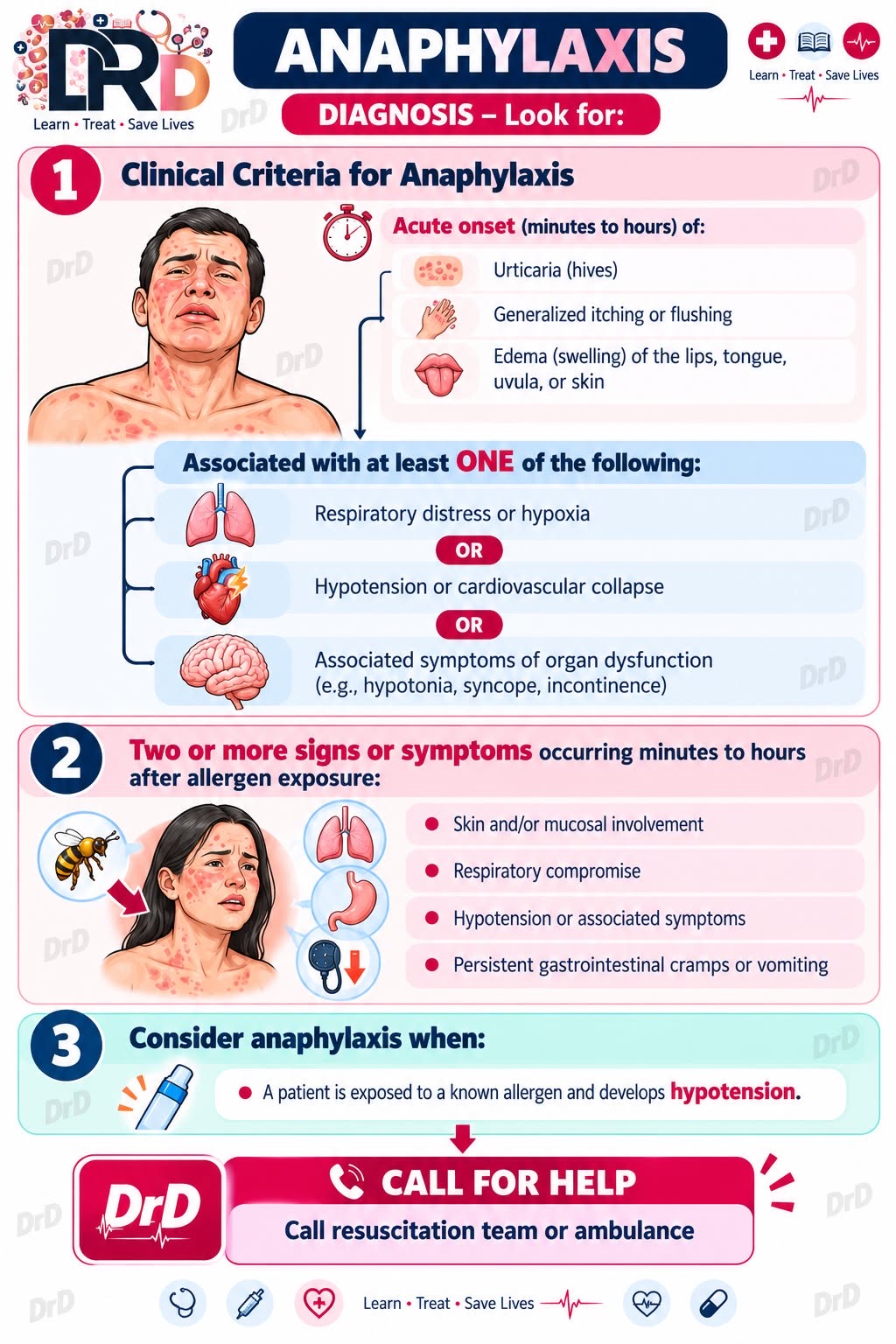
Anaphylaxis in a pregnant patient threatens both mother and fetus (through maternal hypotension and hypoxia); management mirrors standard anaphylaxis with additional attention to positioning and the fetus.
Figures & algorithms
Red flags
- Maternal hypotension/hypoxia (fetal compromise)
- Non-reassuring fetal heart rate
- Airway compromise
- Maternal cardiac arrest
Assessment
Differential diagnosis
- Amniotic fluid embolism
- Eclampsia
- Pulmonary embolism
- Septic shock
- Local anaesthetic toxicity (in the peripartum setting)
Investigations
- Clinical diagnosis - treat immediately
- Continuous fetal monitoring (if viable gestation)
- Serial maternal tryptase
- Maternal monitoring (BP, SpO2, ECG)
Management
- Give IM adrenaline immediately - do NOT withhold it in pregnancy
- Position the mother in the left lateral tilt to relieve aortocaval compression
- Give high-flow oxygen and IV fluid resuscitation
- Monitor the fetus and involve obstetrics/anaesthetics urgently
- Repeat adrenaline as needed; for maternal cardiac arrest, perform CPR with manual uterine displacement and consider perimortem caesarean section
- Observe for biphasic reaction and identify the trigger
Drugs & doses
IM adrenaline (standard dose - the same as for non-pregnant adults)
High-flow oxygen
IV crystalloid boluses
Antihistamines and steroids as adjuncts
Disposition
Admit with obstetric and anaesthetic involvement; fetal monitoring; observe for biphasic reaction.
Complications & pitfalls
- Fetal hypoxia / demise
- Maternal cardiac arrest
- Biphasic reaction
- Preterm delivery
Exam pearls
- Adrenaline is life-saving and must not be withheld because of pregnancy
- Left lateral tilt relieves aortocaval compression and improves venous return
- In maternal arrest beyond around 20 weeks, perimortem caesarean within a few minutes improves maternal resuscitation
Disclaimer: Educational decision support for qualified clinicians and students — not a substitute for clinical judgement, local protocols or a full drug reference. Confirm every dose and contraindication against your formulary before prescribing.