Anaphylaxis in the patient on beta-blockers — glucagon rescue
Adrenaline-resistant anaphylaxis in beta-blocked patients · Allergy / Immunology
Physician-written · Verified by three sets of doctors · Reviewed November 2026
Bedside summary
Beta-blockade blunts the response to adrenaline and can produce unopposed alpha effects, causing adrenaline-resistant hypotension and bronchospasm in anaphylaxis. Glucagon bypasses the beta-receptor to raise cyclic AMP, restoring inotropy and bronchodilation.
Figures & algorithms
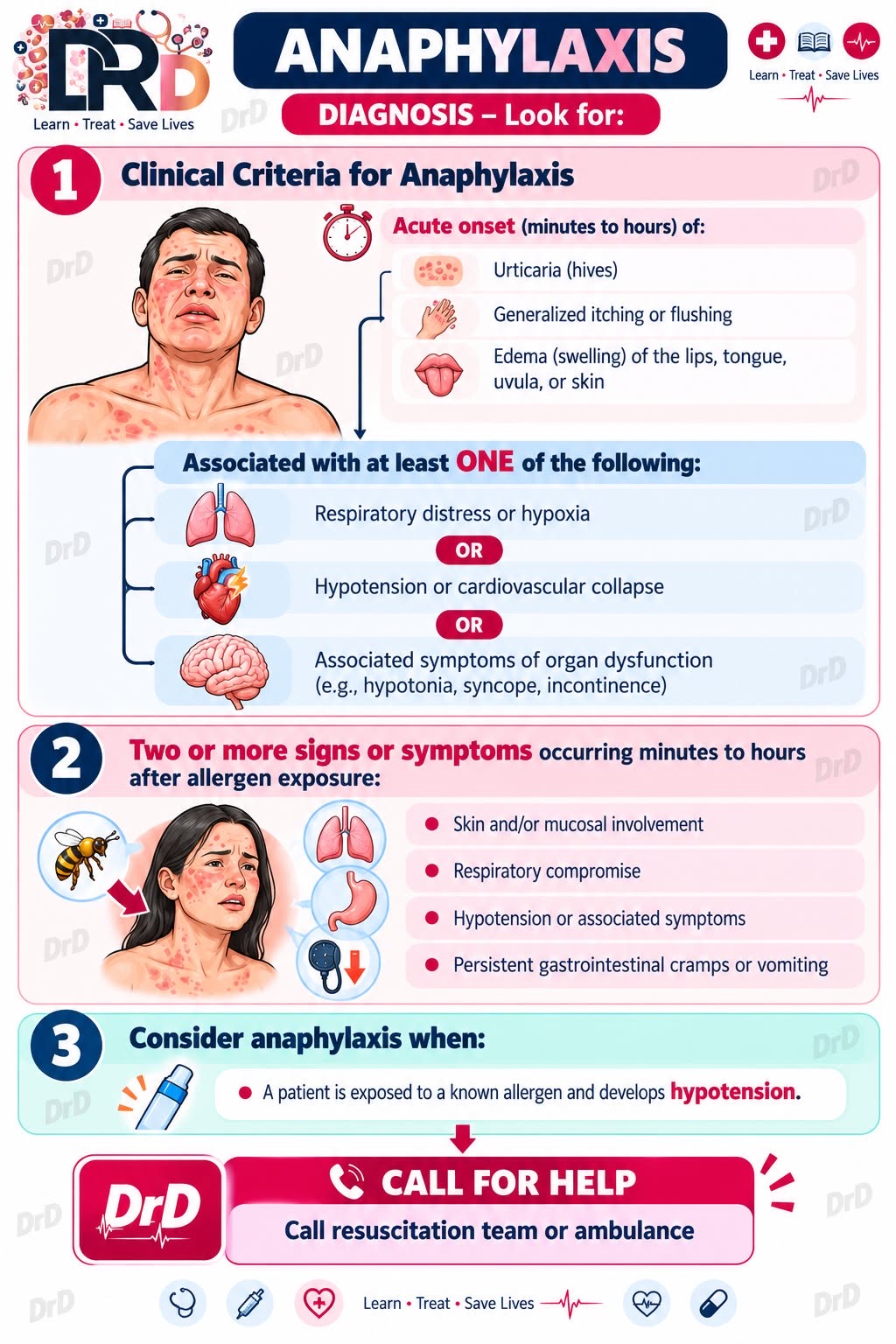
Red flags
- Persistent hypotension despite two IM adrenaline doses
- Bradycardia unresponsive to atropine
- Vomiting with reduced consciousness (aspiration risk)
- Stridor or progressive airway oedema
- Rising lactate indicating sustained hypoperfusion
Assessment
Differential diagnosis
- Simple under-treated anaphylaxis
- Primary cardiogenic shock (bradycardia from beta-blocker overdose)
- ACE-inhibitor-mediated (bradykinin) angioedema
- Septic or hypovolaemic shock
- Vasovagal reaction
Investigations
- Continuous ECG and blood pressure monitoring
- Serial mast cell tryptase (resuscitation, 1-2 h, baseline)
- Blood gas with lactate and glucose
- 12-lead ECG (bradycardia, blocks, ischaemia)
- Medication reconciliation confirming beta-blocker use and dose
Management
- Give IM adrenaline 500 mcg and high-flow oxygen; repeat adrenaline at 5 min
- Lay flat, raise legs, give rapid crystalloid bolus 500-1000 mL
- If poor response after two IM doses, give IV glucagon bolus and prepare an infusion
- Place a nasogastric tube / antiemetic cover as glucagon commonly causes vomiting — protect the airway
- Escalate to IV adrenaline infusion alongside glucagon if still refractory
- Add atropine for symptomatic bradycardia and consider additional vasopressor
- Treat bronchospasm with nebulised salbutamol and ipratropium
- Involve critical care early; monitor glucose (glucagon causes hyperglycaemia then rebound)
Drugs & doses
Adrenaline IM — 500 mcg (0.5 mL 1:1000), repeat every 5 min
Glucagon — 1-2 mg IV bolus, repeat after 5 min if needed, then infusion 5-15 mcg/min titrated
Atropine — 500 mcg IV, repeat to maximum 3 mg for bradycardia
Adrenaline IV infusion — 1 mg in 100 mL 0.9% saline (10 mcg/mL), titrated under critical care
Salbutamol — 5 mg nebulised, repeated for bronchospasm
Ondansetron — 4 mg IV to counter glucagon-induced vomiting
Disposition
Admit to HDU/ICU for monitored observation of at least 6-12 h, with cardiology/allergy review and medication optimisation before discharge.
Complications & pitfalls
- Aspiration from glucagon-induced vomiting
- Refractory shock and cardiac arrest
- Hyperglycaemia followed by rebound hypoglycaemia
- Hypokalaemia from combined catecholamine and glucagon therapy
- Biphasic reaction
Exam pearls
- Suspect beta-blockade in any adrenaline-resistant anaphylaxis — check the drug chart immediately
- Glucagon is the key adjunct; have an airway plan because vomiting is near-universal
- ACE-inhibitor co-prescription further worsens bradykinin-mediated angioedema and response
- Document the implicated allergen and advise against non-selective beta-blockers at follow-up
Disclaimer: Educational decision support for qualified clinicians and students — not a substitute for clinical judgement, local protocols or a full drug reference. Confirm every dose and contraindication against your formulary before prescribing.